
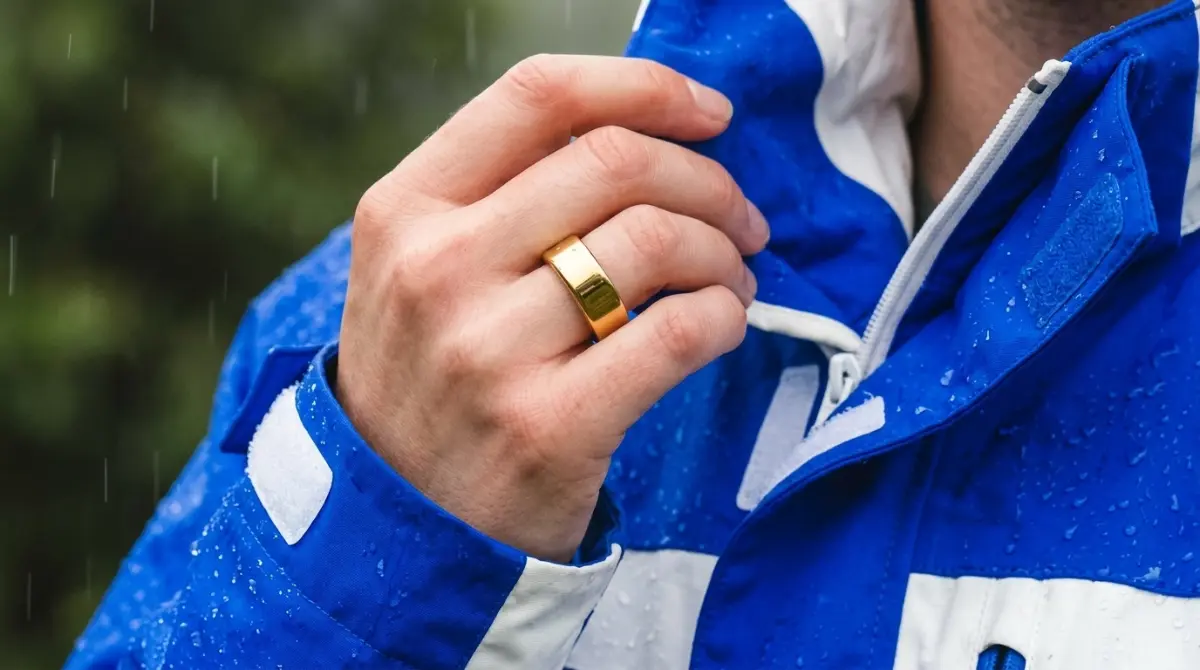


Oura Sues Ultrahuman Again to Block US Ring Pro Sales
Oura filed a federal patent infringement lawsuit in Texas against rival Ultrahuman, targeting the redesigned Ring Pro and manufacturing partner SVTronics to block American retail sales just two days after securing a fresh utility patent on curved ring internal electronics.
Umar Thariwat | · 12 min read

Patent battles over wearable electronics have shifted from wristwatches down to the finger. Finnish health tracking company Oura Health Oy opened another federal legal assault against its main Indian competitor, Ultrahuman Healthcare Pvt., in the United States District Court for the Eastern District of Texas. The complaint targets the newly introduced Ultrahuman Ring Pro, accusing the Bengaluru startup of copying patented mechanical layouts, sensor arrangements, and battery assemblies. The legal maneuver lands right after Ultrahuman managed to bring its devices back to American consumers following an import ban that halted its older Ring Air model. By naming both Ultrahuman and its Texas-based contract manufacturing partner SVTronics as defendants, Oura is attempting to shut down the rival distribution pipeline directly inside American borders. The aggressive courtroom push reflects corporate tension inside the smart ring business, continuing aggressive brand defenses we analyzed during our Oura market competition report.
The lawsuit lands during an intense commercial scramble for smart ring dominance. Market intelligence reports estimate that global smart ring shipments will expand by 12.8% this calendar year, with health-conscious buyers seeking screenless alternatives to smartwatches. Oura spent a decade constructing an extensive patent wall to protect its market lead, using patent infringement lawsuits to slow down ambitious competitors. Ultrahuman redesigned its flagship hardware specifically to skirt earlier administrative rulings, securing import approvals from United States Customs and Border Protection before opening retail orders for the Ring Pro. Oura answered by asserting two patents, including a utility patent issued a mere forty-eight hours before filing the complaint. The corporate struggle highlights how established hardware leaders use intellectual property courts to maintain pricing power, an offensive strategy reminiscent of disputes we examined in the Qualcomm patent licensing battles.
The 48-Hour Patent Deployment in Marshall Texas
The speed with which Oura initiated this litigation reveals calculated corporate preparation. On Tuesday, October 20, 2026, the United States Patent and Trademark Office granted Oura US Patent Number 12,769,363. The patent describes an electronic wearable device shaped as a circular band, incorporating a flexible circuit board, a curved battery pack, positioning magnets, and optical light sensors sealed inside a waterproof resin enclosure.
Two days later, on Thursday, October 22, Oura legal counsel walked into the federal courthouse in Marshall, Texas, filing a formal complaint asserting that the Ultrahuman Ring Pro infringes the fresh patent alongside design patent D804,471. The Eastern District of Texas is known across the legal profession for fast trial schedules and juries that frequently award heavy financial penalties in intellectual property disputes. By securing the patent on Tuesday and filing the lawsuit on Thursday, Oura gave Ultrahuman zero time to analyze the newly issued claims or adjust manufacturing lines. Oura is demanding a permanent injunction blocking all sales, marketing, and distribution of the Ring Pro across the United States, paired with treble damages for alleged willful infringement. Corporate legal actions seeking to protect high-valuation commercial assets match trends we reviewed when regulators audited ownership records for private assets.
The Ring Air Ban and the Domestic Customs Detour
To understand why Oura returned to court, one must inspect the regulatory fight that preceded this filing. Earlier this year, Oura won an administrative victory before the United States International Trade Commission. The trade panel determined that Ultrahuman earlier model, the Ring Air, infringed Oura existing sensor patents. The commission issued a formal limited exclusion order, instructing border officers to block overseas shipments of the Ring Air from entering American seaports or air cargo terminals.
The import ban threatened to crush Ultrahuman American revenue. To bypass the exclusion order, Ultrahuman chief executive Mohit Kumar executed a rapid engineering revision, creating the Ring Pro. Ultrahuman submitted the revised blueprints to the Customs and Border Protection Part 177 administrative review branch. Customs officials issued a formal ruling confirming that the redesigned Ring Pro sat outside the scope of the International Trade Commission exclusion order, clearing the new ring for domestic import. Kumar celebrated the customs ruling publicly, announcing that the Ring Pro was fully cleared for American retail buyers. Oura current lawsuit proves that administrative customs clearances provide temporary shelter: while customs agents only enforce existing exclusion orders, patent holders can immediately file fresh federal lawsuits asserting newly issued patents against redesigned hardware. Navigating sudden operational restrictions reflects business hurdles we followed when tracking regulatory settlements over business practices.
Targeting SVTronics: The Texas Manufacturing Beachhead
A distinctive tactical element in Oura fresh complaint is the inclusion of SVTronics Inc. as a direct co-defendant. SVTronics is a contract electronics manufacturer operating cleanroom assembly facilities in Plano, Texas. Following the trade commission ban on imported units, Ultrahuman partnered with SVTronics to establish domestic assembly lines, producing Ring Pro units directly inside Texas to avoid international shipping checkpoints.
Oura legal team recognized this domestic supply route. By naming SVTronics in the lawsuit, Oura alleges that the contract manufacturer actively participates in patent infringement by assembling, testing, and packaging the accused rings under Ultrahuman direction. This creates immediate commercial pressure on the supplier. Contract manufacturers operate on modest assembly fees; they have no desire to defend multi-million-dollar patent lawsuits on behalf of overseas clients. If SVTronics fears financial exposure or court injunctions, it could suspend production lines, cutting off Ultrahuman domestic supply before holiday shopping begins. Attacking contract manufacturers represents a hard-nosed legal strategy designed to choke off physical production. The search for secure consumer hardware assembly parallels manufacturing hurdles we detailed when evaluating the Oura Ring long-term review.
Comparing Smart Ring Patent Portfolios and Hardware Profiles
| Device Maker | Accused Model | Active Patent Disputes | Monthly Subscription | US Assembly Presence | Retail Starting Price |
|---|---|---|---|---|---|
| Oura Health | Oura Ring 4 (Plaintiff) | Over 150 utility and design patents | $5.99 per month mandatory | European & Asian contracted plants | $349 |
| Ultrahuman | Ring Pro & Ring Air | ITC exclusion (Air) / Texas suit (Pro) | $0 (Free lifetime access) | Plano, Texas via SVTronics | $349 |
| Samsung | Galaxy Ring | Preemptive declaratory judgment action | $0 (Included with Galaxy phones) | South Korean internal facilities | $399 |
| RingConn | RingConn Gen 2 | Named in multi-party Oura complaints | $0 (Free dashboard software) | Shenzhen contract partners | $299 |
The comparison matrix clarifies the commercial stakes driving this litigation. Oura operates on a dual revenue model: selling hardware for $349 while charging users an ongoing $5.99 monthly software subscription. Ultrahuman, Samsung, and RingConn sell hardware without mandatory monthly fees, attracting price-sensitive consumers who dislike recurring charges. If Ultrahuman can sell a subscription-free ring with comparable biometric accuracy, Oura recurring software revenue comes under immediate threat. The consumer appetite for subscription-free biometric tracking was demonstrated in our evaluation of the Oura Ring 4 hardware review.
The Physics of Ring Packaging: Curved Batteries and Thin Resins
To grasp why smart ring manufacturers repeatedly clash over patent claims, one must examine the extreme mechanical constraints governing finger-worn computers. Unlike a smartwatch, which offers a broad rectangular chassis with ample room for flat pouch cells, planar circuit boards, and vibration motors, a ring must fit comfortably around a human finger bone.
The total wall thickness of a wearable ring cannot exceed 2.8 millimeters without feeling bulky and awkward when a user closes their hand. Inside that tiny circular boundary, engineers must cram multiple light-emitting diodes, photodetectors to measure blood pulse volume, an accelerometer to track motion, a temperature sensor, processing chips, Bluetooth radio antennas, and an energy store. Standard flat batteries are useless; the battery must be manufactured as a curved arc that wraps around the inner titanium shell. Oura patent 12,769,363 covers the specific geometric stacking of these elements: placing the flexible printed circuit board over the curved battery, positioning magnetic alignment points for wireless charging docks, and filling voids with medical-grade epoxy resin. Because the laws of geometry leave few alternative ways to assemble circular electronics within a two-millimeter profile, almost every competing ring ends up looking similar inside. Oura is using that physical reality to argue that any functional smart ring infringes its packaging patents. Hardware packaging limits across portable electronics match challenges we analyzed when Apple tested screenless fitness trackers.
Subscription Fatigue and the Ultrahuman Marketing Counter
Beyond technical blueprints, this legal contest is a battle between competing business models. When Oura launched its third-generation hardware in 2021, it made a controversial corporate pivot: locking sleep staging charts, temperature trends, and cardiovascular scores behind an active $5.99 monthly paywall. Users who stop paying the monthly subscription see their expensive titanium ring turn into a basic step counter.
Ultrahuman built its marketing identity around user frustration with subscription fees. The company advertises that once you buy a Ring Pro, all software features: continuous glucose monitoring integrations, circadian rhythm tracking, and sleep analysis: remain accessible forever with zero recurring charges. This pitch resonated with consumers suffering from software subscription fatigue. Ultrahuman also moved faster than Oura in software releases, shipping experimental features like atrial fibrillation detection and caffeine tracking windows months ahead of Oura official updates. By offering innovative software without a monthly toll, Ultrahuman emerged as Oura most dangerous brand challenger in North America. Oura lawsuit is an attempt to use legal force where marketing messaging has struggled. Tracking consumer wearable choices matches product evaluations in our tested guide to the best workout headphones and fitness tools.
The Pre-IPO Valuation Wall: Defending the $5B Objective
The timing of Oura legal offensive is connected to its corporate financing goals. Oura has raised more than $350M from premier venture capital syndicates, reaching an estimated private valuation of $5B. Investment bankers are preparing the Finnish enterprise for an initial public offering on the New York Stock Exchange in 2027.
To secure a rich valuation multiple in public markets, Oura must convince institutional asset managers that its profit margins are defensible. Wall Street will not pay high multiples for a consumer electronics company that faces eroding market share and commodity price competition. Investors want to see that Oura holds an impenetrable monopoly over the smart ring category, supported by sticky subscription cash flows. If low-cost competitors like Ultrahuman, RingConn, and Circular can sell lookalike hardware across American retail chains, Oura subscription numbers will decelerate. By suing competitors aggressively, Oura signals to pre-IPO investors that it will use every legal weapon available to defend its market dominance. Financial disclosures and corporate market valuations were examined in our report detailing Oura initial public offering planning.
The Preemptive Counterstrike by Samsung
Oura litigious posture has not gone unchallenged by larger hardware conglomerates. When Samsung Electronics prepared to launch the Galaxy Ring earlier this year, the South Korean electronics giant refused to wait for Oura to file a patent lawsuit.
Instead, Samsung filed a preemptive declaratory judgment action against Oura in federal court in California. Samsung asked the judge to declare that the Galaxy Ring does not infringe Oura patent portfolio, accusing Oura of engaging in a pattern of patent intimidation against any competitor entering the market. Samsung legal filing documented how Oura sued Circular in 2022, sued Ultrahuman in 2023, sued RingConn in 2024, and issued public threats against Samsung minutes after the Galaxy Ring was teased on stage. Samsung argued that Oura patents cover obvious engineering choices that any competent electrical engineer would use when building a circular electronic gadget. If Samsung succeeds in invalidating Oura patents in California, Oura legal claims against Ultrahuman in Texas could unravel. Bluetooth device connectivity and accessory rivalries were explored in our analysis of Samsung tracking accessories and platform integrations.
Bengaluru Deeptech Pride and the Indian Hardware Ambition
In India, the lawsuit is viewed through a lens of national industrial pride. India achieved international fame as a global software programming hub, but the nation has struggled to produce globally recognized consumer hardware brands. Most Indian electronics firms act as white-label importers of Chinese hardware.
Ultrahuman broke that mold. Founded by Mohit Kumar and Vatsal Singhal, the company designed its hardware in Bengaluru, raised capital from prominent venture investors including Alpha Wave Incubation and Blume Ventures, and competed directly with Silicon Valley favorites on American store shelves. When the International Trade Commission banned the Ring Air, Indian tech publications framed the dispute as Western protectionism designed to strangle an emerging Asian challenger. Kumar public defiance: setting up assembly lines in Texas, winning customs clearances, and vowing to fight Oura in open court: has turned Ultrahuman into a symbol of Indian hardware capability. Kumar declared on social media that Oura fresh lawsuit is proof of desperation, stating that Ultrahuman will not retreat from the American market. The international expansion of Asian consumer brands reflects market dynamics we followed when Oppo launched flagship hardware worldwide.
The Patent Thicket and the Threat of Category Stagnation
The broader concern haunting the wearable technology market is that patent wars will stifle hardware progress. When a single dominant company uses broad utility patents to claim basic design shapes: such as placing a curved battery inside a ring: smaller innovators are locked out of the market.
Young hardware startups cannot afford to spend millions of dollars defending patent lawsuits in East Texas. Rather than competing on battery longevity, sleep algorithm accuracy, or medical sensors, startups are forced to spend their venture capital on intellectual property attorneys. If only multi-billion-dollar conglomerates like Apple and Samsung possess the legal balance sheets to survive Oura patent gauntlet, consumer choice will shrink. The smart ring category could devolve into a duopoly where prices stay high and true innovation slows down. The delicate balance between protecting genuine inventions and encouraging healthy market competition remains an unresolved tension in consumer electronics. The challenge of sustaining hardware innovation across competitive categories was detailed in our report on Honor long-term software rollout plans.
The Road Ahead for the Texas Smart Ring Showdown
The patent showdown in Marshall, Texas will test the durability of Oura legal moat. Over the coming months, federal judge Rodney Gilstrap will review Oura preliminary injunction motion to decide whether to pull the Ring Pro off American retail shelves while the case proceeds to trial.
Ultrahuman legal team will move to stay the litigation, asking the Patent Trial and Appeal Board to review the validity of patent 12,769,363 through inter partes review. Ultrahuman will argue that curved batteries and circular circuit boards were well known in prior academic literature years before Oura filed its claims. If Ultrahuman can convince patent examiners that the patent should never have been granted, Oura lawsuit will collapse. If Oura secures an injunction and shuts down SVTronics assembly lines, Ultrahuman American expansion will suffer a devastating blow. As both companies prepare their legal briefs, one reality is evident: the battle for the future of wearable computing will not be settled solely in design studios or engineering laboratories, but in federal courtrooms where every millimeter of titanium is contested under the law.
Read More on TechRobust:

Umar Thariwat
 LinkedIn
Umar Thariwat
Expertise:Tech News Reporting, Tech Business Analysis, Economic Foundations, Market Trends, Digital Economy
Award:Rising Voice of the Year 2025
Thariwat is a Staff Writer and Reporter covering tech news and enterprise trends at TechRobust. Blending daily reporting with her ongoing academic background in economics, she analyzes earnings, digital market, and the commercial strategies powering the global tech sector.