


Apple Launches Smart Home Lineup With Locks and Thermostats
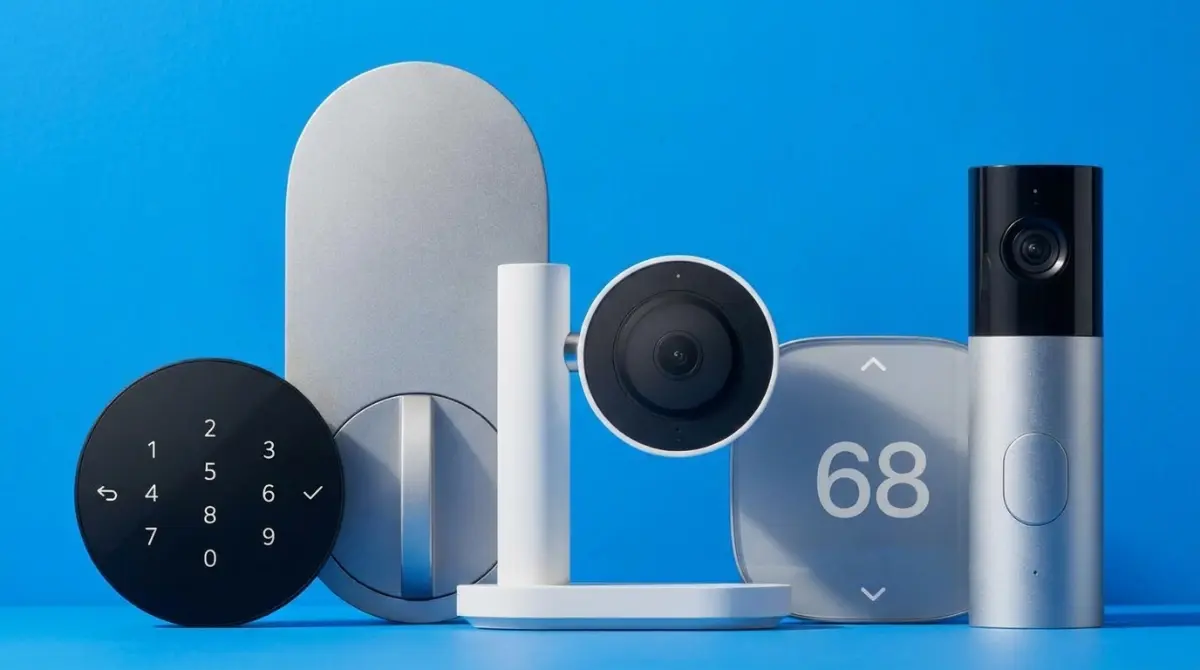
Apple expanded into dedicated home hardware through the Apple Home Collection, teaming with LG Electronics and Schneider Electric to debut smart deadbolt locks, dual-camera video doorbells, and intelligent thermostats running on the open Matter standard.
Goriola Ayankoya | 13 Oct. 2026, 9:37 AM · 10 min read

Smart home hardware has spent twelve years frustrating ordinary homeowners with incompatible connection standards and unreliable mobile software. Setting up an automated household meant buying different brand accessories, downloading separate smartphone apps, and creating half a dozen cloud accounts that constantly broke connections. When an internet router dropped offline, door locks stopped responding, video cameras failed to load, and household thermostats reset their temperature schedules. Apple decided to challenge that fragmented retail market directly. On Tuesday, October 13, 2026, the company announced the Apple Home Collection, a curated family of dedicated smart home hardware accessories developed in close engineering collaboration with LG Electronics and Schneider Electric. The lineup includes an ultra-wideband smart deadbolt lock, a dual-camera video doorbell, outdoor floodlight cameras, and an intelligent household thermostat. The hardware runs on open Matter protocols and local Aliro access standards, ensuring core security and entry functions operate smoothly even during total internet outages. The launch signals an ambitious expansion into physical household infrastructure, matching developments we followed when Apple developed dedicated home display software systems.
The strategic foundation of the Home Collection marks a departure from Apple historical hands-off approach to smart accessories. In previous years, Apple developed the software framework, leaving physical manufacturing entirely to third-party accessory makers like Eve, Belkin, and Philips Hue. While that arrangement kept Apple balance sheet clean, the resulting consumer experience was uneven, marred by inconsistent industrial design, confusing packaging, and spotty retail distribution. By co-designing the Home Collection with global industrial powerhouses LG and Schneider Electric, Apple establishes a unified hardware standard. Accessories carry a cohesive industrial visual language, feature one-tap setup through the iPhone, and rely on end-to-end encryption through the Apple Home app. Availability begins in December across the United States, Canada, and the United Kingdom, with select secondary accessories arriving in early 2027. How major technology platforms expand their physical product catalogs mirrors hardware strategies we analyzed when hardware manufacturers unveiled diverse home electronics.
Hands-Free Front Door Entry With Aliro and Ultra-Wideband
The centerpiece of the home access lineup is the LG Smart Deadbolt Lock, finished in Essence Graphite and Essence Silver. The lock replaces standard mechanical door deadbolts, combining an exterior numeric keypad with an interior motorized deadbolt turn mechanism. Rather than forcing homeowners to balance grocery bags while fishing for metal brass keys or tapping phone screens, the lock uses Apple home key technology powered by ultra-wideband radio chips.
The system tracks an authorized user spatial position as they walk up the garden path. Using localized radio triangulation between the deadbolt and an Apple Watch or iPhone in the user pocket, the door unlocks automatically the moment the person reaches the porch mat. To prevent accidental unlocks when someone walks past the front door inside the house, directional antennas detect whether the authorized device is approaching from the outside or moving within the foyer. The lock also supports numerical PIN codes, physical backup keys, and contactless NFC taps that function for hours after an iPhone battery has depleted. Crucially, the hardware supports the open Aliro digital key standard and executes access decisions locally on the device, meaning doors unlock instantly even if regional cellular networks or home internet providers suffer complete outages. Digital security access protocols across consumer devices were explored in our analysis of hardware tracking beacons and digital security keys.
Dual Camera Video Doorbells and Entryway Package Detection
Front door monitoring on the LG Video Doorbell Wired tackles a persistent headache found on older video doorbells: blind spots beneath the camera lens. Traditional video doorbells use a single wide-angle lens pointed straight ahead, capturing visitors faces but cutting off the front porch floor where delivery couriers drop cardboard boxes.
The LG Video Doorbell solves that blind spot by packing dual cameras into its slender vertical frame. The primary front-facing camera captures crisp 2.5K high-resolution video of approaching visitors, complete with low-light color night vision and two-way audio talk. Below the main lens sits a secondary downward-angled full HD camera dedicated entirely to monitoring the porch floor. When a courier drops a package, the system detects the parcel, switches views automatically, and sends an interactive notification displaying both the delivery person face and the package on the floor. When someone rings the doorbell, the chime sounds through connected HomePod speakers, plays through the new HomeView tabletop display, and pops up an interactive video card across Apple TV screens. The local neural engine identifies visitors using facial recognition linked to personal Apple Photos libraries, announcing friends by name rather than issuing generic motion alerts. Camera sensor innovations across mobile hardware match developments we detailed in our report on the Oppo Find X10 series camera hardware configuration.
Adaptive Heating and the Schneider Electric Thermostat
Climate control inside the Home Collection runs through the Schneider Home Smart Thermostat, priced at $199.95 in clean Silver and White finishes, supported by optional $39.95 wireless room temperature sensors. The thermostat connects directly into standard household HVAC systems, heat pumps, and electric heating boards, featuring a minimalist glass display that shows current temperatures and ambient humidity levels.
The real breakthrough in climate management is Adaptive Temperature, an automation system powered by on-device intelligence from the user iPhone. Traditional smart thermostats require users to build rigid, static temperature schedules that waste energy when schedules change. Adaptive Temperature monitors occupancy patterns dynamically. When the last resident leaves the house, the thermostat lowers heating or cooling automatically to conserve power. As family members commute home from work, the system calculates estimated arrival times based on iPhone location data, adjusting living room temperatures so the house feels comfortable the moment the front door unlocks. Room sensors placed in bedrooms prioritize comfort where people sleep, ignoring empty living spaces during overnight hours. Managing household energy consumption with smart software reflects broader utility efficiency trends we analyzed in our coverage of flexible power systems optimizing electrical demand.
The Apple HomeView Tabletop Command Center
To tie these accessories together, Apple introduced the HomeView, a $299 smart display that functions as a physical command center for modern residences. Available in tabletop and wall-mounted form factors, the device features an eight-inch touch panel that displays live camera feeds, controls lighting scenes, adjusts thermostats, and displays family calendars at a glance.
The HomeView acts as a dedicated Home Hub and Thread border router, maintaining communication with locks, lights, and sensors around the clock. When a resident approaches the screen, built-in presence sensors wake the display, showing contextual widgets tailored to the time of day: morning traffic and calendar briefs before work, recipe guides during dinner hours, and home security overviews before bed. An integrated speaker provides balanced sound for listening to news briefings or streaming music in kitchens. The tabletop version is available in silver, starlight, rose pink, and space gray, while wall-mounted units use specialized mounting plates co-developed with Schneider Electric. Hardware design choices across connected consumer devices match trends we evaluated when reviewing lightweight consumer hardware alternatives.
Complete Local Encryption and the Privacy Advantage
The strongest differentiator Apple brings to the smart home sector is its strict data privacy framework. Commercial home security cameras from competitors have suffered terrible privacy breaches over recent years, with corporate employees spying on user camera feeds, unencrypted video clips leaking onto public web servers, and companies handing over customer footage to law enforcement agencies without court warrants.
The Apple Home Collection operates under strict end-to-end encryption through HomeKit Secure Video. Video recordings captured by the LG outdoor cameras, floodlights, and doorbells are analyzed and encrypted locally on Home Hub hardware inside the house before uploading to iCloud storage. Neither Apple nor LG holds the cryptographic keys required to decrypt user video footage. Furthermore, all accessory communications use local Wi-Fi and Thread mesh networks, preventing accessories from phoning home to overseas corporate servers. For privacy-conscious homeowners who refused to install internet-connected cameras inside their living rooms, Apple cryptographic guarantees offer peace of mind that corporate rivals cannot match. Privacy and security standards across modern consumer platforms were examined in our review of Amazon Ring updating hardware encryption protections.
Challenging Amazon Ring and Google Nest Hegemony
Apple entry into dedicated home accessories represents an existential challenge to Amazon and Google, which have dominated the consumer smart home market through Ring, Blink, and Nest product lines. Amazon and Google captured massive market shares by selling hardware at near-cost prices, using doorbells and cameras to funnel households into monthly cloud subscription services and retail shopping pipelines.
Apple brings distinct structural advantages to the fight. Over one billion people carry iPhones in their pockets, providing an instant distribution channel that requires zero third-party bridge hardware. Furthermore, Apple does not charge separate camera fees; recording history is included directly inside existing iCloud Plus subscription tiers that millions of families already pay for to backup phone photos. By offering premium hardware with zero hidden subscription surcharges, Apple provides a cost-effective alternative for households tired of paying five dollars a month for every camera mounted on their roof gutters. The commercial rivalries shaping platform hardware were explored in our analysis of major corporate partnerships expanding platform tools.
The Industrial Partnership Model With LG and Schneider
Co-branding the Home Collection with LG Electronics and Schneider Electric is an operational victory for Apple hardware divisions. Designing exterior cameras that survive twenty-below blizzards, deadbolt motors that endure years of mechanical door slams, and thermostats that interface with complicated high-voltage wiring requires specialized manufacturing experience that consumer electronics companies lack.
By partnering with Schneider Electric, a global titan in electrical distribution and building infrastructure, Apple ensures its thermostats comply with municipal building codes and electrical safety certifications worldwide. LG brings world-class manufacturing scale in precision optics, motor assembly, and weatherized outdoor plastics. This division of labor allows Apple to focus on industrial styling, user software, and cryptographic security while leaving physical factory tooling to established industrial giants. Corporate collaboration models across complex hardware manufacturing reflect patterns we tracked when semiconductor manufacturers negotiated shared production facilities.
Installation Realities and the Professional Electrician Hurdle
While the deadbolt lock and wireless cameras can be installed by handy homeowners using basic household screwdrivers, deploying wired doorbells and smart thermostats introduces real installation friction. Many older homes across North America lack common C-wires required to power digital thermostats, while legacy doorbell chimes often run on low-voltage transformers that cannot support dual-camera video feeds.
If an ordinary customer buys a $199 thermostat only to discover that their furnace wiring lacks the proper voltage leads, the product turns into an expensive return box. To prevent consumer frustration, Apple is partnering with certified electrical networks like OnTech and regional HVAC technicians, offering white-glove professional installation services during the checkout process. Making professional installation accessible is mandatory if Apple wants to move beyond tech hobbyists and reach mainstream suburban households. The challenges of consumer hardware deployment were detailed in our review of complex hardware configurations across modern consumer devices.
The Long Term Horizon for the Connected Home
The debut of the Apple Home Collection proves that the consumer technology battleground has expanded past handheld smartphone screens into the physical architecture of our living spaces. For a decade, the smart home promised convenience but delivered technical headaches, fragmented apps, and privacy concerns.
By uniting unified hardware design, open Matter communication, local ultra-wideband access, and zero-knowledge encryption, Apple, LG, and Schneider Electric have constructed a blueprint for what a secure connected home should look like. If the hardware proves reliable across winter freezes and summer heatwaves, the Home Collection could establish itself as the premier hardware standard for the modern household, turning Apple Home from an overlooked iPhone icon into the foundational operating system of everyday life.
Read More on TechRobust:

Goriola Ayankoya
 LinkedIn
Goriola Ayankoya
Expertise:Consumer Hardware, Smartphone Trends, Gadget Reviews, Breaking Tech News, Mobile Ecosystems
Award:TechRobust Hardware Reporter of the Year 2025
Goriola is a Staff Writer and Reporter specializing in consumer technology, breaking tech news, and hands-on hardware analysis. He tracks fast-paced mobile developments, reviews modern gadgets, and unpacks product launches to give readers clear, practical insights into everyday consumer tech.