
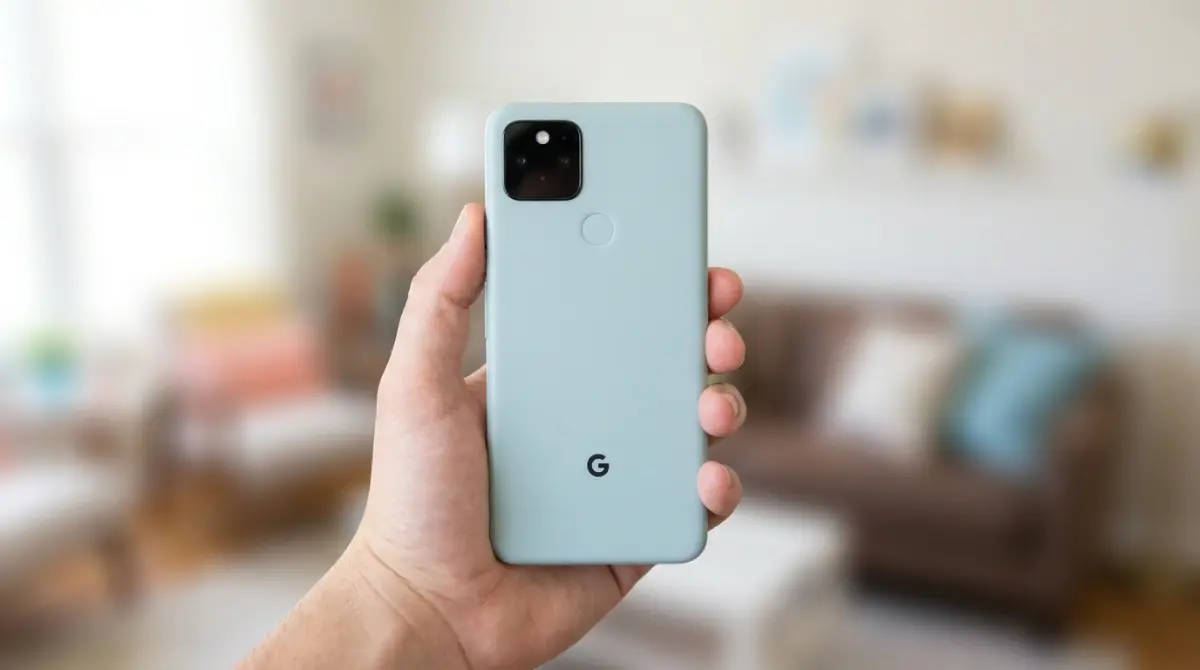


Google Pixel 5 Hardware Deserves More Praise
Released during intense global supply chain disruptions, the Google Pixel 5 retreated from premium flagship ambitions to deliver a highly practical, mid-tier device that surprisingly withstood the test of time.
Umar Abubakar | 3 Oct. 2026 · 5 min read

The consumer smartphone market frequently rewards bold hardware experiments and ignores pragmatic engineering. When technology companies launch a new device, buyers expect flashing promotional metrics, updated processors, and entirely new physical designs. Six years ago, Google found itself in a difficult position regarding its mobile hardware division. The prior generation had attempted to introduce air-gesture radar sensors and advanced facial recognition, only to suffer from terrible battery endurance and poor sales. Combined with severe global supply chain shortages caused by a worldwide pandemic, the company decided to retreat from the premium flagship competition entirely. The resulting device, the Pixel 5, received heavy criticism at launch for charging a high retail price while using mid-range internal components. Yet, looking back at the hardware today, this particular smartphone deserves heavy praise for delivering exactly what frustrated users actually needed.
To see why this hardware release matters in retrospect, we have to look at the failures of its immediate predecessor. The fourth-generation Google smartphone was a commercial disappointment because it prioritized novelty over basic utility. The battery capacity was far too small to support a high refresh rate display, meaning owners frequently needed to charge their phones by mid-afternoon. When engineers sat down to design the fifth generation, they stripped away the expensive radar chips and complex sensor arrays. They concentrated entirely on fixing the actual hardware complaints that buyers reported daily. This return to basic functionality is a design philosophy we frequently evaluate when reviewing modern hardware, much like our recent analysis of how Google built hidden pause points into the Pixel 11 operating system.
The most controversial decision the hardware team made involved the main processing unit. Instead of buying the most expensive premium silicon from Qualcomm, the designers selected a mid-tier Snapdragon 765G chip. At the time, technology reviewers and power users complained loudly. The retail price hovered around $699, which felt too expensive for a phone lacking top-tier processing power. But this particular processor choice provided a massive practical advantage: it sipped electricity rather than gulping it. By pairing a highly efficient processor with a much larger physical battery cell, the phone achieved outstanding longevity. Users could easily pull the device off a charger at dawn and still have plenty of power remaining at midnight. For a brand that had previously struggled to keep its phones powered through a standard workday, this change completely altered how owners interacted with the phone.
Beyond the internal processing power, the physical chassis design represented a brilliant compromise between durability and premium aesthetics. Most expensive smartphones rely on fragile glass back panels to support wireless charging. Glass shatters easily when dropped on concrete sidewalks. The Pixel 5 utilized a recycled aluminum enclosure coated in a thin layer of bio-resin plastic. This material choice gave the phone a grippy, textured feel that resisted fingerprints while remaining light in the hand. The engineering team cleverly cut a small physical hole in the aluminum frame beneath the resin layer to allow the wireless charging coils to function properly. Owners gained the structural strength of metal and the convenience of wireless charging without the constant fear of cracking a rear glass panel. We have tracked how hardware manufacturers balance material durability and consumer pricing in our recent coverage of Framework cutting component costs and issuing customer refunds.
The display implementation also deserves continued respect from hardware enthusiasts. The engineering team achieved perfectly symmetrical bezels around the entire organic light-emitting diode screen. Even today, many expensive devices feature a slightly thicker black border at the bottom edge of the display, commonly referred to as a chin. By using a flexible display panel and bending the display connector underneath the screen itself, Google created a visually pleasing, uniform border that felt highly refined. The screen size measured exactly six inches, hitting a physical sweet spot that allowed easy one-handed typing without feeling cramped during video playback. As modern phones continue to grow into massive tablets that barely fit inside denim pockets, the compact dimensions of this particular device remain highly desirable for everyday portability.
The camera system took a similarly practical approach. Rather than chasing massive megapixel counts or experimental optical zoom lenses, the designers stuck with a proven 12-megapixel main image sensor. They understood that their computational photography algorithms were already excellent. Instead of a telephoto lens, they added an ultrawide camera, which most consumers find much more useful for taking group photos and capturing indoor real estate shots. While the camera hardware lacked the extreme zoom capabilities of competing devices, it produced highly consistent, sharp, and well-exposed images every single time the user pressed the shutter button. The software handled the heavy lifting, proving that mature image processing can overcome older optical hardware.
Another highly welcomed hardware return was the physical fingerprint scanner mounted on the back of the phone. While the industry was rushing to place biometric readers directly underneath the front display glass, early optical under-display scanners were often slow and inaccurate. A rear-mounted capacitive scanner was incredibly fast, highly secure, and allowed users to unlock their device before they even pulled it completely out of their pockets. It was an older technology, but it worked flawlessly. Sometimes, the best hardware decision a company can make is choosing reliability over visual novelty. You can see similar practical design choices in our breakdown of how Apple executed the iPhone Duo split screen hardware.
Six years after its initial retail debut, the Pixel 5 stands as a highly successful hardware pivot. It did not try to compete on raw processing speed or artificial benchmarking scores. It was built to solve the problems ordinary people face when using a pocket computer. The device offered all-day battery life, a highly durable body, a great camera, and a compact size that felt wonderful to hold. By making the best out of a bad situation during a tough year, the hardware team created a phone that aged remarkably well. It laid the practical groundwork for the highly successful budget-friendly models that followed, proving that prioritizing everyday reliability is always a winning hardware strategy.
Read More on TechRobust:

Umar Abubakar
 LinkedIn
Umar Abubakar
Expertise:Editorial Leadership, Product Design (UI/UX), Digital Media Strategy, Technology Systems, Product Architecture
Award:TechRobust Visionary Leader of the Year 2025
Umar serves as Editor-In-Chief and CEO of TechRobust, combining editorial vision with senior product design expertise to shape how modern technology stories are built, packaged, and told. Overseeing all editorial verticals, he directs coverage across global and regional tech landscapes while applying deep design thinking to publication strategy and reader experience.