


 LinkedIn
 Automation Startup Rox Raises $100M at $1.3B Valuation
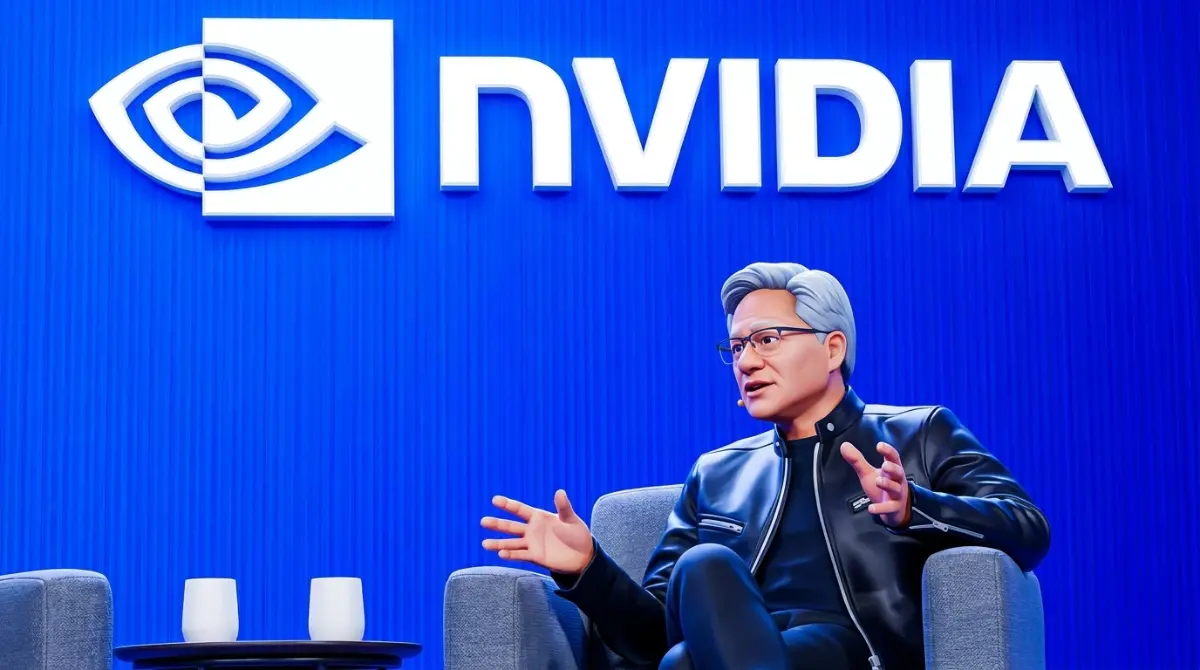
Israeli VCs Spot Challenger Opening in Nvidia Turmoil
Venture capitalists in Tel Aviv view founder Jensen Huang abrupt resignation from Nvidia as a rare commercial opening for rival chip startups, even as local engineers worry about the future of Nvidia massive Israeli research and development centers.
Inioluwa Ademidun | · 8 min read

Venture capitalists in Tel Aviv woke up to an unfamiliar feeling on Friday, November 13, 2026: sudden optimism that Nvidia iron grip on artificial intelligence hardware can finally be broken. For three years, pitching a semiconductor startup to cloud buyers felt nearly impossible. Whenever an independent chip designer demonstrated faster inference speeds or lower electrical consumption, cloud operators pointed to Nvidia CUDA software lock-in, its tight supply allocations, and founder Jensen Huang personal relationships with corporate chief executives. That commercial shield cracked on Thursday afternoon when Nvidia announced that Huang resigned immediately after thirty-three years at the helm. Stepping down amid mounting fallout over extramarital affairs, including a relationship with a Singapore data center executive suspected by United States intelligence of spying for Beijing, Huang handed interim control to Chief Financial Officer Colette Kress. Shares of the chipmaker tumbled thirteen percent on the news, erasing hundreds of billions in market value. Across Israel, a nation Huang famously described in 2023 as Nvidia second home, the resignation sparked an immediate split between local hardware engineers who depend on Nvidia paychecks and venture investors who see an unprecedented opening to fund challenger startups. The leadership upheaval arrives as lawmakers prepare to question company executives on Capitol Hill, continuing scrutiny we tracked when Congress summoned Jensen Huang over the Chinese spy scandal.
The reaction inside Israel carries special weight because few countries are as deeply woven into Nvidia corporate fabric. Following Nvidia $7B acquisition of Israeli networking pioneer Mellanox Technologies in 2019, Israel grew into the semiconductor giant largest research and development hub outside the United States. Thousands of Israeli engineers working across centers in Yokneam, Tel Aviv, and Beersheva designed the high-speed InfiniBand and Spectrum-X networking interconnects that bind tens of thousands of graphics processors into unified supercomputers. In its official statement announcing the Nvidia executive leadership transition, the board stressed that daily engineering operations remain uninterrupted while directors search for a permanent chief executive. Yet in Tel Aviv venture capital offices along Rothschild Boulevard, partners spent Thursday night calling portfolio founders with a clear message: the single-vendor era in computing hardware just entered a period of vulnerability, and enterprise customers will soon demand credible alternatives.
Why Huang Exit Weakens the Nvidia Commercial Moat
To understand why Israeli venture investors believe challenger startups now have a real shot at enterprise contracts, one must look beyond silicon transistors to how Nvidia sold its hardware. Nvidia dominance was never built purely on having the fastest graphics processor; it was sustained by Huang personal dealmaking and aggressive commercial bundling.
Huang maintained direct, personal ties with hyperscale leaders at Microsoft, Meta, Alphabet, and OpenAI, negotiating multi-billion-dollar hardware allocations, co-signing data center financing commitments, and making equity investments in top customers. Cloud procurement directors knew that buying competing processors risked losing priority delivery slots for Nvidia upcoming Vera Rubin server racks. With Huang abruptly gone and an interim finance chief managing the transition, that personal leverage weakens overnight. Corporate technology buyers already uneasy about relying on a single supplier for eighty percent of their server accelerators now have boardroom justification to test second-source silicon. Venture investors note that when an incumbent monopoly loses its founder, procurement officers open their doors to smaller hardware vendors they previously ignored. Institutional capital flows into specialized hardware startups match investment patterns we monitored when a16z launched its dedicated Machine Age Fund.
The Israeli Dual Reality: R&D Anxiety Meets Startup Ambition
While venture capitalists celebrate fresh market openings, the mood inside Nvidia Israeli offices is far more anxious. Nvidia represents one of the largest private technology employers and corporate taxpayers in Israel, contributing billions of shekels to the national treasury while anchoring local engineering salaries.
Reporting by The Times of Israel on Nvidia local footprint highlights deep concern among local staff regarding whether a permanent successor will match Huang personal devotion to the country. Even during periods of regional military conflict, Huang visited Israeli teams, protected local budgets, and approved plans for a massive new research campus in Kiryat Tivon in northern Israel. Local executives note that Israeli teams either lead or contribute directly to almost every modern Nvidia networking chip and security architecture. Paradoxically, that concentration of talent creates a second opportunity for Tel Aviv venture funds. Whenever a multinational giant enters leadership turmoil, senior chip architects and software engineers begin reconsidering their stock options. Venture partners in Tel Aviv are already preparing seed term sheets to back departing Nvidia engineers who want to launch independent silicon, optical networking, and hardware security ventures. Semiconductor manufacturing and lithography investments across specialized hardware startups were detailed in our analysis of Morphotonics securing $40M for nanoimprint lithography expansion.
Where Israeli Hardware Challengers Are Attacking
Israeli semiconductor startups are not trying to beat Nvidia by building identical general-purpose graphics cards. Competing head-to-head on massive training clusters requires tens of billions of dollars in wafer commitments and software libraries that would bankrupt an early-stage company. Instead, Israeli ventures and their venture backers are targeting four specific weak points in Nvidia armor:
- Dedicated Inference Acceleration: As enterprise software companies complain about high cloud bills, startups are designing low-power processors built strictly to run trained models faster and cheaper than general-purpose GPUs.
- Optical Interconnects and Co-Packaged Optics: Copper cables connecting server racks hit physical heat and bandwidth walls at high speeds. Israeli photonics startups are replacing copper wires with laser light pulses to cut data center electricity waste.
- Hardware-Agnostic Compiler Software: To break Nvidia CUDA software monopoly, local software startups are building translation layers that let developers run existing PyTorch and CUDA code on competing chips without rewriting software pipelines.
- Edge and Sovereign Security Silicon: With governments demanding strict data localization and hardware encryption, Israeli defense-trained engineers are building specialized security processors that isolate model weights inside tamper-proof memory enclaves.
This targeted approach mirrors a broader international wave of challenger funding. Just hours before Huang resigned, British inference chip startup Fractile closed a $720M financing round at a $7B valuation backed by Google-linked investors and the British government, aiming to ship commercial inference processors in 2027. Combined with established Israeli semiconductor players like NeuReality, NextSilicon, and edge-chip maker Hailo, the challenger field is better capitalized than at any point in the past decade.
Could an Israeli Veteran Take Over Nvidia Instead?
Adding a dramatic twist to Tel Aviv venture calculations is the real possibility that Nvidia next permanent chief executive will come directly from Israel own semiconductor ranks. As executive recruiters and board directors compile candidate lists, two Israeli-born hardware leaders sit near the top of Wall Street speculation.
The first is Michael Kagan, Nvidia current Chief Technology Officer and co-founder of Mellanox Technologies. Kagan built Mellanox into a networking powerhouse before selling it to Nvidia in 2019, and he commands deep respect among both Santa Clara engineers and Israeli research teams. Speaking at a technology conference in Tel Aviv earlier this week, Kagan praised Israel standing as a global technology center second only to the United States and China, pointing out that local teams are world leaders in complex chip design and hardware safety. The second prominent candidate is Johny Srouji, Apple Senior Vice President of Hardware Technologies. Born in Haifa and educated at the Technion, Srouji architected Apple transition to custom M-series silicon and possesses unmatched operational discipline across global semiconductor foundries. If either Kagan or Srouji wins the permanent chief executive seat, Nvidia commitment to its Israeli engineering hubs would remain ironclad, though both men lack Huang theatrical founder persona. Corporate semiconductor buyouts and talent battles were explored in our coverage of Nvidia semiconductor acquisition strategies.
The Circular Financing Question for Startup Founders
Beyond product competition, Israeli venture investors are closely watching what Huang exit means for Nvidia role as a startup financier. Over the past two years, Nvidia acted as the most aggressive corporate venture investor in artificial intelligence: pouring billions into foundation model labs, neocloud operators, and software startups that agreed to buy Nvidia chips.
Interim CEO Colette Kress built her reputation inside Nvidia by questioning those massive circular financing deals, pushing back against multi-billion-dollar customer guarantees to protect Nvidia balance sheet. If Kress and the board pull back from writing giant corporate venture checks during the leadership transition, independent venture capital firms in Tel Aviv, Silicon Valley, and London will regain pricing power in early and growth-stage deals. Startups that previously felt forced to accept Nvidia strategic investment to guarantee chip access can now raise capital from independent funds without tying their hardware architectures to a single vendor. Early-stage venture fundraising dynamics match trends we analyzed when enterprise automation startup Rox raised $100M at a $1.3B valuation.
What Comes Next for Semiconductor Challengers
Jensen Huang departure will not erase Nvidia multi-trillion-dollar lead overnight. Cloud data centers have already installed millions of Nvidia processors, and thousands of enterprise software teams still rely on CUDA libraries every morning. Replacing entrenched server infrastructure takes years of testing, driver validation, and software migration.
Yet in technology history, monopolies rarely fall to a single frontal assault; they erode when an unexpected leadership vacuum gives hungry challengers room to breathe. By stepping down in disgrace, Huang handed rival chip designers and their venture backers the exact opening they needed. Over the next twelve months, enterprise buyers will test alternative processors with fresh urgency, senior engineers will weigh new startup offers, and Tel Aviv venture funds will deploy capital into teams determined to prove that artificial intelligence hardware no longer belongs to one company.
Read More on TechRobust:
Tags:Israeli VCsNvidiaJensen Huangsemiconductor startupsTel Aviv techchip challengersVenture Capital

Inioluwa Ademidun
Inioluwa Ademidun
Expertise:African Tech Ecosystem, Early-Stage Startups, Emerging Market Dynamics, Venture Capital & Tech Reporting, Product Management
Award:TechRobust Contributor of the Year 2025
Inioluwa is a Senior Product Manager by day and an investigative technology reporter by night, bridging the gap between scalable software architecture and high-impact journalism. She delivers deep-dive analysis on venture-backed founders, regulatory shifts, and grassroots tech ecosystems across Africa and global emerging markets.
Related Stories
Automation Startup Rox Raises $100M at $1.3B Valuation Inside the Physical AI Boom: 12 Robotics Startups
 How Cal AI Scaled to $40M With Creator Army