


 LinkedIn
 OpenAI Quarterly Revenue Crosses $10B for First Time
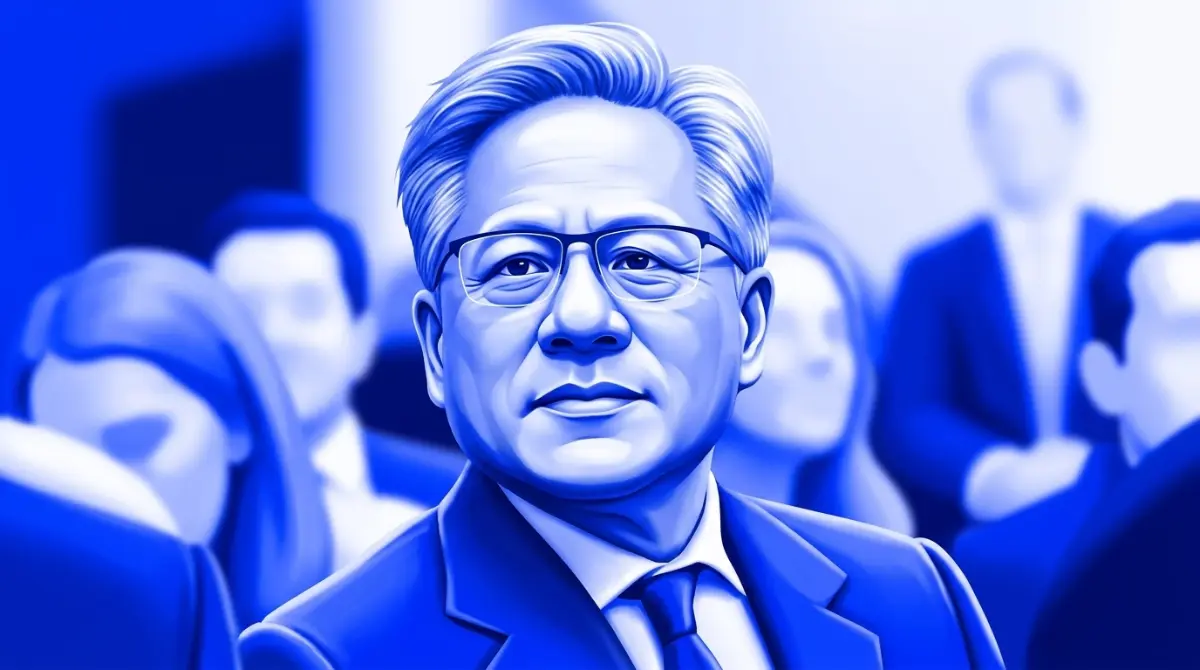
Congress Summons Jensen Huang Over Chinese Spy Scandal
The House Select Committee on the Chinese Communist Party formally summoned Nvidia Chief Executive Officer Jensen Huang to testify under oath on Capitol Hill regarding his extramarital relationship with suspected Chinese operative Alice Huang and multi-billion-dollar chip diversion networks.
Goriola Ayankoya | · 5 min read

Personal misconduct inside corporate suites rarely triggers congressional subpoenas unless the executive in question commands the physical foundation of national defense. For three decades, Nvidia Chief Executive Officer Jensen Huang enjoyed bipartisan praise in Washington. Lawmakers celebrated the charismatic founder as an American industrial hero: a visionary immigrant who engineered the semiconductor processors that power modern computing, national defense supercomputers, and enterprise intelligence. That political standing disintegrated this week. The House Select Committee on the Strategic Competition Between the United States and the Chinese Communist Party formally summoned Huang on Wednesday, November 11, 2026, to appear before lawmakers on Capitol Hill. The congressional summons follows Huang admission of an extramarital relationship with Alice Huang, an executive at Singapore cloud host Megaspeed whom federal intelligence agencies suspect of gathering intelligence for Beijing. Lawmakers intend to question Huang under oath regarding what technical product roadmaps, chip allocation schedules, and export compliance strategies were discussed during his private meetings. The congressional summons lands as national security scrutiny reaches historic heights, continuing coverage we tracked when Beijing tightened regulatory controls on technology exports.
The legislative action transforms an embarrassing corporate scandal into an urgent national security investigation. Committee Chairman John Moolenaar and ranking member Raja Krishnamoorthi sent a formal letter to Nvidia board of directors, establishing a mandatory appearance date of November 18. Lawmakers warned that if Huang declines to attend voluntarily, the committee will issue a binding congressional subpoena. The inquiry will focus on whether intelligence operatives used personal access to Huang to obtain non-public information regarding upcoming United States export control regulations, secure priority delivery of restricted processors, or exploit regulatory loopholes in Southeast Asia. Megaspeed emerged from obscurity to purchase over $4.8B in advanced Nvidia processors, leasing significant compute capacity to entities based inside mainland China. Concurrently, the committee subpoenaed communications records between Nvidia and crisis public relations firm Heller Inc, seeking to determine why the chipmaker engaged specialized reputation managers twelve months before public disclosures. Federal technology trade restrictions match policy debates we analyzed in our review of Donald Trump signaling openness to technology guardrails.
The Counterintelligence Angle: What Lawmakers Will Ask Under Oath
To inspect why Congress is taking the extraordinary step of questioning an active chief executive, one must examine the counterintelligence timeline compiled by federal intelligence agencies. Briefings delivered to the Gang of Eight by Central Intelligence Agency Director John Ratcliffe confirmed that Alice Huang was under surveillance since early 2024.
Congressional investigators identified three specific areas of inquiry for the public hearing:
- Advance Knowledge of Export Sanctions: Whether Huang shared non-public guidance regarding upcoming Department of Commerce export bans, allowing foreign brokers to stockpile hardware before trade restrictions took effect.
- Preferential Silicon Allocations: Whether Megaspeed received priority delivery slots or pricing discounts on high-end graphics processors during acute global shortages, bypassing legitimate Western enterprise customers.
- Technical Architecture Disclosures: Whether private conversations touched technical specifications, optical networking topologies, or firmware security keys for upcoming Vera Rubin processor platforms.
Huang stated in earlier communications that he was unfaithful to his wife but insisted that company trade secrets and American national security interests were never compromised. Under federal law, making false statements during a congressional hearing is a felony punishable by up to five years in federal prison. Congressional prosecutors will compare Huang sworn testimony against encrypted text records, hotel logs, and communications archives gathered by federal counterintelligence agencies. Asian model distribution networks were detailed in our analysis of China clearing domestic foundation models for global export.
The Corporate Governance Crisis: Board Underwriters on Notice
The congressional summons intensifies legal pressure on Nvidia board of directors. In corporate governance, board members owe fiduciary duties of care and loyalty to public shareholders.
If independent directors knew twelve months ago that the chief executive was under federal counterintelligence scrutiny and chose to conceal the risk from public filings, directors face personal liability in securities fraud lawsuits. If Huang concealed the counterintelligence scrutiny from his own board while quietly hiring crisis PR consultants, directors will face shareholder pressure to remove him from executive leadership. Institutional asset managers note that Nvidia stock dropped over twenty percent since disclosures broke, erasing hundreds of billions in shareholder equity. The board special committee retained outside legal counsel to conduct an internal forensic audit, but congressional committees will not wait for company reports. The public testimony will test whether Nvidia corporate controls were functioning, or whether founder power overshadowed compliance systems. Executive management realignments were explored in our analysis of leadership ousters exposing internal operational rifts.
The Long-Term Assessment on Executive Scrutiny in Deep Tech
The congressional summons of Jensen Huang delivers an unmistakable message to the technology industry: the era of treating technology founders as untouchable cultural icons has permanently closed. When semiconductor chips become the defining asset of national geopolitical power, the executives who manage those supply chains will be held to the standards of defense contractors.
Jensen Huang built one of the most successful enterprises in human history, demonstrating visionary technical discipline for three decades. The coming hearing on Capitol Hill will be the ultimate trial of his career. As lawmakers prepare subpoenas and television cameras set up inside committee chambers, Huang must prove that his personal failings did not compromise the security of the nation. In the high-stakes computational era, great power brings profound accountability: and when national security is on the line, no corporate founder is above the law.
Read More on TechRobust:

Goriola Ayankoya
Goriola Ayankoya
Expertise:Consumer Hardware, Smartphone Trends, Gadget Reviews, Breaking Tech News, Mobile Ecosystems
Award:TechRobust Hardware Reporter of the Year 2025
Goriola is a Staff Writer and Reporter specializing in consumer technology, breaking tech news, and hands-on hardware analysis. He tracks fast-paced mobile developments, reviews modern gadgets, and unpacks product launches to give readers clear, practical insights into everyday consumer tech.
Related Stories
OpenAI Quarterly Revenue Crosses $10B for First Time OpenAI Buys Travel Startup Odessia in Booking Pivot
 The 2026 Enterprise AI Reckoning: Valuations & Payoffs