


 LinkedIn
 The 2026 Enterprise AI Reckoning: Valuations & Payoffs
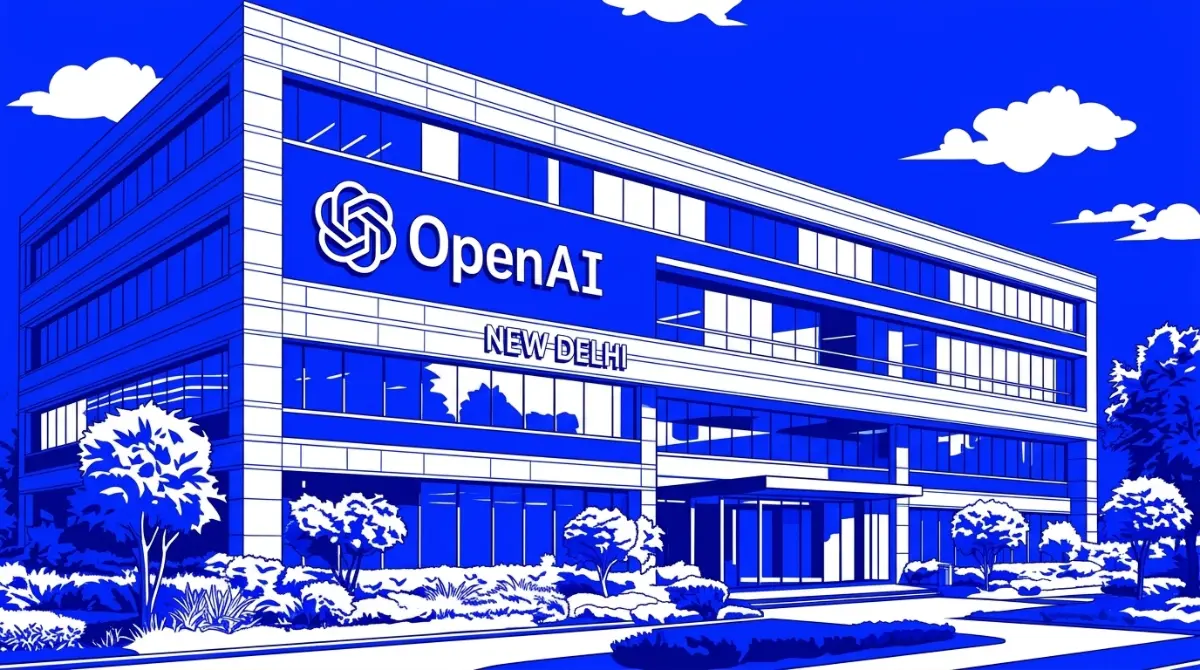
OpenAI Buys Travel Startup Odessia in Booking Pivot
OpenAI acquired venture-backed travel startup Odessia on undisclosed terms, bringing Sonder co-founder Francis Davidson and his engineering team in-house to convert conversational chatbot suggestions into real-world flight, lodging, and ticket reservations.
Umar Thariwat | · 9 min read

Recommending a vacation destination inside a chat window has always been simple for modern language models. A traveler types a budget, asks for sunny beaches or historic mountain towns, and watches a conversational assistant produce lists of boutique hotels, seaside bistros, and scenic hiking trails. The utility stops the second the traveler tries to pay. When a user asks a chatbot to reserve a hotel room or purchase an airline seat, the software stumbles: printing outbound affiliate links to third-party travel aggregators and forcing the user to re-enter passport numbers, dates, and credit card details across separate browser tabs. Recommending trips is cheap, but executing physical transactions requires regulatory licenses, airline ticketing access, and real-time inventory settlement. Artificial intelligence giant OpenAI moved to bridge that transaction divide on Tuesday, November 10, 2026. The San Francisco laboratory confirmed the outright acquisition of Odessia, an early-stage travel reservation startup founded by former Sonder chief executive Francis Davidson. The purchase brings Davidson and his nine-person engineering squad directly into OpenAI commercial product division. Odessia ceased independent operations immediately following the deal, redirecting its booking software to support OpenAI long-term commercial assistant initiatives. The strategic buyout arrives as foundational model creators search for direct transactional commerce revenues, continuing corporate software acquisitions we monitored when tech startups executed a heavy wave of smaller corporate buyouts.
The acquisition marks an aggressive commercial shift for Sam Altman and his executive leadership circle. While OpenAI previously treated travel as an informational prompt category: directing users to external partner plugins operated by Expedia, Booking.com, and Kayak: owning Odessia allows the company to handle reservation execution directly. Founded in late 2025 following the restructuring of hospitality operator Sonder, Odessia operated with an accredited license from the International Air Transport Association, giving the company direct access to global airline distribution networks. Backed by a $6M seed investment led by Sequoia Capital, Odessia processed over $60M in gross travel bookings during a summer testing period, proving that travelers will trust automated assistants to select flights and charge credit cards when pricing is transparent. By absorbing Odessia technology and operational licensing assets, OpenAI is positioning ChatGPT to evolve from a passive research tool into a full-service digital concierge. The deal signals growing competition with established travel booking giants, matching corporate expansion patterns we tracked when enterprise software makers moved to buy specialized engineering teams.
The Francis Davidson Arc: From Sonder Real Estate to Agent Code
To inspect why OpenAI targeted Odessia, one must examine the career of founder Francis Davidson. In 2014, while an undergraduate student, Davidson co-founded Sonder, a hospitality venture that leased urban apartment buildings, furnished rooms with contemporary designs, and rented units to travelers via mobile applications.
Sonder expanded rapidly during the era of low central bank interest rates, raising hundreds of millions of dollars from venture investors and completing a public listing that valued the enterprise at over $1B. The capital-heavy model struggled when commercial real estate leases adjusted: long-term master lease obligations collided with fluctuating travel occupancy, forcing Sonder into severe financial restructuring in late 2025 before third-party brand operators acquired its physical assets. Davidson emerged from that painful corporate restructuring with a revised philosophy. When launching Odessia, he rejected physical real estate leases, heavy warehouse inventories, and large customer service payrolls. He designed Odessia as a pure software operation: using autonomous reasoning models to monitor daily flight price fluctuations, evaluate hotel reviews, and resolve booking cancellations automatically. Davidson noted on professional networks that building Odessia required rethinking travel architecture around autonomous execution rather than human call centers. For OpenAI, recruiting a founder who paired ten years of real-world hospitality relationships with modern agent orchestration provided instant domain credibility. Specialized hospitality automation was explored in our analysis of Dextr AI securing seed capital to automate hotel operations.
The IATA Certification Moat: Moving Past Affiliate Links
The primary structural asset OpenAI secured through the Odessia transaction is not conversational code; it is regulatory standing. Building a software tool that generates travel suggestions is an afternoon project for a junior developer, but booking a commercial airline ticket requires clearing strict industry hurdles.
In global aviation, airline ticket inventory is managed through centralized Global Distribution Systems (GDS) like Amadeus and Sabre. To issue official electronic airline tickets, process passenger seat selections, and handle baggage fees without redirecting buyers to third-party travel portals, a company must hold formal accreditation from the International Air Transport Association. Securing IATA licensing requires posting multi-million-dollar financial bond reserves, undergoing anti-fraud audits, and proving direct compliance with bank card clearing regulations. Most consumer startups avoid these requirements, choosing instead to display affiliate links from Expedia or Skyscanner and collecting modest two percent referral kickbacks. Odessia took the difficult, expensive path: securing full IATA licensing and building direct ticketing rails. By purchasing the business, OpenAI inherits that settlement architecture. When a user tells an assistant to reserve a direct morning flight from New York to London, the software can execute the payment, issue the electronic ticket number, and deliver the boarding barcode directly inside the conversation. Owning the transaction conduit converts OpenAI from an advertising referral board into an authorized merchant of record. Automated transactional commerce was detailed in our review of PayPal lifting profit goals on checkout automation gains.
Comparing AI Travel Assistants and Booking Engines
| Platform Solution | Corporate Parent | Ticketing Authority | Commercial Execution Model | User Monetization Strategy |
|---|---|---|---|---|
| Odessia (Acquired) | OpenAI (Nov 2026) | Accredited IATA agency | Direct on-platform card settlement | Integrated inside ChatGPT accounts |
| Layla Assistant | Expedia Group | Expedia partner inventory | In-app conversational booking | Merchant commission on hotel/air |
| Booking.com AI Trip | Booking Holdings | Direct OTA integration | Redirects to checkout forms | Standard lodging agency commission |
| Google Travel Gemini | Alphabet (Google) | Aggregator search index | Handoff to airline & hotel sites | Pay-per-click travel advertising bids |
| Airbnb AI Concierge | Airbnb Inc | Proprietary host inventory | Direct platform reservation billing | Guest and host platform service fees |
The comparative data illustrates why the travel industry is watching OpenAI moves with trepidation. Online travel agencies like Expedia and Booking Holdings spend billions of dollars annually purchasing search advertising keywords on Google. If travelers begin planning, comparing, and booking complete vacations directly inside conversational assistants, traditional travel websites lose their primary customer acquisition funnel. While Google Gemini remains tied to an advertising business model that requires sending users to external airline portals to preserve search ad clicks, OpenAI has no legacy advertising business to protect. OpenAI can monetize travel by collecting standard merchant commissions, charging payment settlement fees, or bundling priority reservation services into paid monthly subscriptions. Software business transformations across major tech players match developments we monitored when Apple targeted enterprise computing expenses with custom hardware.
The Partner Conflict: Competing With Booking and Expedia
The acquisition of Odessia creates immediate commercial tension between OpenAI and its existing corporate partners. Over the past twenty-four months, OpenAI signed high-profile enterprise agreements with major travel corporations.
Expedia, Booking.com, and Kayak built custom ChatGPT applications and licensed OpenAI foundation models to power their own internal customer service bots. These corporations shared data with OpenAI under the assumption that the research laboratory would remain a neutral infrastructure supplier. By acquiring a licensed travel agency and preparing to process direct reservations, OpenAI is stepping into direct competition with its own paying enterprise customers. A senior executive at a European travel distributor noted that when a supplier buys a customer direct competitor, commercial trust fractures. Travel executives worry that OpenAI will prioritize its own internal booking engine when users submit generic vacation queries, relegating third-party travel plugins to secondary positions. If travel corporations conclude that OpenAI is using partner prompt telemetry to build competing commercial services, enterprise clients may accelerate transitions to alternative foundation models from Anthropic or open-source weights from Meta. Corporate partnerships and platform competition match themes we analyzed when Nvidia invested $3B into Meta to secure hardware infrastructure.
The Financial Transition: Moving Beyond Token Subscriptions
The underlying business driver accelerating the Odessia purchase sits on OpenAI financial ledger. While the company annualized revenue run rate reached impressive heights through ChatGPT Plus subscriptions and developer API token billing, selling text tokens carries high server costs.
Running graphics processors to generate paragraphs of text produces thin gross profit margins once cloud electrical fees and hardware depreciation charges are deducted. Digital commerce produces superior economic returns. In consumer travel, global gross bookings exceed $1.5T annually. Online travel agencies routinely capture margins between ten and fifteen percent on hotel reservations and three to five percent on airline tickets. If ChatGPT captures even a fractional share of global corporate and leisure travel bookings, the resulting interchange and commission fees would generate billions of dollars in high-margin cash flow. That transaction revenue does not require training larger, more expensive foundation models; it simply monetizes the conversational interactions users are already conducting on the platform every day. Diversifying income streams away from pure compute token sales is mandatory as OpenAI prepares for potential public equity offerings. Corporate revenue balance sheets were explored in our analysis of OpenAI adjusting private valuation targets during financing rounds.
The Autonomous Agent Horizon: Managing Real-World Travel Friction
While the economic prize is significant, executing autonomous travel reservations involves unpredictable operational friction. Planning a vacation on a computer screen is pleasant; dealing with real-world travel disruptions is an operational trial.
Flights encounter mechanical delays, winter blizzards cancel airport connections, and hotels overbook guest rooms during holiday weekends. In traditional travel agencies, human customer support specialists spend hours on telephone hold lines negotiating re-bookings and securing hotel vouchers. If an automated assistant books a flight that gets canceled, the user will not accept a generic error message; they expect the assistant to resolve the emergency instantly. Francis Davidson and his engineering team focused Odessia software on post-booking automation: building agents that monitor flight radar feeds, anticipate missed connections before planes land, and initiate automated re-ticketing via airline APIs. OpenAI must prove that its reasoning models can handle customer disputes, credit card refunds, and airline re-accommodations without stranding travelers in foreign airports. Consumer protections and software reliability match issues we tracked when Chariot raised capital to eliminate hidden consumer fees.
The Long-Term Assessment on Autonomous Travel Commerce
OpenAI acquisition of Odessia marks a defining moment in the evolution of consumer computing: the transition from software that talks to software that acts. For three years, the tech industry marveled at models that could write essays, generate images, and pass academic exams.
That novelty phase has concluded. The next era of technology value belongs to autonomous agents that execute commercial transactions in the physical world. By absorbing Francis Davidson, his engineering team, and Odessia IATA travel licensing assets, Sam Altman has signaled that OpenAI will not remain confined to an informational chat box. The road ahead will require navigating complex regulatory compliance, soothing irritated corporate travel partners, and proving that automated agents can survive the messy realities of delayed flights and lost hotel reservations. If OpenAI executes on this transaction roadmap, the company will have built something far more valuable than a popular digital assistant: it will have constructed the commercial operating system for how human beings navigate, explore, and experience the planet.
Read More on TechRobust:

Umar Thariwat
Umar Thariwat
Expertise:Tech News Reporting, Tech Business Analysis, Economic Foundations, Market Trends, Digital Economy
Award:Rising Voice of the Year 2025
Thariwat is a Staff Writer and Reporter covering tech news and enterprise trends at TechRobust. Blending daily reporting with her ongoing academic background in economics, she analyzes earnings, digital market, and the commercial strategies powering the global tech sector.
Related Stories
The 2026 Enterprise AI Reckoning: Valuations & Payoffs Anthropic Sets $70-$78 IPO Price for $1.4T Valuation
 Short Seller Flagged Nvidia CEO China Ties in May