


 LinkedIn
 Tesla to End Cybertruck Output and Refund Deposits
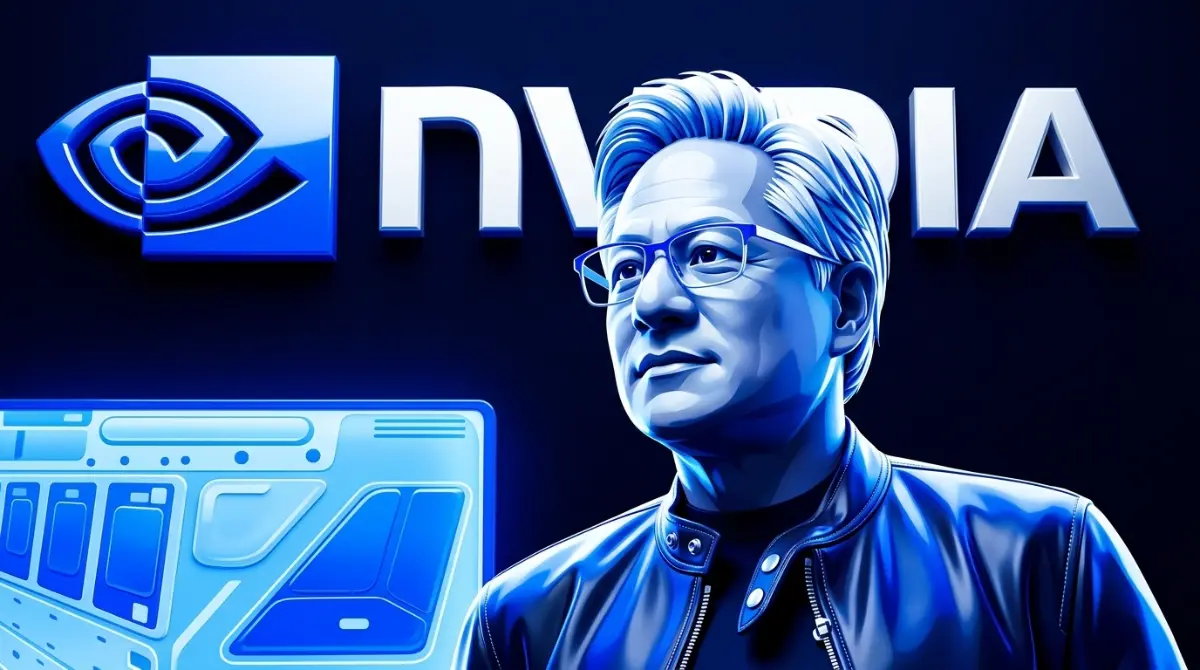
Short Seller Flagged Nvidia CEO China Ties in May
Activist firm Culper Research warned investors about undisclosed connections between Nvidia chief Jensen Huang and Singapore-based Megaspeed six months before federal intelligence scrutiny broke into public view, as shareholders file fraud lawsuits over concealed export vulnerabilities.
Umar Abubakar | · 8 min read

Financial short sellers are routinely dismissed by corporate boardrooms as destructive market cynics who spread panic for personal profit. When an activist hedge fund publishes an investigative dossier questioning corporate accounting or supplier arrangements, corporate public relations desks respond by attacking the messenger, reassuring shareholders that operations are pristine. That predictable corporate defense collapsed this week. Long before Nvidia board of directors opened an independent inquiry into founder and Chief Executive Officer Jensen Huang personal ties with suspected Chinese intelligence operative Alice Huang, the paper trail had been mapped by short seller Culper Research. In an investigative dossier published on May 21, 2026, Culper revealed that it had taken a short position against Nvidia, warning that the chipmaker was using opaque distributor conduits across Southeast Asia to bypass United States export controls. The report detailed transactions connecting Jensen Huang to Singapore data center host Megaspeed and affiliated intermediary Apex, asserting that capital linked to Chinese corporate giants was flowing into Nvidia hardware clusters. The early warning lands as the scandal escalates into federal courtrooms, continuing corporate governance coverage we tracked when Nvidia board opened an independent probe into Jensen Huang.
The rediscovery of the May 2026 short seller report delivers an uncomfortable reality check to institutional asset managers. While mainstream Wall Street brokerages spent the summer pushing price targets toward $200 per share, Culper investigators documented that Nvidia reported revenue depended on fragile third-party distributors in jurisdictions bordering mainland China. The report did not reveal that Jensen Huang was conducting an extramarital affair with Megaspeed executive Alice Huang (Huang Le), nor did it prove she was recruited by China Ministry of State Security. What the dossier proved was financial and physical diversion: showing that billions of dollars in advanced graphics processors shipped to Singapore and Malaysia were being accessed by organizations headquartered inside Beijing and Shenzhen. Nvidia dismissed Culper claims in May as self-serving market manipulation. Six months later, with Jensen Huang admitting to marital infidelity, federal intelligence directors briefing congressional committees, and shareholders filing class-action fraud lawsuits in San Jose, Culper warnings look prophetic. The corporate fallout arrives as semiconductor suppliers navigate strict trade controls, matching regulatory developments we analyzed when Beijing tightened regulatory controls on technology exports.
The May 2026 Dossier: Mapping the Megaspeed Conduit
To inspect why Culper Research targeted Nvidia six months ago, one must examine the corporate structure of Megaspeed. In late 2022, the United States Department of Commerce Bureau of Industry and Security introduced export regulations prohibiting foundries from selling advanced processors to Chinese military and commercial laboratories without federal licenses.
Nvidia answered those export curbs by designing lower-specification chips for China, while expanding shipments of its top-tier processors to neutral third-party hubs in Singapore, Malaysia, and the United Arab Emirates. Culper Research began tracking trade customs manifests and corporate registries in Southeast Asia, uncovering that Megaspeed had emerged from nowhere to become one of Nvidia largest buyers globally. The short seller documented that Megaspeed was spun out of a Chinese digital gaming venture in 2023, yet managed to secure over $4.8B in advanced Nvidia hardware allocations during global silicon shortages. Culper tracked shipments involving hardware assembly partners Aivres and Giga Computing, asserting that Megaspeed was operating as a computing proxy: leasing processor clusters to Chinese domestic developers through remote cloud APIs. By renting processing time remotely, Chinese clients accessed computational power without requiring physical chip deliveries to mainland soil. Trade conduits across Asian computing markets match patterns we followed when China cleared domestic foundation models for global export.
The Shareholder Lawsuit: San Jose Federal Court Filing
The rediscovery of the short seller report has become central evidence in a proposed securities fraud class-action lawsuit filed in United States District Court for the Northern District of California on Monday evening, November 9, 2026. Representing institutional and retail shareholders, litigation firm Levi & Korsinsky accused Nvidia and Jensen Huang of defrauding public investors.
The legal complaint alleges that Huang and senior executives concealed material operational risks from public disclosure statements:
- Failure to Disclose Compromising Ties: Concealing that the chief executive maintained a close relationship with an executive at Megaspeed who was under federal counterintelligence surveillance.
- Misrepresenting Supply Chain Integrity: Assuring public investors that export control compliance was pristine while knowing that multi-billion-dollar shipments to Southeast Asian buyers faced imminent regulatory crackdowns.
- Artificial Revenue Inflation: Booking billions in hardware sales to intermediary entities that carried severe counterparty and geopolitical default risks.
The complaint highlights that Nvidia stock dropped 4.27% on Monday to close at $178.67 on massive trading volume of 462.6 million shares, pulling the stock down more than twenty-five percent from its October all-time high of $239.24. The lawsuit asserts that shareholders suffered tens of billions of dollars in equity losses when the undisclosed truth reached public markets. Verifying private share ownership and corporate compliance was explored in our analysis of regulators auditing private corporate share transactions.
Comparing Semiconductor Short Seller Reports and Outcomes
| Short Seller Firm | Targeted Semiconductor Firm | Publication Date | Primary Investigative Allegation | Subsequent Official Validation |
|---|---|---|---|---|
| Culper Research | Nvidia Corporation (NVDA) | May 21, 2026 | Opaque China proxy conduit via Megaspeed | Board probe opened; CEO admitted affair Nov 2026 |
| Hindenburg Research | Super Micro Computer (SMCI) | August 2024 | Accounting manipulation & export evasion | DOJ investigation & auditor resignation |
| Muddy Waters Research | InnoLight Technology | October 2023 | Inflated transceiver margins & round-tripping | Regulatory inquiries in Asian markets |
| Wolfpack Research | Canaan Inc (CAN) | February 2021 | Undisclosed related-party mining sales | Share price collapsed 80%+ post-report |
| Viceroy Research | Hexagon AB (Sensor Tech) | July 2023 | Concealed Russian and Chinese defense sales | Corporate governance review initiated |
The comparative data illustrates why activist short seller research carries weight in technology hardware. Because high-end semiconductor supply chains are global, verifying customer identities requires boots-on-the-ground investigative reporting that traditional equity analysts at investment banks never conduct. Sell-side analysts at Goldman Sachs or Morgan Stanley rely on management conference calls, accepting company shipment disclosures on faith. Activist short sellers inspect shipping manifests, review corporate registry filings, and interview local logistics contractors. When a short seller documents abnormal shipments to intermediate shell corporations, institutional investors who ignore the data do so at their own peril. Financial balance sheet shifts and corporate equity contracts match moves we documented when AMD absorbed charges on customer equity contracts.
The Washington Briefing: Ratcliffe, Clayton, and November 18
The geopolitical dimension of the scandal escalated on Capitol Hill on Monday afternoon. Central Intelligence Agency Director John Ratcliffe and Director of National Intelligence Jay Clayton conducted an emergency closed-door briefing for senior congressional leaders, including members of the Gang of Eight.
Intelligence officials outlined the counterintelligence timeline: revealing that federal agencies began tracking Alice Huang in early 2024. Lawmakers were briefed on classified intercepts showing that Chinese Ministry of State Security handlers tasked Alice Huang with cultivating high-level executive relationships across American hardware and software companies. President Donald Trump confirmed on Monday that the Federal Bureau of Investigation is conducting a full national security inquiry. Meanwhile, Michigan Representative John Moolenaar, chairman of the House Select Committee on the Strategic Competition Between the United States and the Chinese Communist Party, formally scheduled a mandatory congressional briefing with Jensen Huang for November 18. Lawmakers intend to question Huang under oath regarding what technical product roadmaps, chip allocation schedules, and export compliance strategies were discussed during his private meetings. If congressional testimony reveals that Huang shared confidential technical disclosures, federal prosecutors could open criminal export control investigations. Geopolitical rivalries across computing technology were examined in our report detailing Donald Trump signaling openness to technology guardrails.
The Governance Dilemma: Can Jensen Huang Survive?
The central question confronting Nvidia board of directors is whether Jensen Huang can remain at the helm of a $3.5T enterprise while defending against federal counterintelligence inquiries and shareholder fraud lawsuits. In Silicon Valley history, visionary founders who built corporate monopolies rarely yield power willingly.
Huang is not simply a hired chief executive; he is the co-founder who created modern computer graphics, pioneered CUDA software, and engineered the hardware that powers modern artificial intelligence. His personal vision and relentless work ethic turned Nvidia into a foundational pillar of American economic and military power. If the board removes Huang, the executive disruption could delay hardware release roadmaps for the upcoming Vera Rubin processor family, damaging customer relationships with Microsoft, Meta, and Amazon. If the board retains Huang, Nvidia faces perpetual regulatory scrutiny: with federal agencies auditing every customer contract, foreign allies questioning chip integrity, and congressional committees issuing subpoenas. The board independent committee must determine whether corporate compliance systems failed, or whether the founder personal actions compromised the national security of the United States. Corporate executive transitions and operational rifts were analyzed in our review of executive ousters exposing internal operational rifts.
The Long-Term Outlook for Semiconductor Supply Chain Diligence
Culper Research May 2026 report and its subsequent validation deliver an undeniable conclusion to institutional investors: in the era of strategic technology rivalries, supply chain compliance is an existential corporate metric. For three years, Wall Street rewarded semiconductor companies that beat quarterly revenue expectations, asking zero questions about where billions in hardware actually ended up.
The illusion that American chipmakers could sell processors to third-party brokers in Singapore without those chips flowing into China has been shattered. The scandal will force the Department of Commerce to implement strict know-your-customer regulations: requiring semiconductor fabricators to monitor the physical geolocation of every processor die throughout its operational life. For Nvidia, the coming weeks will be the most demanding trial in its thirty-three-year history. Jensen Huang must prove that while he failed in his personal life, he did not fail his company, his shareholders, or his country. The lesson for the broader technology industry is permanent: when national security is on the line, the truth will eventually surface: and the short sellers who read the shipping manifests will always have the last word.
Read More on TechRobust:

Umar Abubakar
Umar Abubakar
Expertise:Editorial Leadership, Product Design (UI/UX), Digital Media Strategy, Technology Systems, Product Architecture
Award:TechRobust Visionary Leader of the Year 2025
Umar serves as Editor-In-Chief of TechRobust, combining editorial vision with senior product design expertise to shape how modern technology stories are built, packaged, and told. Overseeing all editorial verticals, he directs coverage across global and regional tech industry while applying deep design thinking to publication strategy and reader experience.
Related Stories
Tesla to End Cybertruck Output and Refund Deposits Nvidia Board Probes CEO Jensen Huang Over Chinese Spy Ties
 New York Times in Talks to Buy Letterboxd for $330M