


 LinkedIn
 Nvidia Board Probes CEO Jensen Huang Over Chinese Spy Ties
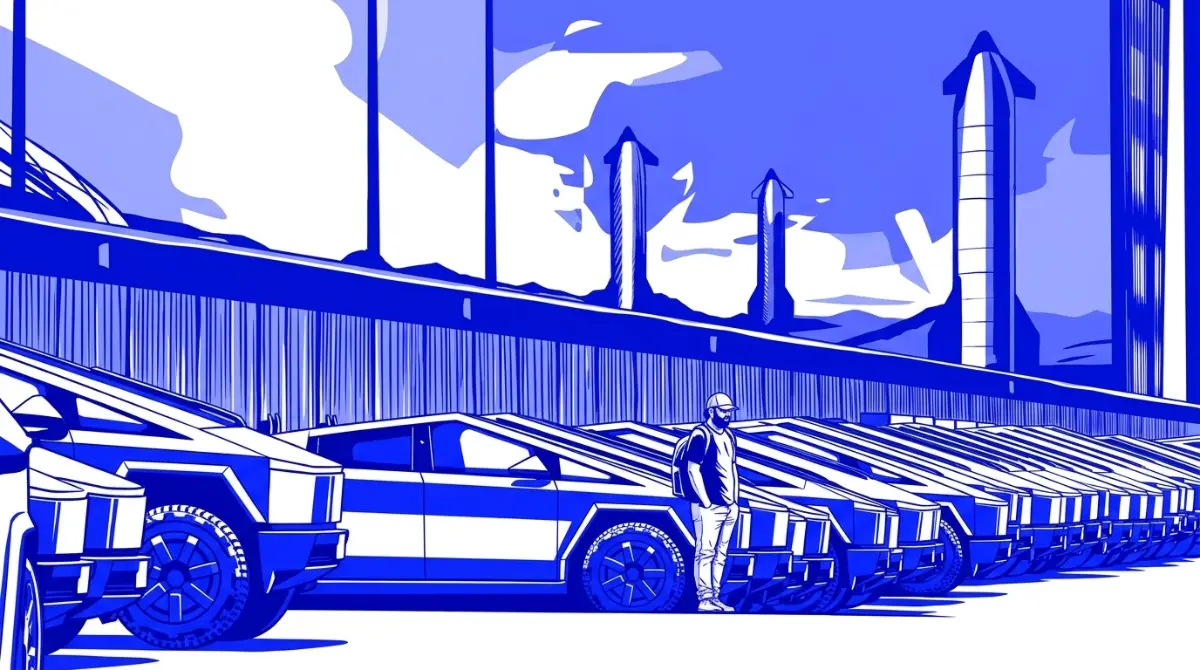
Tesla to End Cybertruck Output and Refund Deposits
Elon Musk confirmed Tesla will dismantle its Cybertruck production line in eight months, returning pre-order deposits to thousands of reservation holders while redirecting factory floor capacity to mass produce its driverless Cybercab robotaxi.
Umar Thariwat | · 9 min read

The most polarizing consumer vehicle of the electric vehicle era is heading for an early grave. When Tesla Chief Executive Officer Elon Musk walked onto a Los Angeles stage in November 2019 to shatter armored glass windows with a steel ball, the angular stainless-steel Cybertruck was promised as a revolutionary electric pickup that would dominate American roadways. Over one million hopeful customers paid $100 and $250 reservation deposits, picturing an indestructible utility truck that would out-tow traditional gas trucks at an entry price of $39,900. Seven years later, that manufacturing promise has hit a brick wall. Writing on social platform X on Sunday, November 8, 2026, Musk announced that Tesla will shut down and dismantle its Cybertruck assembly line in about eight months. Admitting that outstanding customer orders exceed what the factory can build before the line closes, Musk stated that Tesla will refund deposits to thousands of reservation holders. Musk defended the decision against reports that the pickup was killed due to financial losses, claiming the truck achieved positive margins but arguing that its extreme manufacturing complexity is outweighed by the commercial value of mass-producing the driverless Cybercab robotaxi instead. The dramatic cancellation marks a monumental strategic pivot for the electric automaker, continuing corporate realignments we followed when Tesla rolled out commercial cybercab rides for public testing.
The decision to terminate Cybertruck manufacturing after less than three years of volume deliveries delivers a harsh dose of industrial reality to Tesla shareholders. While Musk added an extra factory shift at Gigafactory Texas to assemble as many remaining orders as possible before the summer shutdown, total lifetime production will fall short of initial forecasts that once promised 250,000 trucks annually. Industry estimates suggest Tesla delivered fewer than 65,000 total Cybertrucks since commercial customer handoffs began in late 2023. The vehicle suffered from persistent manufacturing bottlenecks: handling ultra-hard stainless-steel body panels that broke metal stamping presses, calibrating steer-by-wire electrical harnesses, and managing five separate safety recalls within an eighteen-month window. By clearing out the massive Cybertruck assembly footprint in Austin, Tesla is freeing up floor space, high-voltage battery cell lines, and specialized assembly workers to support the Cybercab: a dedicated two-passenger autonomous vehicle without a steering wheel or pedals that Musk believes will anchor a multi-trillion-dollar ride-hailing monopoly. The factory conversion lands as autonomous vehicle fleets face intense regulatory reviews, matching safety oversight investigations we tracked when federal regulators probed Tesla Cybercab deployment safety rules.
The Manufacturing Nightmare: When Stainless Steel Fails Mass Production
To inspect why Tesla chose to kill the Cybertruck rather than re-engineer it, one must examine the metallurgical choices that doomed the pickup from inception. Traditional automobile manufacturers build vehicle bodies using stamped aluminum alloys or mild steel, materials that deform predictably in mechanical presses and absorb paint coats easily.
Musk insisted on building the Cybertruck out of an unpainted, 30X cold-rolled stainless-steel alloy: the identical metal skin used on SpaceX Starship orbital rockets. That design choice created endless factory headaches. Stainless steel is stiff and unforgiving; stamping lines could not bend panels without spring-back variations that produced uneven gaps along doors and tailgates. Because the body had no protective exterior paint, fingerprints, road salt, and bird droppings caused visible surface corrosion, prompting owner complaints across online forums. The vehicle introduced an advanced 48-volt electrical architecture and steer-by-wire mechanical linkages that eliminated traditional steering columns. While those electronic systems represented genuine engineering advances, assembling them onto an ultra-heavy, six-thousand-pound chassis resulted in frequent mechanical failures. The National Highway Traffic Safety Administration issued five separate safety recalls: addressing unpinned accelerator pedal pads that trapped throttles, defective windshield wiper motors that failed in heavy rain, and delayed backup camera feeds that violated federal motor safety standards. The physical toll of building complex hardware was detailed in our review of hardware teardowns uncovering causes of physical device failures.
The Opportunity Cost Math: Cybercab Margins Trump Pickup Trucks
The core business justification presented by Musk touches what corporate finance economists call opportunity cost. In modern automotive manufacturing, factory floor space, electrical substation power, and skilled labor are finite assets.
Musk rejected claims that the Cybertruck was discontinued because it lost money. In its third-quarter 2024 earnings report, Tesla disclosed that Cybertruck manufacturing had achieved a positive gross margin for the first time. The problem was not that the truck lost money on individual units; it was that the return on invested capital was terrible compared to autonomous transport. Selling a ninety-thousand-dollar pickup truck delivers a one-time gross margin of fifteen to twenty percent. Building an autonomous Cybercab that operates on Tesla commercial ride-hailing network generates recurring software revenues: collecting eighty cents of pure profit on every passenger mile traveled across a five-year vehicle lifecycle. A single factory line assembling two hundred thousand Cybercabs generates compounding cash flow that dwarfs selling a few thousand luxury pickup trucks to suburban drivers. Musk calculated that keeping hundreds of engineers focused on fixing Cybertruck tailgate latches and wiper motors was a waste of resources when those same engineers could accelerate autonomous factory lines. Capital allocation strategies across Musk corporate empire were analyzed in our report on Tesla and SpaceX earnings testing corporate capital allocations.
Comparing High-Profile Electric Pickup Programs
| Vehicle Model | Chassis Construction | Commercial Status | Starting Market Price | Annual Volume Trajectory |
|---|---|---|---|---|
| Tesla Cybertruck | 30X cold-rolled stainless steel | Ending production in ~8 months | $79,990 to $99,990 | Peak ~30k/yr; returning deposits |
| Rivian R1T | Bonded aluminum & high-strength steel | Active commercial production | $69,900 base | Steady ~25k to 35k annual run rate |
| Ford F-150 Lightning | Military-grade aluminum body | Paced down; hybrid focus | $57,000 commercial base | Scaled back shifts to match demand |
| Chevrolet Silverado EV | Ultium unibody steel architecture | Slow commercial fleet ramp | $74,800 retail base | Slow volume build across fleet accounts |
| GMC Hummer EV Pickup | Heavy reinforced steel truck frame | Low-volume luxury halo | $98,000+ luxury tier | Niche production under 15k units |
The comparative data illustrates why the entire electric pickup segment is retreating. Across Detroit and Silicon Valley, automakers discovered that traditional truck buyers: rural contractors, commercial fleets, and suburban tradespeople: are skeptical of battery-electric pickups. Electric trucks suffer from severe range loss when towing heavy horse trailers or equipment payloads in freezing winter temperatures, while commercial fast-charging stations remain scarce along rural routes. Ford slashed production shifts on the F-150 Lightning, and General Motors delayed electric truck investments to focus on hybrid drivetrains. By pulling the plug on the Cybertruck, Tesla is simply admitting what competing legacy automakers realized months ago: building six-figure electric pickup trucks is a low-margin niche, not a mass-market business. Macroeconomic shifts across consumer transportation were detailed in our analysis of the structural trends guiding America electric vehicle future.
The Customer Fallout: Returning Deposits to One Million Buyers
The operational headache now confronting Tesla customer service desks is processing refunds for hundreds of thousands of reservation holders. When Musk unveiled the pickup in 2019, Tesla accepted refundable $100 deposits, amassing an estimated one million reservations that provided the automaker with interest-free working capital.
When the production version finally arrived in late 2023, Tesla broke its pricing commitments: canceling the promised $39,900 single-motor configuration and launching Foundation Series editions priced between $100,000 and $120,000. Affluent tech executives and celebrity influencers snapped up early units, but the vast majority of reservation holders declined to convert their $100 deposits into ninety-thousand-dollar purchases. Customer waitlists stalled, and Tesla was forced to offer discounted leasing packages and low-interest loans to clear unsold inventory. Musk admission that Tesla must return deposits to a lot of people confirms that the company cannot fulfill its backlog before dismantling the line. Processing thousands of refunds will trigger customer irritation, but it closes the book on an experimental vehicle that had become a public relations liability. Corporate legal obligations and consumer refund rights match regulatory themes we tracked when ride-hailing platforms settled disputes with regulators.
Secondary Market Shock: Existing Owners Face Resale Collapse
For existing Cybertruck owners who spent over one hundred thousand dollars on early Foundation Series editions, Musk announcement is an economic shock. The secondary automobile market values vehicles based on parts availability, manufacturer support, and long-term production volume.
When an automaker announces that an entire vehicle line will be dismantled after three years, used vehicle prices plummet. Prospective secondhand buyers worry about sourcing replacement stainless-steel panels, windshield wiper motors, and 48-volt electrical components once Tesla ceases factory output. Insurance underwriters are already raising insurance premiums on existing Cybertrucks, citing repair costs where minor fender benders require replacing entire unibody castings. Existing owners who purchased the truck as a status symbol or an investment asset are discovering that their vehicles face rapid depreciation. Tesla committed to providing replacement parts and warranty service through its retail network, but service center technicians already face long repair backlogs. Vehicle resale dynamics and insurance costs match consumer hardware realities we explored in our review of consumer warranty and hardware refund standards.
The Wall Street Pivot: Becoming a Pure Autonomous Bet
The broader financial significance of ending Cybertruck production is that it strips away the last pretense that Tesla is a conventional consumer car manufacturer. For five years, Wall Street bulls valued Tesla based on vehicle delivery growth: expecting the company to sell five million passenger cars annually by 2030 across sedans, crossovers, and pickup trucks.
Musk has dismantled that investment thesis. By ending the Cybertruck, shelving plans for a conventional $25,000 Model 2 hatchback, and focusing capital on the Cybercab, Dojo supercomputers, and Optimus humanoid robots, Musk is forcing public investors to value Tesla as an autonomous intelligence monopoly. If Tesla perfects Full Self-Driving and deploys thousands of driverless Cybercabs across American metropolitan centers, company earnings will reach unprecedented heights. If autonomous software hits regulatory roadblocks or encounters safety failures, Tesla will be left without fresh consumer passenger vehicles to defend market share against aggressive Chinese electric vehicle makers. Musk has pushed all his chips to the center of the table, betting the future of Tesla on autonomous machine vision. Product roadmap adjustments across vehicle lines match developments we followed when Tesla adjusted timelines for its second-generation Roadster.
The Final Verdict on the Cybertruck Era
The death of the Tesla Cybertruck marks the end of an era of unchecked design hubris in the automotive industry. Elon Musk attempted to reinvent automobile manufacturing from first principles: replacing proven stamping techniques, paints, and steering linkages with unbending stainless steel and futuristic electronics.
The physical world pushed back. Building consumer pickup trucks requires respecting practical utility, manufacturing tolerances, and driver realities. While the Cybertruck succeeded as a cultural spectacle and a visual head-turner, it failed the fundamental test of industrial manufacturing: producing a reliable, affordable machine that millions of people want to buy. By shutting down the assembly line and refunding deposits, Tesla is cutting its losses and clearing the factory floor for its next gamble. History will remember the Cybertruck as a fascinating, flawed monument to Silicon Valley ambition: a vehicle that attempted to bend reality to match a visionary will, only to prove that in the physical factory, the laws of manufacturing always win.
Read More on TechRobust:

Umar Thariwat
Umar Thariwat
Expertise:Tech News Reporting, Tech Business Analysis, Economic Foundations, Market Trends, Digital Economy
Award:Rising Voice of the Year 2025
Thariwat is a Staff Writer and Reporter covering tech news and enterprise trends at TechRobust. Blending daily reporting with her ongoing academic background in economics, she analyzes earnings, digital market, and the commercial strategies powering the global tech sector.
Related Stories
Nvidia Board Probes CEO Jensen Huang Over Chinese Spy Ties New York Times in Talks to Buy Letterboxd for $330M
 Starlink Taps Qualcomm for Nationwide 5G Mobile Grid