


 LinkedIn
 New York Times in Talks to Buy Letterboxd for $330M
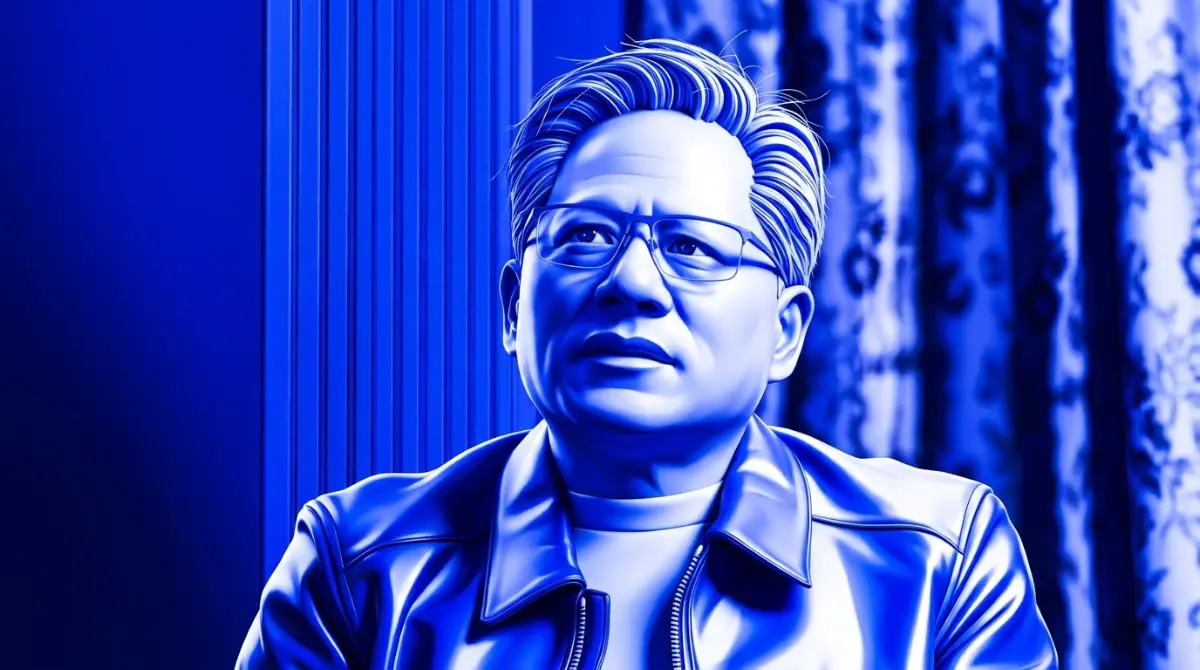
Nvidia Board Probes CEO Jensen Huang Over Chinese Spy Ties
Nvidia board of directors initiated an independent inquiry into founder and Chief Executive Officer Jensen Huang following revelations that he had an extramarital relationship with a Singapore data center executive suspected by United States intelligence of spying for Beijing.
Umar Thariwat | · 9 min read

The geopolitical contest over advanced computing silicon has collided with personal conduct inside the world most valuable semiconductor company. The board of directors at Nvidia opened an independent investigation on Sunday, November 8, 2026, into founder and Chief Executive Officer Jensen Huang following disclosures that he was the target of a foreign intelligence operation. The inquiry follows investigative reporting revealing that United States intelligence agencies suspect Alice Huang, an executive at Singapore-based cloud host Megaspeed, of gathering intelligence on behalf of the Chinese government. In an internal message sent to staff on Sunday, Jensen Huang acknowledged having an extramarital relationship with Alice Huang, apologizing to his family, employees, and shareholders for his personal actions while pledging complete cooperation with outside investigators. The company stated that while the board holds no evidence suggesting company trade secrets or American national security assets were compromised, an independent committee of outside directors will review all available records. The inquiry lands as semiconductor hardware sits at the center of international trade controls, continuing strategic corporate scrutiny we monitored when Nvidia invested $3B into Meta to secure hardware infrastructure.
The investigation creates acute governance exposure for an executive who has personified the machine intelligence boom. Under Huang direction, Nvidia transformed from a graphics card designer into a multi-trillion-dollar monopoly commanding over eighty percent of the world machine learning processor market. That market dominance turned Nvidia into a central focus of American national security policy, with the United States Department of Commerce enforcing strict export curbs to prevent advanced processors from reaching Chinese military research institutes. The relationship between Huang and an executive whose firm acts as a major regional compute distributor introduces uncomfortable questions regarding supply chain compliance. Congressional leaders in Washington responded immediately: senior lawmakers on the House Select Committee on the Strategic Competition Between the United States and the Chinese Communist Party called on Huang to provide a formal congressional briefing before the end of the month. The political scrutiny arrives as semiconductor leaders manage complex export rules, matching regulatory tensions we examined when Beijing tightened regulatory controls on technology exports.
The Megaspeed Connection: A $4.8B Hardware Conduit
To inspect why federal intelligence agencies tracked this personal relationship, one must examine the corporate operations of Megaspeed. Incorporated in Singapore, Megaspeed was spun off from a Chinese digital gaming corporation in 2023, positioning itself as an independent cloud hosting provider across Southeast Asia.
Over the past twenty-four months, Megaspeed emerged as one of Nvidia largest commercial customers in the Asia-Pacific region. Trade records show that Megaspeed purchased more than $4.8B in advanced Nvidia computing processors to populate server halls across Singapore, Malaysia, and regional hubs. While Megaspeed markets cloud computing services to commercial customers, intelligence analysts flagged that significant portions of that compute capacity were leased to corporate and institutional entities based inside mainland China. Under current American export guidelines, shipping advanced processors directly to Chinese mainland addresses is prohibited without federal export licenses. Setting up data center operations in intermediary third countries like Singapore allows regional businesses to rent processing time remotely, accessing computational power through cloud networks without violating physical shipping embargoes. Federal investigators are auditing whether intelligence operatives used access to Huang to anticipate upcoming American export bans or secure priority chip allocations during global processor shortages. Component distribution networks across Asia match patterns we followed when China cleared domestic foundation models for global export.
The Internal Apology: An Executive Memo to Staff
The public revelation was confirmed by Huang himself in an emotional communication sent to company personnel on Sunday afternoon. In the memo, Huang addressed the personal and professional fallout directly:
"I was unfaithful to my wife. My actions hurt her and our children. There is no excuse for what I did. I am deeply sorry. My responsibility is to serve you and be worthy of your trust. I have fallen short of that responsibility. I am fully committed to NVIDIA and will work to earn back your confidence. Regarding the national security concerns raised in news reports, NVIDIA's Board of Directors has initiated an independent investigation. I support the investigation and will cooperate fully."
Huang added that he remains devoted to American security interests, stating: "I love our country and our company. I am committed to protecting NVIDIA and supporting America's national security. I am proud and grateful to be an American." An official company spokesperson confirmed that Huang will continue leading Nvidia as chief executive without interruption while the investigation proceeds. The admission of personal misconduct by a corporate founder commanding a $3.5T enterprise is rare in Silicon Valley, where public relations teams routinely issue sanitized statements. The personal admission reflects high-stakes corporate management realignments, matching executive governance shifts we tracked when leadership departures exposed internal operational rifts.
Comparing Major Semiconductor Geopolitical Inquiries
| Corporate Entity | Inquiry Focus | Investigating Body | Primary Commercial Asset | Operational Governance Outcome |
|---|---|---|---|---|
| Nvidia (November 2026) | CEO ties to suspected Chinese intelligence operative | Independent Board Committee & outside legal counsel | $4.8B Megaspeed GPU sales & export compliance | Independent probe ongoing; CEO stays in office |
| ASML Holdings (2023) | Former employee IP theft in China | Internal audit & Dutch export authorities | Lithography machine software manuals | Tightened internal data access controls |
| Applied Materials (2024) | Evading export bans via South Korea routing | US Department of Justice & SEC | Semiconductor manufacturing equipment | Subpoenas and revised compliance programs |
| TSMC (October 2024) | Silicon found in Huawei Ascend processors | US Commerce Department & internal review | Sophgo proxy chip design orders | Suspended shipments to intermediate clients |
| Intel Corporation (2024) | Supply chain visibility & military audits | US Department of Defense security panels | Defense industrial foundry certifications | Separated foundry operational structures |
The comparative data illustrates how the semiconductor sector has become an active battleground for espionage. In past decades, corporate espionage centered on stealing physical blueprints or manufacturing manuals from engineering laboratories. Today, the strategic objective pursued by foreign intelligence services is intelligence collection: identifying supply bottlenecks, learning which corporate buyers receive priority chip deliveries, and finding administrative loopholes in export regulations. When an intelligence operative builds direct personal access to the chief executive of the dominant semiconductor supplier, the intelligence value is immense. Government verification audits across private corporate shares match themes we explored when regulators demanded verification of private share transactions.
The Board Mandate: Independent Counsel and Digital Audits
The formal investigation initiated by the Nvidia board will be supervised by a special committee composed entirely of independent, non-executive directors. The committee retained independent outside legal counsel and forensic cybersecurity investigators to conduct an exhaustive audit.
The investigative scope will focus on three specific compliance perimeters:
- Digital Communications Audits: Forensic analysis of all personal and corporate email accounts, text messaging threads, encrypted chat applications, and calendar schedules used by Huang to identify what corporate information was shared.
- Commercial Contract Reviews: Detailed examination of all commercial contracts signed with Megaspeed, verifying whether pricing discounts, hardware allocations, or delivery schedules differed from standard commercial terms.
- Export Control Verification: Auditing serial numbers and end-user destination certificates for the $4.8B in processors shipped to Megaspeed to confirm that hardware was not diverted to restricted Chinese organizations.
The board stated that while it maintains complete confidence in Huang executive leadership, conducting an independent inquiry is necessary to protect corporate integrity and satisfy federal regulators. Megaspeed stated in Singapore that its corporate leadership takes these reports seriously, denies wrong-doing, and is committed to cooperating with factual inquiries. The Chinese embassy in Washington dismissed the allegations as baseless political smears aimed at suppressing technological trade. Enterprise compliance reviews across technology suppliers were detailed in our analysis of AMD absorbing charges on customer equity deals.
Washington Backlash: Select Committee Calls for Hearings
The political reaction in Washington will determine the broader regulatory fallout for Nvidia. Lawmakers on the House Select Committee on China have spent months warning that Chinese technology firms use third-party nations in Southeast Asia and the Middle East to bypass chip export controls.
The disclosure that Nvidia chief executive had a close personal relationship with an executive at a primary Singaporean buyer gives congressional hawks an opening to demand stricter export restrictions. Lawmakers are preparing hearings to examine whether the Department of Commerce export controls contain loopholes that allow foreign proxies to purchase billions in hardware. If congressional committees conclude that current rules fail to prevent chips from being leased to Chinese researchers, lawmakers could introduce legislation mandating know-your-customer rules for cloud hosting providers, requiring American chipmakers to verify the ultimate identity of every developer renting processing time on their silicon worldwide. The potential introduction of stricter export rules arrives as global venture capital pours billions into Asian technology, continuing financing trends we monitored when DeepSeek raised $15.9B in private funding.
The Market Impact: Managing Multi-Trillion-Dollar Exposure
Nvidia stock dipped 3.1% in initial trading following the news, pulling down broader semiconductor indices. Wall Street analysts noted that while personal scandals rarely unseat visionary founders who deliver record financial results, national security investigations carry real regulatory risks.
Nvidia is scheduled to report its third-quarter financial earnings later this month, with investors expecting record revenues exceeding thirty-five billion dollars. If the board investigation uncovers evidence that export rules were circumvented, or if federal authorities issue administrative penalties, the company could face fines or restrictions on international sales. Institutional investors will listen closely to upcoming corporate disclosures for updates on the board findings. The market volatility matches wider fluctuations across public technology shares, continuing market movements we detailed when Deutsche Bank upgraded technology shares following market selloffs.
The Long-Term Outlook for Executive Diligence in Deep Tech
The investigation into Jensen Huang delivers an unmistakable warning to corporate leaders across the technology sector: personal lives cannot be separated from geopolitical reality when managing critical national infrastructure. Writing software algorithms and fabricating semiconductor silicon are no longer purely commercial endeavors; they are the physical foundation of national power.
Jensen Huang built an industrial empire that changed the direction of human technology, demonstrating extraordinary foresight and commercial discipline for three decades. The coming weeks will test his leadership like never before. As independent investigators review server logs and congressional committees draft subpoenas, Nvidia must prove that its operational controls and national security commitments are uncompromised. In the emerging computational century, corporate power brings immense scrutiny: and when national security is on the line, the guardians of the digital future will be held to the highest standard of accountability.
Read More on TechRobust:

Umar Thariwat
Umar Thariwat
Expertise:Tech News Reporting, Tech Business Analysis, Economic Foundations, Market Trends, Digital Economy
Award:Rising Voice of the Year 2025
Thariwat is a Staff Writer and Reporter covering tech news and enterprise trends at TechRobust. Blending daily reporting with her ongoing academic background in economics, she analyzes earnings, digital market, and the commercial strategies powering the global tech sector.
Related Stories
New York Times in Talks to Buy Letterboxd for $330M Starlink Taps Qualcomm for Nationwide 5G Mobile Grid
 Cloudflare Stock Jumps 15% on $3B Run Rate and Raised Outlook