
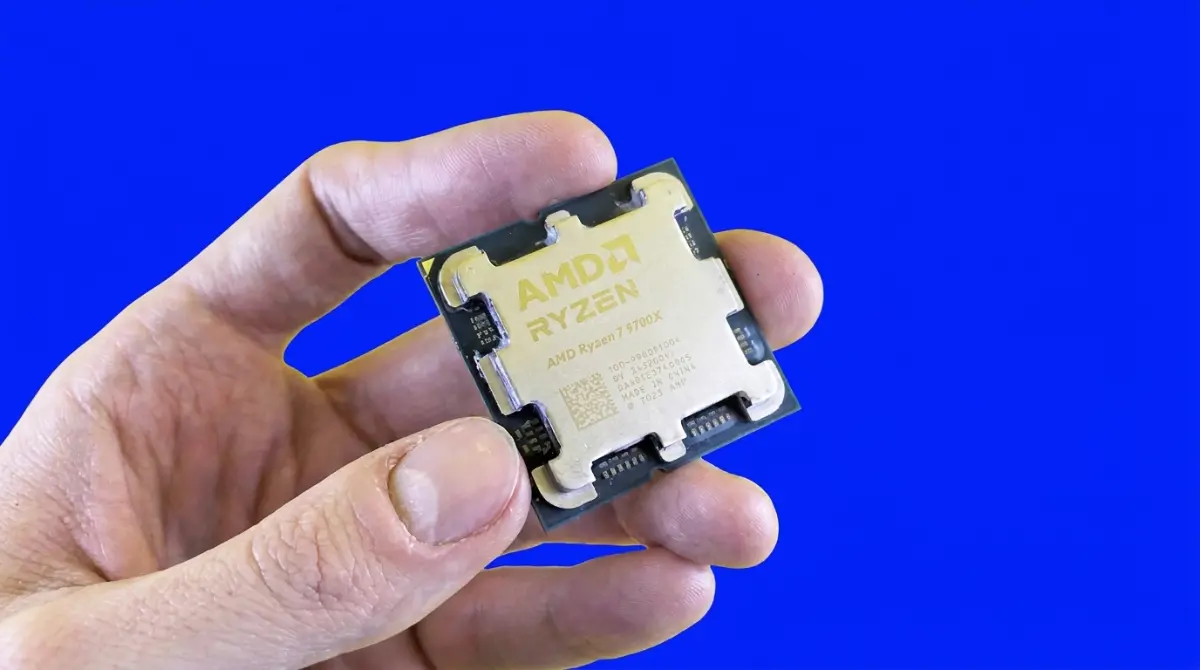


AMD Takes $1.07B Charge on OpenAI and Meta Chip Deals
Advanced Micro Devices absorbed a $1.07B non-cash charge in third-quarter earnings to account for equity warrants issued to anchor clients OpenAI and Meta Platforms, trading potential shareholder dilution for multi-billion-dollar semiconductor server orders.
Umar Thariwat | · 7 min read

Securing multi-billion-dollar processor orders from artificial intelligence titans requires giving away pieces of your own corporate equity. For two years, semiconductor designer Advanced Micro Devices fought to break Nvidia stranglehold on data center accelerators. Cloud operators and foundation model laboratories were desperate for hardware alternatives, yet moving workloads to AMD ROCm software stack carried technical friction and commercial risk. To convince premier clients to sign massive purchase orders, AMD Chief Executive Officer Lisa Su used an aggressive sales incentive: offering major customers equity warrants that allow them to purchase AMD common stock at discounted rates if they hit massive chip purchase milestones. That financing strategy produced its first major accounting bill on Tuesday, November 3, 2026. Reporting third-quarter financial results, AMD took a $1.07B non-cash contra-revenue charge to account for the rising fair value of equity warrants granted to OpenAI and Meta Platforms. The disclosure confirms that winning large-scale enterprise chip orders now requires trading away corporate ownership, continuing balance sheet shifts we monitored when Nvidia invested $3B into Meta to secure hardware ties.
The paper charge did not dampen Wall Street enthusiasm for AMD underlying business. The Santa Clara chipmaker delivered record third-quarter revenue of $13.38B, driven by a ninety-seven percent surge in data center sales. Non-GAAP earnings reached $2.09 per share, beating consensus estimates and sending AMD stock climbing nine percent in extended trading. The stock surge lifted shares of semiconductor peers Nvidia, Broadcom, and Intel in sympathy. Strong demand for AMD Instinct MI325X and upcoming MI350 series accelerators convinced management to lift its 2027 revenue forecast. AMD Chief Financial Officer Jean Hu confirmed on the conference call that the warrants will dilute existing shareholders once OpenAI and Meta satisfy vesting conditions tied to chip shipments and share-price thresholds. Even with potential dilution, institutional investors celebrated the numbers as proof that AMD has established itself as an indispensable second source in the global semiconductor race. Capital spending patterns across semiconductor manufacturers match trends we documented when SK Hynix warned memory shortages will last until 2030.
The Warrant Playbook: Buying GPU Commitments With Equity
To inspect why AMD absorbed a ten-figure paper charge, one must evaluate how equity-linked sales contracts function. In corporate finance, warrants give a customer the legal right to buy company shares at a fixed price in the future if certain contractual conditions are met.
Under the agreements outlined in regulatory filings, AMD granted OpenAI the option to acquire up to roughly ten percent of AMD common stock, conditioned on OpenAI meeting multi-billion-dollar chip shipment targets and AMD hitting specific stock price targets. Meta Platforms secured an identical commercial arrangement valued at up to $100B in hardware orders, though its warrants vest based strictly on chip purchase volumes without stock price hurdles. Under accounting rules, when AMD stock price climbs on public markets, the fair market value of those unexercised warrants increases. AMD must record that value change as a non-cash contra-revenue charge against quarterly gross earnings. The more AMD stock climbs, the larger the accounting charge becomes. In exchange for this balance sheet penalty, AMD locks in guaranteed multi-year purchase commitments from the two largest buyers of computing hardware in the world. Silicon allocation strategies across hyperscalers match moves we tracked when Microsoft posted record revenue as Azure reached $33.2B.
Breaking the Nvidia CUDA Software Moat
The underlying motivation driving Lisa Su equity strategy is the difficulty of unseating Nvidia proprietary CUDA software ecosystem. For a decade, machine learning researchers wrote software code exclusively for Nvidia hardware, making developers reluctant to switch to competing chips.
TECHnalysis Research chief analyst Bob O'Donnell observed that while equity incentives played a role in closing the sales, the deeper commercial factor is pent-up enterprise demand for a serious alternative to Nvidia. Tech giants refuse to remain dependent on a single supplier that extracts eighty percent gross profit margins. By granting OpenAI and Meta equity stakes in AMD, Lisa Su aligned the financial incentives of both customer and supplier. If Meta software engineers spend time optimizing AMD ROCm software stack to run Llama models efficiently, AMD chip sales rise, lifting AMD stock price and making Meta warrant holdings worth billions. The equity incentives turn customers into co-design partners who actively help debug AMD software libraries. AMD has also struck chip purchase deals with Anthropic, agreeing to invest capital directly into Anthropic research labs as part of the hardware rollout. Software optimization frameworks that reduce chip expenses match developments we followed when Nvidia backed Simplismart to cut enterprise processor bills.
Comparing Equity-Linked Hardware Deals in Computing Infrastructure
| Hardware Vendor | Anchor Customer | Commercial Deal Size | Equity Warrant Structure | Target Chip Architecture |
|---|---|---|---|---|
| AMD | OpenAI & Meta Platforms | Up to $100B+ multi-year | Warrants up to ~10% equity stake | Instinct MI325X & MI350 series |
| Qualcomm | Amazon Web Services | $60B chip agreement | Warrants tied to server deployments | Custom data center inference silicon |
| Cerebras Systems | OpenAI | $20B compute commitment | Pre-IPO equity warrants | Wafer Scale Engine (WSE-3) |
| Marvell Technology | Alphabet (Google) | $12.2B custom silicon stake | Warrants for optical DSP purchases | Co-packaged optics & ASIC dies |
| Nvidia | Meta Platforms | $3B direct equity investment | Direct common share purchases | Vera Rubin computing platforms |
The comparative data reveals that equity-for-orders deals have become standard practice across enterprise hardware. Qualcomm granted Amazon warrants in a $60B chip deal, Cerebras gave OpenAI warrants against a $20B commitment, and Marvell issued Alphabet warrants that give Google the right to buy a potential $12.2B stake. In an economy where a handful of hyperscalers control eighty percent of compute demand, chipmakers must offer equity participation to win factory-scale orders. Optical networking and custom silicon buyouts match trends we explored when Marvell acquired Lumentum in a $115B optical deal.
The Shareholder Dilution Question: What Lies Ahead in 2027
While Wall Street applauded the revenue beat, long-term equity investors must confront the reality of shareholder dilution. When OpenAI and Meta exercise their warrants, AMD must issue tens of millions of fresh shares, expanding the share count and reducing earnings per share.
Jean Hu indicated that AMD will provide detailed guidance in 2027 regarding when those vesting conditions could be reached. If chip deliveries accelerate through late 2027, the dilution could reduce existing shareholders equity by eight to ten percent. AMD calculates that absorbing ten percent dilution is an acceptable trade-off to capture one hundred billion dollars in high-margin server chip orders. By securing anchor commitments from Meta and OpenAI, AMD guarantees that TSMC cleanroom allocations will remain fully utilized for the next four years. The cash generated from those sales funds research into next-generation silicon architectures, ensuring that AMD keeps pace with Nvidia annual hardware release cadence. Server procurement agreements across enterprise hosts were analyzed in our report on HPE securing $1.2B in server deals using AMD chips.
Can AMD Dent Nvidia Hardware Monopoly?
The central question confronting semiconductor investors is whether AMD equity gambit will loosen Nvidia dominance. While taking a $1.07B charge proves that AMD is winning massive volume orders, Nvidia continues to sell every graphics processor it can manufacture.
Nvidia gross margins near eighty percent give it unmatched cash flow to outspend rivals on developer tools and custom networking silicon. Yet AMD does not need to destroy Nvidia to deliver massive shareholder value; capturing twenty to twenty-five percent of a five-hundred-billion-dollar accelerator market would transform AMD into a corporate giant. By trading warrants for multi-billion-dollar purchase contracts, Lisa Su has ensured that when tech giants build their next server halls, AMD silicon sits in the racks. The $1.07B paper charge is the price of admission to the most lucrative hardware market in modern history: and AMD is proving it is willing to pay to play.
Read More on TechRobust:

Umar Thariwat
 LinkedIn
Umar Thariwat
Expertise:Tech News Reporting, Tech Business Analysis, Economic Foundations, Market Trends, Digital Economy
Award:Rising Voice of the Year 2025
Thariwat is a Staff Writer and Reporter covering tech news and enterprise trends at TechRobust. Blending daily reporting with her ongoing academic background in economics, she analyzes earnings, digital market, and the commercial strategies powering the global tech sector.