
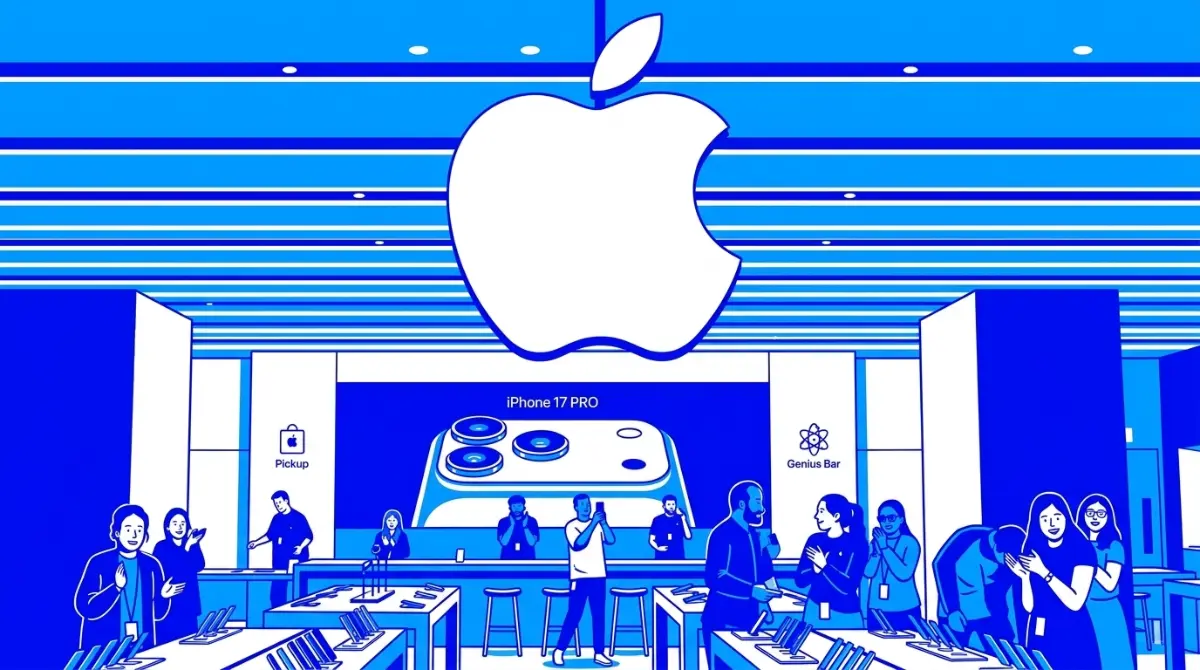


Apple Eyes Third-Party AI Apps for Services Revenue
Apple financial leadership signaled plans to extract fresh services revenue through third-party machine learning partnerships, searching for high-margin software streams as global antitrust rulings erode traditional App Store commissions and mobile gaming sales slow down.
Umar Thariwat | · 8 min read

The golden goose of modern consumer technology is facing structural fatigue. For fifteen years, Apple collected an effortless toll on the digital economy through its App Store. Every time a consumer purchased a mobile game pass, renewed a dating profile, or subscribed to a streaming video app, Cupertino deducted a thirty percent commission from the transaction before remitting funds to software developers. That closed payment tollbooth generated tens of billions of dollars annually in high-margin cash flow, transforming Apple Services into a corporate division larger than most Fortune 500 corporations. That legal and commercial monopoly is cracking. Antitrust court rulings in the United States, digital market regulations across the European Union, and statutory mandates in Japan and Brazil forced Apple to permit alternative payment links, eroding traditional commission yields. At the same time, mobile gaming spending: historically the largest contributor to App Store revenue: has plateaued. Apple executive leadership used its fiscal fourth-quarter earnings call on Monday night, November 2, 2026, to hint at its next commercial savior. Newly appointed Chief Financial Officer Kevan Parekh signaled that Apple is preparing to monetize third-party machine learning applications to accelerate services revenue. The strategic pivot arrives as Apple executive leadership balances software spending against hardware margins, continuing platform monetization shifts we followed when Apple CEO John Ternus declared the company will not ship machine tools for their own sake.
The earnings disclosures delivered a nuanced financial scorecard for Wall Street analysts. While total corporate revenue expanded eight percent to $90.2B, driven by record iPhone sales of $57.58B, Apple projected that services growth will decelerate to between eight and nine percent in the December quarter. Parekh noted that sequential growth faces pressure from third-party licensing agreements and softening digital gaming purchases. Under questioning regarding how Apple intends to reignite double-digit services growth, Parekh pointed toward emerging monetization opportunities tied to external software intelligence partners. Apple already integrated OpenAI ChatGPT into Siri and Apple Intelligence menus, with negotiations underway to add Google Gemini and Baidu models in regional international markets. Currently, those integrations operate on zero-cash promotional agreements: OpenAI receives distribution to two billion active Apple devices, while Apple gives users free access to external reasoning tools without paying licensing fees. Financial analysts recognized that Parekh comments signal the end of that honeymoon period: Apple is designing commercial tollbooths that will force third-party software developers to pay for access to Cupertino active user base. The monetization push arrives as Apple manages surging component expenses, matching balance sheet maneuvers we analyzed when Apple inventory jumped 154% due to memory stockpiling.
The App Store Margin Crisis: Antitrust and Commission Erosion
To grasp why Apple is searching for fresh services revenue, one must evaluate the legal assault dismantling its historical walled garden. For a decade, Apple defended its App Store rules by claiming that forced in-app purchases protected consumer security and privacy.
Regulatory authorities and federal courts rejected that defense. In the European Union, the Digital Markets Act forced Apple to support alternative app marketplaces, allow external payment processing, and cut core commission rates down to ten or seventeen percent. In the United States, federal injunctions resulting from the Epic Games antitrust litigation mandated that Apple allow developers to steer users to external website payment gateways, where developers avoid paying Apple thirty percent cut entirely. Similar regulatory mandates passed in Brazil, South Korea, and Japan. Furthermore, the multi-billion-dollar default search distribution agreement with Google: which paid Apple an estimated $20B annually to remain the default search engine in Safari: is under judicial threat following a federal court ruling finding Google guilty of illegal search monopolization. If federal judges restrict default search payments and app store commissions continue compressing, Apple must replace tens of billions in lost high-margin services revenue. Structuring fresh corporate partnerships across digital platforms was explored in our analysis of Apple App Store rule changes protecting revenue margins.
The Revenue Playbook: How Apple Will Monetize Third-Party Intelligence
How does a hardware platform monetize software that runs on someone else servers? Apple corporate history suggests three distinct commercial mechanisms that executive leadership is preparing to execute:
- The Search Engine Bounty Model: Replacing declining Google search payments by auctioning default model status inside Siri. When a user asks an open-ended question that exceeds on-device Apple Intelligence, Siri routes the query to an external provider. Model developers: including OpenAI, Google, Anthropic, and Perplexity: would pay Apple a revenue-sharing bounty per query or split advertising revenues generated during the interaction.
- App Store In-App AI Subscriptions: Enforcing strict commission cuts on paid model tiers. Hundreds of millions of consumers purchase monthly subscriptions to ChatGPT Plus, Claude Pro, or Perplexity through the iOS App Store. Apple collects fifteen to thirty percent on those recurring subscription fees, turning third-party model popularity into direct services revenue.
- The Private Cloud Compute Toll: Charging enterprise developers for processing data through Apple Private Cloud Compute. If a corporate application requires secure, privacy-preserving cloud inference on Apple Silicon server racks, Apple can charge metered infrastructure fees, transforming its private server clusters into an enterprise cloud revenue stream.
Executing these commercial models ensures that Apple extracts financial rent from the computational boom without taking on the multi-billion-dollar operational risks of training frontier models from scratch. Corporate cloud revenue models across platform leaders match financial strategies we tracked when Microsoft posted record quarterly revenues from Azure cloud services.
Comparing Apple Services Revenue Pillars: Past vs. Emerging
| Services Business Line | Historical Annual Revenue | Current Growth Trajectory | Primary Regulatory Threat | Long-Term Strategic Outlook |
|---|---|---|---|---|
| Google Search Default Bounty | ~$20B pure profit | Threatened by federal antitrust court remedies | DOJ search monopoly remedies | Must be replaced by AI model query auctions |
| App Store Game Commissions | ~$25B to $30B | Plateauing; consumer gaming spend soft | DMA and alternative payment steering rules | Squeezed; shifting focus to enterprise apps |
| AppleCare & Hardware Warranties | ~$9B to $11B | Accelerating due to expensive foldable screens | Right-to-repair state legislation | High growth anchored by iPhone Duo protection |
| Third-Party AI Integration Tolls | Emerging ($0 currently) | Projected to reach $15B+ by 2029 | Antitrust bundling and gatekeeper reviews | Primary future growth driver for Services |
| Apple Music, TV+, iCloud+ | ~$18B combined | Steady mid-single-digit subscription growth | Content licensing inflation | Stable recurring bundle cash flow |
The comparative data illustrates why monetizing third-party machine learning applications is mandatory for Apple financial health. If the Department of Justice prohibits Google from paying Apple twenty billion dollars annually for default Safari search placement, Apple loses roughly ten percent of its total corporate operating profit in a single pen stroke. Auctioning Siri query routing to competing machine intelligence models allows Apple to replace those search payments with query referral fees. With two billion active hardware devices in consumer pockets, Apple commands an unmatched distribution channel that foundation research laboratories will gladly pay to access. Commercial licensing agreements across consumer hardware match developments we examined in our review of the Qualcomm patent licensing agreement with Apple.
The Gatekeeper Dilemma: EU Regulators Are Watching
While monetizing third-party software offers attractive profit potential, Apple strategy will face immediate resistance from antitrust regulators in Brussels and Washington. Under the European Digital Markets Act, Apple is formally designated as a digital gatekeeper, legally prohibited from giving preferential treatment to its own services or imposing unreasonable commercial conditions on third-party software developers.
If Apple attempts to charge excessive tolls on third-party reasoning models, or if it conditions Siri integration on predatory revenue-sharing agreements, European regulators will launch non-compliance investigations that carry fines up to ten percent of global annual turnover. Competition authorities will insist that Apple provide open, non-discriminatory APIs that allow any verified model provider: whether OpenAI, Mistral, Anthropic, or an independent open-weights startup: to integrate with iOS on equal commercial terms. Apple legal teams in Cupertino are working to design monetization structures that comply with EU regulations while capturing software margins. Corporate governance and regulatory compliance across international markets were explored in our analysis of regulators auditing private corporate share ownership records.
Hardware Integration: The Physical Moat Behind the Tollbooth
The ultimate strategic advantage that gives Apple pricing power over software developers is its physical hardware. Software companies can train trillion-parameter models on vast server clusters, but they cannot deliver those capabilities to consumers without physical consumer devices.
Apple controls the silicon, the microphones, the cameras, and the operating system security layers that govern the smartphone in your hand. When a user activates Siri on a subway train or dictates a note on an Apple Watch, Apple on-device neural processing units handle initial intent classification locally. If the task requires external reasoning, Apple decides which third-party server receives the request. By controlling the initial physical touchpoint, Apple ensures that foundation model developers remain dependent on Cupertino distribution. Third-party software companies will discover that while code is infinitely scalable, consumer attention is scarce: and Apple owns the screens where human attention lives. Hardware packaging and retail diagnostics were explored in our analysis of Apple developing wireless diagnostic tools for retail packaging.
The Long-Term Outlook for Apple Services Empire
Kevan Parekh signals during the fourth-quarter earnings call confirm that Apple has entered the next phase of its corporate lifecycle. The era of effortless App Store monopoly commissions is closing, dismantled by antitrust courts and maturing digital gaming markets.
In its place sits an era defined by computational aggregation. By positioning Siri and Apple Intelligence as a universal broker that routes consumer queries to competing third-party models, Apple is building a monetization machine for the next decade. Software laboratories will spend hundreds of billions constructing data centers and buying silicon chips, but Apple will collect a toll on the finished transactions that touch consumer hands. As John Ternus and Kevan Parekh guide Apple through this platform transition, the company is proving that true power in the technology economy does not belong to those who build the most expensive tools, but to the disciplined gatekeeper that controls the gateway to human life.
Read More on TechRobust:
Umar Thariwat
 LinkedIn
Umar Thariwat
Expertise:Tech News Reporting, Tech Business Analysis, Economic Foundations, Market Trends, Digital Economy
Award:Rising Voice of the Year 2025
Thariwat is a Staff Writer and Reporter covering tech news and enterprise trends at TechRobust. Blending daily reporting with her ongoing academic background in economics, she analyzes earnings, digital market, and the commercial strategies powering the global tech sector.