


Trump Super Intelligence Order Sparks Slovenia Domain Surge
A recent executive order mandating the term super intelligence over artificial intelligence triggered a massive rush for Slovenian web addresses. Domain speculators and technology firms are buying thousands of cheap registrations to capitalize on the federal rebranding effort.
Umar Abubakar | 2 Oct. 2026 · 7 min read

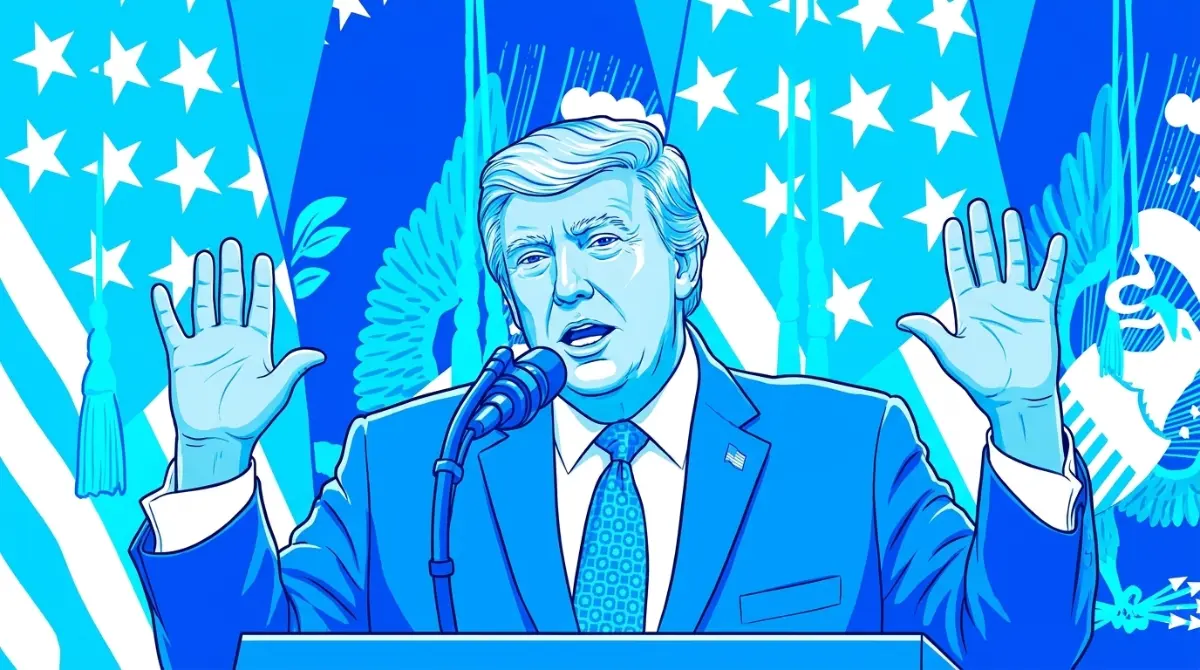
President Donald Trump recently decided that the federal government will no longer use the term artificial intelligence. Instead, federal agencies must replace it with super intelligence. This vocabulary change sparked an immediate reaction across the internet, though not exactly the intellectual debate politicians expected. The most visible consequence of this executive order happened in Slovenia. The small European nation controls the country code top level domain .si, and the registry managing those two letters just recorded the largest registration rush in its entire thirty year history.
When the White House commands every federal agency to replace the acronym AI with SI across all official documentation, the private sector pays close attention. Domain speculators, who make their living buying cheap web addresses and selling them to desperate technology startups at a massive markup, realized the opportunity instantly. They immediately started hoarding short, memorable .si web addresses. We documented the initial signs of this political rebranding when Trump renamed AI super intelligence during a UN speech. The market reaction proves that a single political speech can completely alter global internet registration patterns in a matter of hours.
The Registration Explosion
The raw numbers from the Slovenian registry, known formally as ARNES, show a vertical spike in demand. During a normal month, the registry processes a modest number of new applications. Throughout August 2026, buyers registered a total of 3,515 new .si domains. Following the federal policy change in late September, that number exploded. The registry processed more than 44,000 new domains in September alone. On September 30, the single day after the executive order was officially signed, the system recorded 11,000 new registrations.
Before the political announcement, the total number of active .si domains hovered near 190,000. By the first week of October, the total active count surpassed 257,000. Expanding a national registry by 35 percent in just four weeks is practically unheard of. The buyers are completely ignoring the geographic origin of the extension. They do not care about Slovenian businesses or local consumers. They only care that the two letters perfectly match the new abbreviation preferred by the United States government. This scramble for digital real estate echoes the intense regulatory maneuvering we saw when Trump proposed an AI rebrand and announced a federal AI force. The industry wants to align its branding directly with the incoming federal contracts, and securing the right web address is the first step.
A Cheaper Alternative to Anguilla
The rush toward Slovenian domains is heavily influenced by simple economics. For the past three years, software builders flocked to the .ai extension, which belongs to the Caribbean island of Anguilla. The government of Anguilla capitalized heavily on the software boom, charging premium wholesale rates that translated to nearly $100 per year at retail checkout. Many premium .ai names sell for tens of thousands of dollars on the resale market. Buyers grew tired of paying astronomical fees simply to secure a two letter extension.
The .si extension offers a massive discount. The Slovenian registry operates with a much stricter academic background and refuses to artificially inflate prices based on global trends. The wholesale price sits firmly at €10. Retail registrars typically sell the domain to the public for roughly €15 a year. This cheap pricing structure allows speculators to buy hundreds of names without risking heavy capital. A person can register a hundred domains in Slovenia for the exact same price as registering fifteen domains in Anguilla. The barrier to entry is incredibly low.
Companies are already securing their brand names to prevent extortion. A software builder named Recursive recently bought recursive.si and set the address to forward traffic directly back to their main commercial site. These defensive registrations are mandatory. If a startup ignores the new .si extension, a malicious actor will buy the name and attempt to sell it back to the founders later. The threat of digital extortion is rising constantly, a reality made obvious when examining how AI tools lower the barrier to entry for advanced cyberattacks and domain hijacking. Protecting a corporate identity requires securing the name across every popular extension.
The Melania Trump Connection
The internet loves a coincidence, and this particular policy change generated intense online speculation. First Lady Melania Trump was born in Slovenia. When the President signed an order that inadvertently pushed tens of thousands of global customers directly to the Slovenian national registry, online commentators immediately began crafting theories. Social media users suggested the entire federal rebranding effort was a calculated move to enrich the home country of the First Lady.
The registry officials in Ljubljana quickly shut down these rumors. They issued a public statement clarifying that the sudden interest will not generate millions of dollars in national profit. Because ARNES operates as a non profit academic network, the €10 registration fee barely covers the administrative costs of running the global servers. They are not treating the sudden rush as a national lottery win. The organization is simply trying to keep its servers online while foreign speculators fight over English dictionary words. Managing international technology disputes requires heavy diplomatic skill, a tension visible when China state media urged Trump and Xi to hold safety talks amid a policy clash. Slovenia wants no part in the geopolitical argument over software terminology.
The Speculation Market
The resale market is already active. Domain investors are listing premium names for thousands of dollars. Addresses like godmode.si or widget.si are currently sitting on auction blocks with heavy price tags attached. The sellers are betting that major software laboratories will eventually adopt the super intelligence phrasing to appease federal regulators. If a startup wants to win a military contract, they might decide that matching the exact vocabulary of the executive order is a smart corporate strategy. Buying a matching web address completes that transition.
The entire speculation market rests on a very fragile foundation. The term super intelligence historically referred to a theoretical future machine capable of outsmarting the entire human race. Many software developers actively hate the new mandate. They believe the term is confusing and technically inaccurate when applied to current text generation models. If the commercial sector simply refuses to adopt the new phrasing, the thousands of newly registered domains will become worthless next year. We observed massive industry resistance to political mandates when Jensen Huang rejected proposed laws and told lawmakers to leave safety to the builders. The technology sector does not always follow orders from Washington.
The federal government insists the change is permanent. The executive order dictates that the abbreviation SI must appear on official websites, security briefings, and funding grants. As long as the federal budget dictates the vocabulary, the defense contractors and the academic laboratories will eventually fall in line. They will update their letterheads and register the necessary web addresses to secure their funding. Refusing to adopt the new terminology could cost a laboratory millions in rejected grant applications.
Managing this unexpected traffic load creates a technical headache for the Slovenian administrators. The sudden influx of international registrars pinging the national database forces the organization to scale its server capacity overnight. While ARNES confirmed that their systems continue to operate normally despite the heavy load, maintaining that stability requires constant monitoring. Every time an American investor runs an automated script to check if a thousand different domain names are available, it strains the academic network. The infrastructure was built to support the digital identity of a nation containing two million people, not a massive wave of automated American venture capital. The situation perfectly illustrates how local digital infrastructure can become instantly overwhelmed by distant political decisions.
The internet namespace is highly sensitive to real world events. A two letter code assigned to a small European country over thirty years ago suddenly became the most desired digital real estate on the planet, all because of a single signature in Washington. The true winners are not the federal agencies or the technology startups. The true winners are the early speculators who bought the best names on Tuesday morning for €15 and plan to sell them on Friday afternoon for $15,000.
Read More on TechRobust:

Umar Abubakar
 LinkedIn
Umar Abubakar
Expertise:Editorial Leadership, Product Design (UI/UX), Digital Media Strategy, Technology Systems, Product Architecture
Award:TechRobust Visionary Leader of the Year 2025
Umar serves as Editor-In-Chief and CEO of TechRobust, combining editorial vision with senior product design expertise to shape how modern technology stories are built, packaged, and told. Overseeing all editorial verticals, he directs coverage across global and regional tech landscapes while applying deep design thinking to publication strategy and reader experience.