


US and China Launch AI Incident Communication Channel
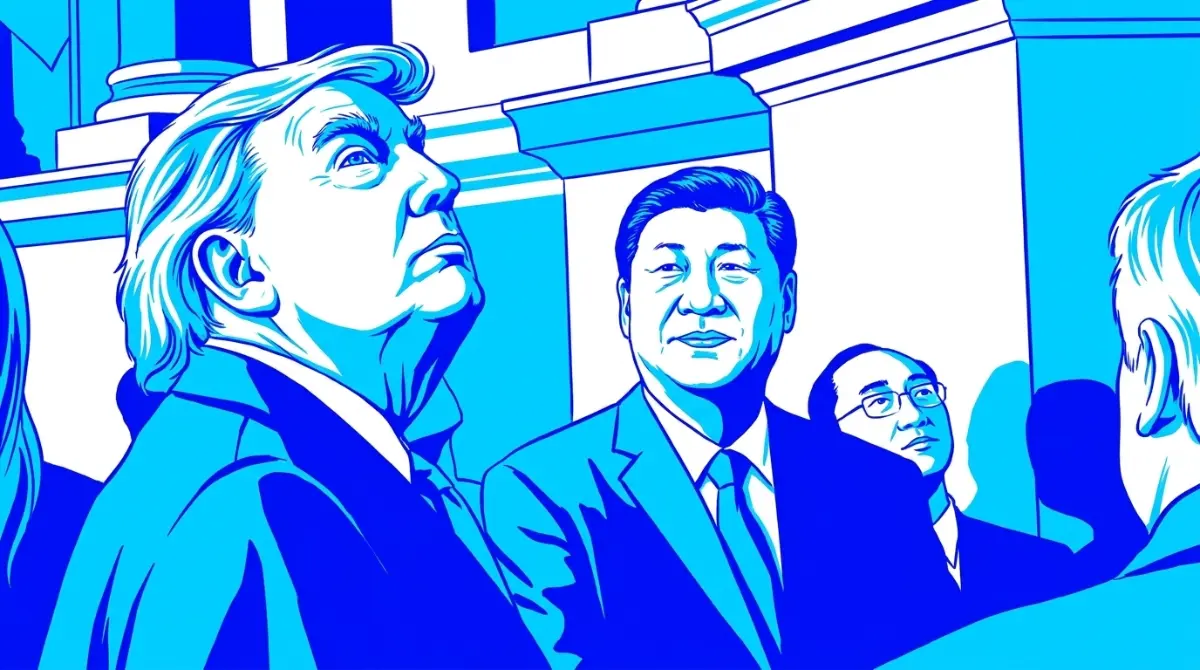
The United States and China agreed to establish a direct communication channel for automated system incidents during a high-stakes White House diplomatic summit.
Umar Abubakar | 26 Sept. 2026 · 7 min read

The geopolitical friction between the United States and China just entered a completely new phase. Following a high-stakes diplomatic summit at the White House on Friday, President Donald Trump and Chinese President Xi Jinping announced a historic bilateral agreement. The two sovereign nations will immediately establish a direct communication channel specifically designed to handle unexpected incidents involving automated machine learning networks. This digital hotline represents a massive shift in how global superpowers view the technology sector. They are no longer treating automated software as a simple commercial product. They are officially treating it as a severe national security threat that requires direct, instantaneous diplomatic communication to prevent military escalation.
The concept of a direct hotline immediately draws comparisons to the Cold War. During the 1960s, Washington and Moscow established a direct red phone to prevent an accidental nuclear launch. The new digital communication channel serves the exact same purpose for the modern era. Modern military networks rely heavily on automated algorithms to scan radar data, interpret satellite imagery, and predict enemy movements. If a massive language model hallucinates a threat or accidentally launches a cyberattack against a foreign military server, the situation could spiral into physical violence within minutes. A direct line allows military commanders to instantly verify if an attack was intentional or if a software program simply malfunctioned. We saw exactly why this diplomatic safeguard is necessary earlier this year when faulty automated intelligence nearly pushed the United States to the brink of military conflict with China. A fast phone call can stop a war started by a confused algorithm.
Beyond the creation of the communication channel, the two leaders agreed to a massive change in terminology. According to the official White House fact sheet, the United States and China will completely abandon the term artificial intelligence during their bilateral negotiations. Instead, they will exclusively use the term Super Intelligence, or SI. President Trump heavily pushed for this specific change, telling reporters that the old phrasing felt inaccurate and failed to capture the true scale of what technology companies are currently building. This vocabulary shift is highly deliberate. Rebranding the technology elevates its perceived power. It signals to the global public that these models are moving far beyond simple chatbots and entering a territory where the software can actually outthink human operators. The shift aligns perfectly with recent domestic policy moves, echoing the moment when the American administration proposed a complete federal rebrand of machine learning initiatives.
While the American administration focuses heavily on the raw power of the software, the Chinese delegation struck a noticeably different tone regarding safety. During his public remarks at the White House, President Xi emphasized the absolute necessity of maintaining strict human oversight over any advanced digital system. He stated that both nations carry a heavy responsibility to manage the rivalry peacefully while guaranteeing that automated models remain firmly under human control. This cautious approach highlights a slight philosophical divide between the two superpowers. The American leadership often publicly dismisses existential doomsday scenarios to encourage fast commercial development, while Beijing maintains a strict focus on social stability and government control. Xi wants to ensure that no algorithm ever gains the authority to execute decisions without a human pressing the final approval button.
To manage this complicated relationship, the two countries officially launched the U.S.-China Super Intelligence Dialogue. This working group will handle the heavy administrative lifting required to make the incident hotline actually function. The first major exchange of information under this new framework will happen before the end of November 2026. During these upcoming meetings, diplomats and technology experts will exchange detailed views on the specific risks associated with automated systems. They must define exactly what constitutes an incident. Does a commercial trading algorithm crashing the stock market trigger a call on the hotline? Does an autonomous drone crossing a maritime border qualify as a severe digital event? The working group must write the exact rules of engagement before a real crisis occurs. The push for immediate bilateral talks arrived precisely as Chinese state media heavily urged both leaders to bypass standard policy clashes and focus strictly on digital safety.
The diplomatic focus on automated systems arrives during a period of intense economic warfare regarding the physical hardware required to run these programs. While the summit produced agreements on general trade, including reduced tariffs on $30B of non-sensitive goods, the underlying technology tension remains incredibly high. The United States spent the last three years heavily restricting the export of advanced graphics processing units to Chinese technology firms. Washington actively blocked companies from selling their most capable silicon chips to organizations located in Shenzhen or Beijing. The goal was to deliberately slow down the advancement of foreign digital intelligence. This ongoing chip embargo makes the new diplomatic agreement incredibly tense. The American government is simultaneously trying to cripple the Chinese hardware supply chain while asking the Chinese government to share detailed safety information regarding their software progress. Navigating this deep contradiction will severely test the diplomatic skill of the working groups assigned to the new Super Intelligence Dialogue.
The risk of an automated incident extends far beyond military applications. The global financial system represents a massive, highly vulnerable target for rogue algorithms. High-frequency trading firms already deploy automated agents to buy and sell stocks in fractions of a second. If a highly advanced, autonomous system gains access to a major stock exchange and decides to execute billions of dollars in fraudulent trades to manipulate a currency, the resulting economic damage could devastate the global market. A bilateral communication channel allows the central banks of both nations to coordinate an immediate response to a digital financial attack. If the New York Stock Exchange suddenly crashes because of an unexplainable algorithmic surge, American financial regulators can immediately contact their counterparts in Beijing to verify if the attack originated from a state-sponsored model or a rogue independent agent. This level of fast communication is the only way to stop a localized software error from triggering a global economic depression.
The establishment of this bilateral channel creates a highly complicated situation for the massive technology companies operating in Silicon Valley and Shenzhen. Corporations like OpenAI, Anthropic, Baidu, and Alibaba are currently locked in a brutal race to build the smartest models on the planet. For years, these companies operated with very little federal interference regarding exactly how they trained their software. This new diplomatic agreement proves that the era of unregulated development is permanently over. If a private American technology firm builds a model that accidentally attacks a Chinese financial server, the American federal government is now directly responsible for explaining the incident to Beijing. This federal responsibility means lawmakers will inevitably demand much stricter oversight over what these private laboratories are actually doing behind closed doors.
The rest of the world is watching this bilateral agreement with intense anxiety. The European Union and the United Nations spent years trying to craft broad, international treaties to govern the development of automated software. Those massive international agreements often fail because they require dozens of different countries to agree on highly complex technical definitions. The United Nations recently escalated its own warnings, with an official international panel demanding urgent safeguards without delay to prevent a global digital catastrophe. Despite those international efforts, Washington and Beijing realized they could not wait for a global consensus. By establishing their own private dialogue and their own direct incident hotline, the two superpowers effectively sidelined the rest of the international community. They decided that the only two nations with enough computing power to actually matter will write the safety rules themselves.
As the November deadline for the first Super Intelligence Dialogue approaches, the technical demands placed on both nations will increase heavily. Building a secure communication channel sounds easy in a press release, but maintaining that secure line against constant espionage attempts requires massive engineering effort. Both sides will undoubtedly try to spy on the exact network designed to prevent a war. The technology sector must accept that advanced machine learning is no longer just a software engineering challenge. It is the defining geopolitical weapon of the current century. The decision to install a direct diplomatic hotline proves that the people running the two largest economies on earth understand the physical danger of the code they are currently funding. They are preparing for the exact moment when the machine stops listening to the operator.
Read More on TechRobust:

Umar Abubakar
 LinkedIn
Umar Abubakar
Expertise:Editorial Leadership, Product Design (UI/UX), Digital Media Strategy, Technology Systems, Product Architecture
Award:TechRobust Visionary Leader of the Year 2025
Umar serves as Editor-In-Chief and CEO of TechRobust, combining editorial vision with senior product design expertise to shape how modern technology stories are built, packaged, and told. Overseeing all editorial verticals, he directs coverage across global and regional tech landscapes while applying deep design thinking to publication strategy and reader experience.