
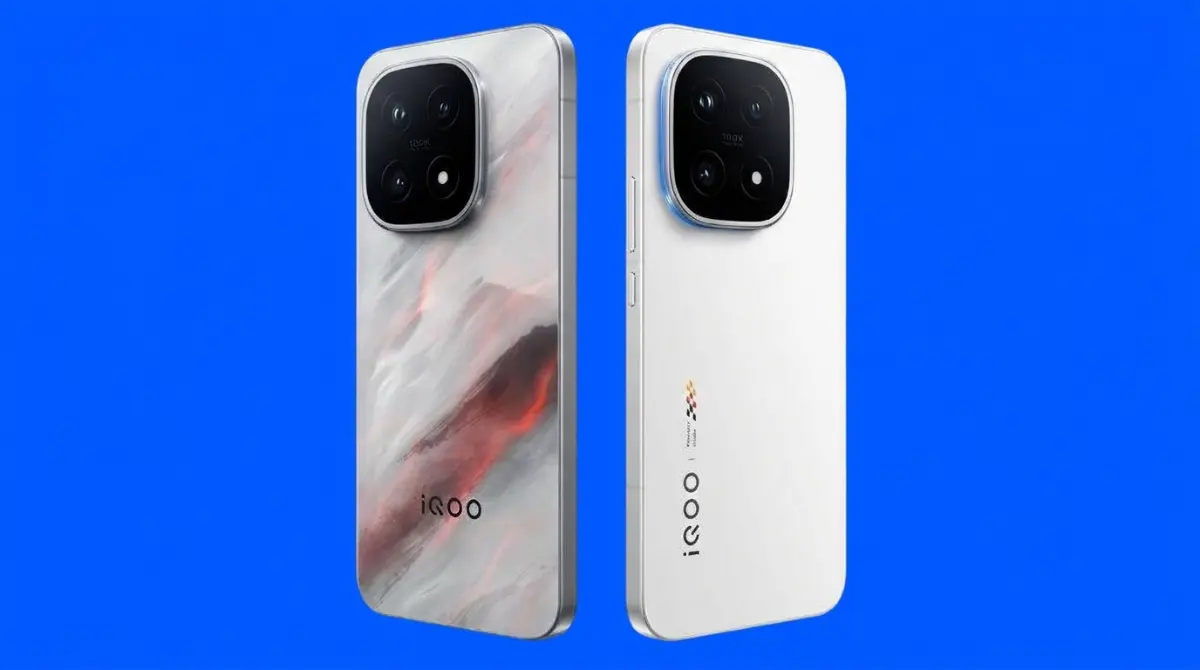


iQOO 16R and Z12 Turbo Leak: Specs and Screen Size
Supply channel leaks out of China revealed core hardware specifications for the upcoming iQOO 16R and Z12 Turbo, pairing flagship-tier silicon with a 6.78-inch 144Hz flat OLED panel and a massive silicon-carbon battery pack.
Goriola Ayankoya | 17 Oct. 2026, 4:20 AM · 9 min read

Mobile gamers looking for top-tier computing power are tired of paying four figures for delicate glass novelties. For five years, mainstream phone manufacturers treated mobile gamers like a captive audience, locking high frame-rate performance behind expensive flagship handsets loaded with unnecessary camera periscopes, faux-leather backings, and curved display edges that register accidental palm touches during competitive play. Budget-conscious mobile consumers had to settle for plastic handsets running thermal-throttling mid-range silicon that dropped frames after fifteen minutes of intense action. Vivo gaming sub-brand iQOO is preparing to shake up that product segment once again. Reliable supply channel disclosures published on Friday, October 16, 2026, by prominent hardware tipsters on Weibo revealed core engineering specifications for the upcoming iQOO 16R, expected to launch in Chinese domestic channels as the iQOO Z12 Turbo. The leaked specifications indicate that the handset pairs flagship-grade Qualcomm processor silicon with a flat 6.78-inch 1.5K display and a massive silicon-carbon power cell, continuing a brand playbook aimed at delivering sustained gaming throughput at aggressive price points. The leak arrives as mobile device manufacturers battle over battery chemistry, a trend we evaluated when OnePlus unveiled the OnePlus 16 with a 9,000mAh battery.
The leak details a deliberate design philosophy: strip away non-essential lifestyle gimmicks to allocate every manufacturing dollar toward processor cooling, screen responsiveness, and battery endurance. The device is expected to debut in domestic Asian retail channels in early winter, followed by international rollouts across India and Southeast Asia during the first quarter of 2027. The iQOO R and Turbo series built a loyal following among competitive mobile esports players who demand raw processing speed without the steep markup charged by premium consumer lifestyle brands. By bringing Qualcomm newest processor silicon into a sub-$450 price bracket, iQOO is applying direct market pressure to established mid-range contenders. The aggressive hardware pricing matches product strategies we tracked when reviewing the Vivo T5 5G launching with a 7,050mAh battery.
Flagship Grade Qualcomm Silicon in an Affordable Chassis
The headline revelation in the supply leak centers on the internal processing silicon. According to the leaked documentation, the iQOO 16R and Z12 Turbo will be powered by Qualcomm Snapdragon 8 Elite platform, utilizing custom Oryon CPU cores fabricated on advanced foundry nodes. Rather than relying on standard Arm Cortex blueprints, Qualcomm custom silicon architecture delivers dramatic leaps in single-core instruction execution and sustained graphical performance. Benchmark leaks suggest the octa-core processor layout features prime performance cores clocked past 4.0GHz, supported by an Adreno 800-series GPU capable of hardware-accelerated ray tracing in modern mobile game engines.
Putting flagship silicon into an affordable chassis requires careful thermal management. In budget phones, high clock speeds often trigger aggressive thermal throttling within ten minutes of launching heavy 3D titles, cutting frame rates in half to prevent internal components from melting. To combat this, iQOO engineered a large stainless steel vapor chamber spanning over 6,000 square millimeters, paired with high-conductivity graphite thermal sheets. The cooling assembly routes heat evenly across the back plate, allowing the processor to sustain peak clock speeds during extended competitive gaming sessions without burning user fingers. Qualcomm expansion into custom performance silicon was detailed in our launch coverage of the Snapdragon 8 Elite flagship mobile processing platform.
The Flat 6.78-Inch 144Hz Display Built for Competitive Play
For dedicated mobile gamers, screen geometry is a critical hardware feature. While lifestyle flagships continue pushing curved waterfall glass edges to make devices look thin on store shelves, competitive gamers despise curved screens. Curved edges distort visual angles, produce annoying glare along screen borders, and cause accidental touch inputs when gripping the phone tightly in landscape mode.
The iQOO 16R and Z12 Turbo adopt a completely flat 6.78-inch LTPS OLED panel sourced from Chinese display specialists TCL CSOT and BOE. The screen delivers a sharp 1.5K resolution of 1,260 by 2,800 pixels, striking an optimal balance between visual sharpness and graphics processor power consumption. Crucially, the panel supports a native 144Hz refresh rate, delivering fluid motion clarity in supported multiplayer titles like Call of Duty: Mobile and PUBG Mobile. The display features high-frequency pulse-width modulation dimming rated at 2,160Hz, eliminating invisible screen flicker to reduce eye strain during late-night gaming marathons. Peak local brightness reaches an impressive 4,500 nits, ensuring complete readability under outdoor sunlight. Display engineering trade-offs across consumer devices were examined in our review of Huawei advanced screen display technologies.
Silicon-Carbon Chemistry and the Battery Capacity Race
The secondary technical triumph revealed in the leak is the adoption of high-density silicon-carbon battery chemistry. Traditional lithium-ion phone batteries using graphite anodes hit a physical energy density limit years ago, forcing manufacturers to choose between heavy, bulky bricks or skinny phones that died before evening dinner. By doping the battery anode with silicon micro-particles, battery fabricators can store significantly more energy in the same physical volume.
The leak indicates that the iQOO 16R will carry a massive power cell ranging between 7,000mAh and 8,000mAh, while maintaining a chassis thickness below 8.3mm. This capacity allows the device to deliver up to twelve hours of continuous 3D gaming on a single charge, or two full days of ordinary mixed communication use. Paired with Vivo 90W or 100W FlashCharge wired charging, the battery can replenish from empty to one hundred percent in approximately thirty-five minutes. The handset also incorporates dedicated hardware bypass charging: when plugged into a wall outlet during active play, the electrical current routes directly to the processor and display, bypassing the battery completely. This prevents the chemical cell from heating up during active play, protecting long-term battery health while keeping the phone cool in hand. The industry shift toward high-capacity battery hardware matches patterns we followed when Honor revealed high-density battery engineering. Hardware protections around battery longevity were also examined in our analysis of Samsung dedicated hardware chips for battery packs.
Stripping Away Camera Clutter to Control Costs
To deliver flagship processing silicon, a 144Hz OLED panel, and a massive battery at an aggressive retail price, iQOO made calculated compromises in mobile photography. Unlike high-end camera flagships that carry three or four large sensors paired with expensive periscope zoom lenses, the iQOO 16R features a streamlined dual-camera array on its rear deck.
The primary camera uses a 50MP Sony or OmniVision sensor measuring 1/1.56 inches, equipped with optical image stabilization and an f/1.88 aperture lens. For everyday snapshots, document scanning, and social media clips, the main camera captures clean, detailed images with natural color reproduction. The secondary camera is a basic 8MP ultra-wide sensor, dispensing with useless 2MP macro and depth sensors that manufacturers often include to pad out spec sheets. There is no dedicated telephoto lens; zoom photography relies on digital cropping from the high-resolution primary sensor. For mobile gamers and practical users who prioritize computing performance over professional telephoto photography, this hardware trade-off is completely sensible. Complex optical hardware configurations across premium devices were explored in our preview of the Oppo Find X10 series global hardware configurations.
Memory Configurations and Fast Internal Storage
A high-performance gaming handset is only as fast as its memory pipeline. The leaked documentation confirms that the iQOO 16R will abandon outdated 8GB memory tiers entirely, establishing 12GB of high-speed LPDDR5X RAM as the base retail specification, with top-tier configurations offering 16GB. Storage options begin at 256GB and scale up to 512GB using UFS 4.1 flash chips.
The adoption of UFS 4.1 storage delivers read speeds exceeding 4,000 megabytes per second. This rapid storage throughput ensures that massive modern mobile games, which often exceed thirty gigabytes in file size, load in seconds without stuttering or delayed texture pop-in. The operating system utilizes virtual memory allocation, allowing the device to keep dozens of heavy applications suspended in background memory without forcing sudden reloads. The dangers of skimpy system memory configurations across modern computing devices were analyzed in our guide to the best budget laptops for students and creators.
OriginOS Seventeen and Dedicated Gaming Software
In domestic Chinese retail channels, the iQOO Z12 Turbo will ship booting OriginOS 17 built on top of the Android 17 codebase. The interface features Vivo proprietary Monster Mode gaming engine, which optimizes thread scheduling across CPU cores to prioritize gaming frame rates over background system tasks.
The software suite includes custom touch sampling rate multipliers, allowing the screen to respond to finger taps at up to 2,000Hz during critical gaming moments. Gamers can configure custom on-screen crosshairs, adjust individual game sound equalizers to hear enemy footstep cues, and record gameplay clips directly to local storage without third-party recording software. For international markets, the device will ship with Funtouch OS 17, retaining Google Play services, clean English menus, and minimal carrier bloatware. Vivo commits to three major Android operating system upgrades and four years of bimonthly security updates for the series. Mid-range software and hardware tuning were evaluated in our hands-on review of the Nothing Phone 4a and mid-range design strategies.
Competitive Matchup Against Redmi and Realme
When the iQOO 16R lands on retail shelves, it will enter direct competition with established sub-brand flagships like the Redmi Turbo 4 and the Realme GT Neo series. On paper, the iQOO offering holds clear architectural advantages: pairing custom Oryon CPU silicon with a 144Hz flat OLED display and an enormous battery cell creates a compelling performance package under $450.
Xiaomi Redmi series has historically dominated the budget performance crown, but recent Redmi devices faced consumer criticism for running warm under sustained gaming loads and cutting corners on chassis rigidity. If iQOO can keep the starting retail price near 2,299 yuan in China (roughly $320) and under 32,000 rupees in India, the handset will represent an unbeatable value proposition for competitive mobile gamers and students. The fierce rivalry among budget Android manufacturers reflects retail dynamics we documented in our review of the Redmi Note 17 Pro Max with high-capacity battery hardware. Physical industrial design choices across iQOO hardware lines were also detailed in our leak report on the iQOO 16 design leak and camera module.
The Verdict on Budget Flagship Killers
The leaked specifications for the iQOO 16R and Z12 Turbo prove that the budget flagship category is alive and thriving. By rejecting the overpriced camera gimmicks and fragile curved displays of luxury handsets, iQOO is building a focused, uncompromising gaming machine that delivers raw speed where mobile users notice it most.
Packing flagship Qualcomm silicon, a flat 144Hz OLED panel, and an enormous silicon-carbon battery into a clean, pocketable chassis proves that consumers do not need to spend four figures to enjoy top-tier mobile performance. If Vivo can execute a prompt international rollout without inflating retail prices through regional import tariffs, the iQOO 16R could establish itself as the definitive budget gaming powerhouse of the year. It serves as a reminder to the entire smartphone industry that true mobile innovation is about delivering practical speed, long battery life, and durable hardware at prices real consumers can afford.
Read More on TechRobust:

Goriola Ayankoya
 LinkedIn
Goriola Ayankoya
Expertise:Consumer Hardware, Smartphone Trends, Gadget Reviews, Breaking Tech News, Mobile Ecosystems
Award:TechRobust Hardware Reporter of the Year 2025
Goriola is a Staff Writer and Reporter specializing in consumer technology, breaking tech news, and hands-on hardware analysis. He tracks fast-paced mobile developments, reviews modern gadgets, and unpacks product launches to give readers clear, practical insights into everyday consumer tech.