
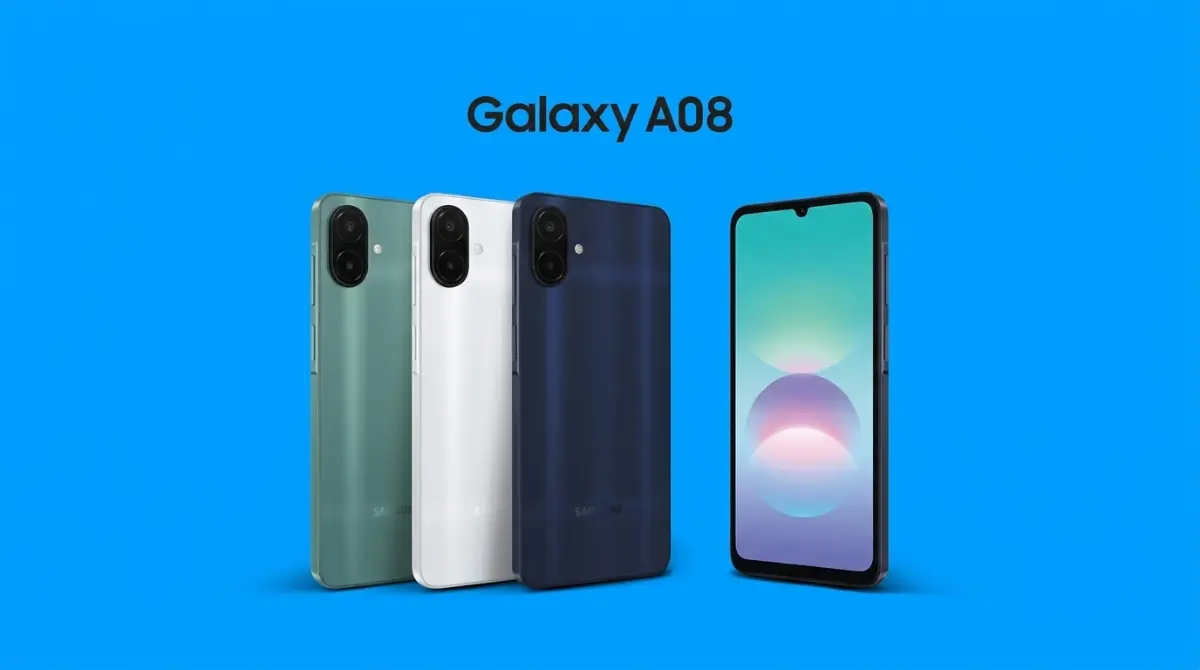


Samsung Galaxy A08 Debuts In Malaysia With 6000mAh Battery
Samsung brings its newest entry-level Galaxy A08 to Malaysia, pairing a massive battery with six years of guaranteed software support for RM899.
Umar Abubakar | 25 Sept. 2026 · 4 min read

Samsung has officially introduced the Galaxy A08 to the Malaysian market, delivering an entry-level smartphone that prioritizes extreme battery life and long-term software support over top-tier processing speed. Priced at RM899, the device enters a crowded hardware segment where Chinese manufacturers typically dominate. Instead of competing purely on synthetic benchmark scores, the manufacturer is banking on device longevity to attract cost-conscious buyers.
The main selling point of the Galaxy A08 sits under its rear panel. The hardware packs a massive 6,000mAh battery cell, providing a noticeable physical capacity increase over its direct predecessor. For users who rely on their devices for ride-hailing applications or continuous media playback, this larger power unit guarantees the phone can survive extended hours away from a wall outlet. When the battery eventually drains, the phone supports standard 25W wired charging, which remains slower than competing mid-range options but acceptable for this pricing tier. The company recently increased its focus on internal power regulation, a hardware strategy seen when Samsung integrated specialized battery security chips into its broader Galaxy lineup to prevent thermal degradation.
Processing Hardware and Display Specifications
Driving the software interface is the MediaTek Helio G99+ processor. This silicon provides adequate performance for daily communication tasks, light media consumption, and standard applications, but it explicitly lacks 5G connectivity. Restricting the device to 4G networks allows the manufacturer to keep production costs low, though it forces buyers to evaluate whether they can live without faster mobile data speeds over the next few years.
Memory configurations in Malaysia include 6GB of LPDDR5X RAM paired with 128GB of internal storage. The motherboard includes a dedicated slot for microSD cards, permitting users to expand physical storage by an additional 2TB. Samsung also included a virtual memory feature that temporarily converts unused storage space into working memory to prevent application crashes during heavy multitasking.
On the front, the phone features a 6.7-inch PLS LCD panel that refreshes at 90Hz. While an OLED display would offer superior contrast, the chosen LCD unit provides smooth scrolling without heavily taxing the battery. This display configuration contrasts sharply with the premium screens the company builds for its flagship models, highlighting the clear separation in hardware tiers before the expected Samsung Galaxy S27 launch early next year.
Camera Array and Physical Design
The optical system relies on a functional, no-frills setup. The rear chassis holds a 50MP main camera with an f/1.8 aperture, supported by a simple 2MP depth sensor for portrait photography. The front display features a U-shaped notch housing an 8MP selfie sensor. Both the front and rear cameras max out at 1080p video recording, meaning buyers looking for 4K video capture will need to search higher up the product stack.
The physical body measures 8.0 millimeters thick, a respectable engineering achievement considering the massive internal battery block. The casing carries an IP64 rating, offering verified defense against everyday dust exposure and light water splashes. Buyers can select from three physical color options: Dark Blue, Silver, and Green. The conservative design language matches other budget offerings from the manufacturer and pairs well with affordable accessories, similar to the price drops recently tracked when Galaxy Buds3 FE hardware fell in cost.
A Long-Term Software Guarantee
The most unusual feature of this RM899 smartphone has nothing to do with its physical hardware. Samsung committed to delivering six major operating system upgrades and six years of security patches for the Galaxy A08. Providing premium software support for an entry-level device forces consumers to reconsider how often they actually need to upgrade their electronics. A user buying this phone today will continue receiving active security updates well into the next decade.
This long-term support timeline places direct pressure on competing Android manufacturers, who frequently abandon their budget phones after a single software update. While high-end buyers might pursue extreme hardware, such as the elaborate mechanics seen in the Huawei Mate XT 2 tri-fold design, budget consumers simply want a phone that functions reliably without presenting a security risk two years after purchase. The Galaxy A08 trades top-tier performance for guaranteed stamina, giving Malaysian buyers a practical choice in the entry-level smartphone market.
Read More on TechRobust:

Umar Abubakar
 LinkedIn
Umar Abubakar
Expertise:Editorial Leadership, Product Design (UI/UX), Digital Media Strategy, Technology Systems, Product Architecture
Award:TechRobust Visionary Leader of the Year 2025
Umar serves as Editor-In-Chief and CEO of TechRobust, combining editorial vision with senior product design expertise to shape how modern technology stories are built, packaged, and told. Overseeing all editorial verticals, he directs coverage across global and regional tech landscapes while applying deep design thinking to publication strategy and reader experience.