


 LinkedIn
 Anthropic 7 Founders Cash Out Nearly $2B in Record IPO
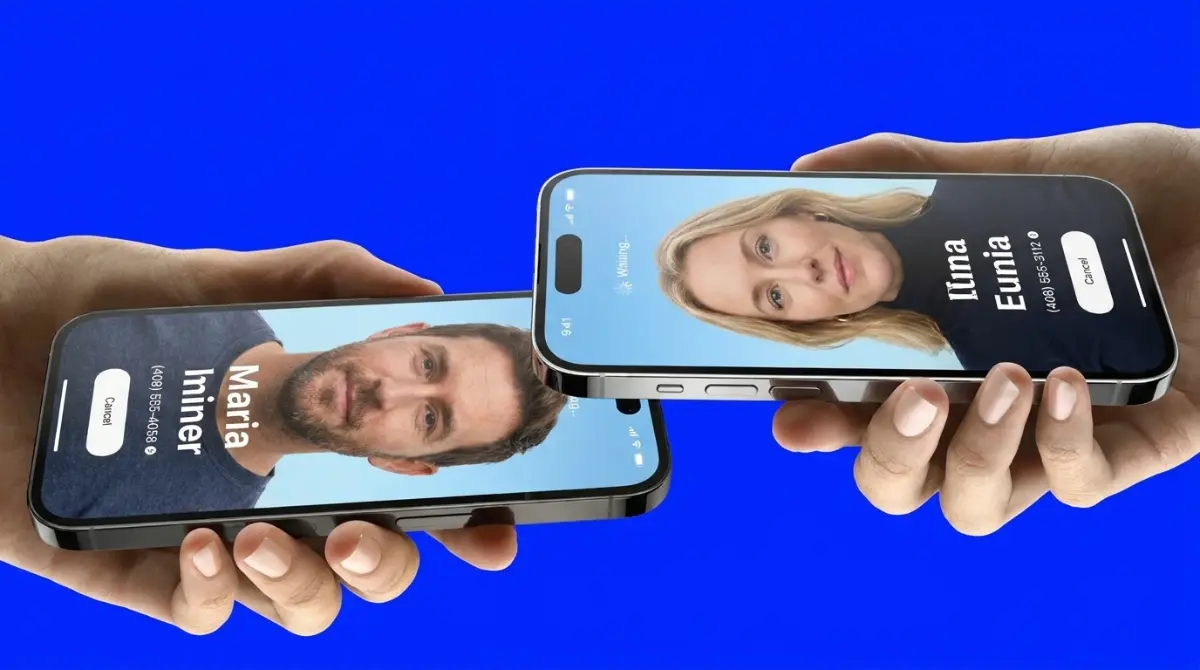
US Startup Sues Apple in India Over NameDrop Patent
Santa Monica startup GG Technologies sued Apple in the Bombay High Court for $161.86M, claiming iOS NameDrop copies its patented contact-sharing software and asking judges to halt Indian iPhone and Apple Watch imports as a parallel US trade probe advances.
Umar Thariwat | · 9 min read

Apple built NameDrop to make swapping phone numbers feel effortless, yet the tap-to-share feature has now pulled Cupertino into a three-front patent fight spanning Texas, Washington, and Mumbai. Santa Monica startup GG Technologies has filed a 781-page commercial patent lawsuit against Apple in the Bombay High Court, seeking ₹15B (about $161.86M) in damages and a court order blocking the feature across India. Behind the legal filing stands Gaurav Goel, an Indian Institute of Technology Delhi graduate and former Goldman Sachs investment banker who founded GG Technologies in 2018 to build StayTouch, a cross-platform contact-exchange app. Goel company claims Apple built NameDrop using proximity-sharing technology GG Technologies invented and patented years earlier. Beyond cash damages, the startup wants Indian judges to stop Apple from importing or selling iPhones and Apple Watches preloaded with NameDrop inside one of Apple fastest-expanding international markets. No court or trade agency has ruled Apple liable for infringement so far, and Apple has not issued a public response to the Mumbai complaint, yet the coordinated pressure hits Cupertino right as India becomes central to both its factory supply chain and its retail sales plans.
The Mumbai complaint marks a deliberate escalation in a dispute that has been building quietly since spring. Under Indian commercial court rules, companies must usually attempt pre-institution mediation before bringing a patent suit to trial. GG Technologies entered mediation with Apple in April 2026, only for talks to collapse without a settlement in September. The startup then lodged its formal Bombay High Court petition in October, though judges have not yet assigned a first hearing date. Rather than fighting a giant hardware maker inside a single courtroom where deep-pocketed defense teams can stretch proceedings for years, GG Technologies has opened simultaneous fronts in India and the United States. The legal squeeze arrives during a testing stretch for Cupertino leadership under Chief Executive Officer John Ternus, whose transition we covered when Apple appointed John Ternus to guide its next hardware era.
Inside the Patent Claims Behind StayTouch and NameDrop
To see why a small California startup believes it can challenge a multi-trillion-dollar hardware giant, you have to look closely at the filing timeline and the technical mechanics of both products. Goel conceived StayTouch in 2018 after running into the old networking headache of trading paper business cards and manually typing phone numbers during his finance career. Released publicly in 2019 on both iOS and Android, StayTouch lets two people bring their phones close together to exchange contact profiles without manually pairing Bluetooth radios or typing usernames. When one user later updates a phone number, job title, or profile photo, the app syncs those edits automatically across existing connections.
According to patent records detailed in Gadgets Now patent filing analysis, GG Technologies filed a United States provisional patent application on May 9, 2019, followed by an international patent filing on May 8, 2020. The company applied for Indian protection in 2021 and received Indian Patent No. 546169, titled "Method and System for Proximity-Based Contact Transfer," on July 27, 2024. Apple unveiled NameDrop in June 2023 as a headline addition to iOS 17, shipping it to iPhone owners that autumn as outlined in the Apple iOS 17 launch release, before extending support to Apple Watches via watchOS 10.1 in October 2023.
Apple explains in its NameDrop technical support guide that holding the top of an iPhone a few centimeters above another iPhone or Apple Watch triggers a screen glow and haptic pulse, letting each person pick which phone number or email address to share or receive only. GG Technologies claims two independent technical reviewers inspected its patents against NameDrop and flagged seven overlapping areas, including proximity detection, wireless contact initiation without manual pairing, selective field sharing, and explicit user consent screens. In earlier United States court responses, Apple disputed those infringement claims and challenged the validity of the startup patent assertions, signaling that Cupertino intends to fight the technical scope of the patents rather than cut a quick check.
How GG Technologies Built a Three-Front Legal Trap
Small startups almost always lose war-of-attrition patent lawsuits against Big Tech because federal jury trials take years and drain millions in legal fees. GG Technologies structured its campaign to create commercial urgency across two continents at once:
- First US Federal Suit (Western District of Texas): Filed on April 10, 2026 under Case No. 6:2026cv00237, asserting US Patent No. 12,022,369. Apple filed its answer and counterclaim on June 25, 2026. On September 15, 2026, the federal court paused the case at Apple unopposed request while trade regulators investigate, leaving the claims alive rather than dismissed.
- US International Trade Commission Investigation: Following a July 28 complaint amended on August 14, federal trade officials formally opened Section 337 Investigation No. 337-TA-1520 on August 28, 2026, per the official USITC investigation notice. GG Technologies is asking the commission for a limited exclusion order and a cease-and-desist order that could bar imports of infringing Apple hardware into the United States.
- Second US Federal Suit (Newly Issued Patent): On November 3, 2026, the exact day the United States Patent and Trademark Office issued continuation US Patent No. 12,784,009 naming Goel as inventor, GG Technologies lodged a fresh Texas lawsuit (Case No. 6:2026cv00701) before District Judge Leon Schydlower alleging willful infringement.
- Bombay High Court Commercial Suit (India): Filed in October 2026 after failed mediation, demanding ₹15B ($161.86M) and an injunction restricting Indian sales and imports of NameDrop-equipped iPhones and Apple Watches.
Combining an American trade tribunal with the Bombay High Court is a calculated pressure tactic. Unlike regular district courts that usually award cash royalties years after the fact, the USITC moves on strict statutory timelines (typically fifteen to eighteen months) and wields the threat of customs import bans. Apple saw how painful a USITC exclusion order can become during its drawn-out blood-oxygen sensor fight with medical device maker Masimo, which forced Cupertino to disable a marquee Apple Watch health feature on American store shelves just to keep shipping hardware.
Why Filing in Mumbai Strikes a Sensitive Nerve for Apple
Targeting India is not a random geographical detour, nor is it simply a nod to Goel educational roots at IIT Delhi. India sits at the center of Apple global manufacturing and consumer sales plans for the next decade. As United States and Chinese trade frictions linger, Apple and its assembly partners have poured billions into Indian iPhone plants to diversify production outside China, while opening flagship Apple retail stores and expanding regional distribution networks.
On the consumer side, iPhones still account for less than 10% of total smartphone shipments across India, giving Apple enormous runway as rising urban incomes push middle-class buyers toward premium handsets. Any temporary injunction from the Bombay High Court threatening customs clearance or retail distribution in India would rattle supply schedules and grab local headlines right as Apple promotes newer product tiers, including recent hardware rollouts we covered around Apple hardware transition plans. Even if judges ultimately refuse a sweeping import ban over a single software feature, defending a 781-page patent complaint in Mumbai adds fresh legal friction in a jurisdiction where Indian courts have historically shown willingness to grant interim commercial injunctions when patent holders present strong preliminary records.
The Bigger Fight Over Big Tech Absorbing Startup Features
Strip away the patent numbers, and GG Technologies lawsuit touches a raw nerve running through Silicon Valley and Bengaluru alike: the habit of operating system giants copying handy standalone apps and baking them natively into phones for free. Developers call it getting "Sherlocked," named after Apple early desktop search tool that wiped out an independent utility overnight.
When a platform owner folds a startup main feature directly into iOS, the independent app loses its reason to exist almost instantly. An iPhone user who can tap two devices together out of the box with zero downloads has little incentive to install StayTouch or convince colleagues to create separate accounts. Because StayTouch runs on both iOS and Android, cross-platform swapping remains one small edge NameDrop cannot replicate, yet Apple lock-in shrinks the addressable pool of iPhone-to-iPhone networking dramatically. Similar clashes over platform boundaries and intellectual property rights have popped up across Cupertino software empire this year, including legal tensions we tracked when OpenAI challenged Apple iCloud rules.
At the same time, software patents carry real hazards for everyday users and competing engineers. Defense attorneys in these disputes routinely argue that broad claims covering ideas like "bringing two phones close together to exchange contacts" stretch patent monopolies over obvious wireless interactions built atop standard NFC, Bluetooth, and Ultra Wideband chips. Patent examiners granted Goel patents in both Washington and New Delhi, which gives GG Technologies legal standing today, yet Apple lawyers will almost certainly scour pre-2019 prior art—from old Android Beam NFC transfers to Bump, the famous 2009 tap-to-share app Google acquired and shut down—to argue the claims should be invalidated.
What Happens Next in Mumbai and Washington
Apple holds one clean technical escape hatch that it lacked during earlier hardware patent battles. Unlike a physical optical sensor soldered inside an Apple Watch chassis, NameDrop is a software toggle inside iOS and watchOS. If an administrative law judge at the USITC or a bench at the Bombay High Court ever ruled against Apple, Cupertino could push an over-the-air software patch disabling NameDrop in the affected country inside forty-eight hours, neutralizing any threat to physical iPhone shipments while keeping retail shelves stocked.
That software off-switch limits the odds of an actual iPhone sales freeze, yet it does not erase Apple financial exposure. If GG Technologies proves infringement across hundreds of millions of shipped iPhones and Apple Watches since 2023, back-damages calculations in Texas and Mumbai could still carry a steep price tag. Watch two upcoming checkpoints closely: the initial hearing listing in the Bombay High Court and the evidentiary schedule set by the USITC administrative law judge in Investigation 337-TA-1520. Until then, GG Technologies has already achieved what few tiny startups pull off against Cupertino: forcing Apple legal teams on two continents to defend a native iPhone feature they assumed nobody could touch.
Read More on TechRobust:
Umar Thariwat
Umar Thariwat
Expertise:Tech News Reporting, Tech Business Analysis, Economic Foundations, Market Trends, Digital Economy
Award:Rising Voice of the Year 2025
Thariwat is a Staff Writer and Reporter covering tech news and enterprise trends at TechRobust. Blending daily reporting with her ongoing academic background in economics, she analyzes earnings, digital market, and the commercial strategies powering the global tech sector.
Related Stories
Anthropic 7 Founders Cash Out Nearly $2B in Record IPO Payhawk Raises $280M Series C at $2B Valuation
 Intel Sued by Shareholders After 29% Stock Plunge