


 LinkedIn
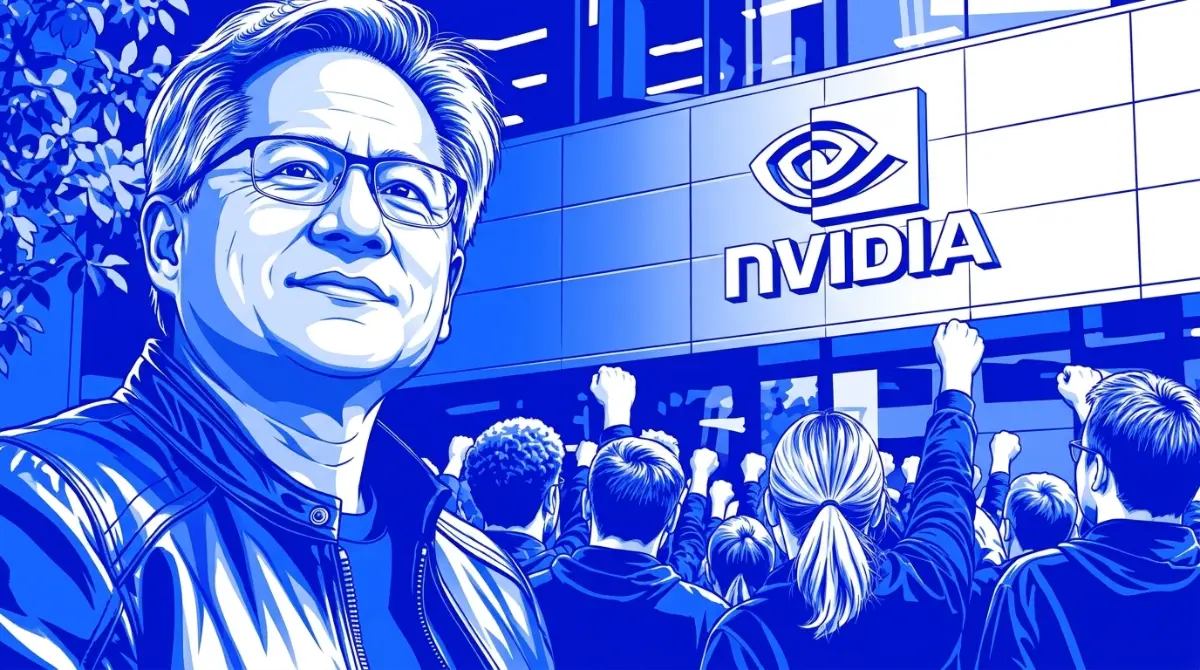 Nvidia Staff Cheer Jensen Huang Return to HQ as CEO
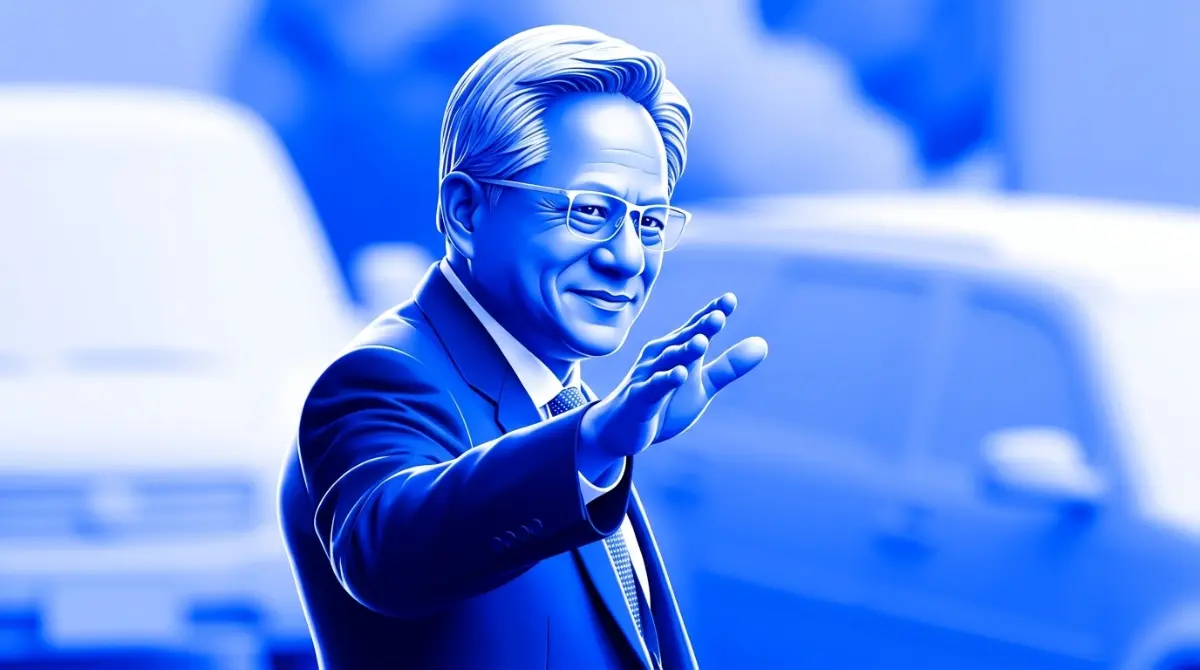
Lawmakers Clash Over Jensen Huang Return to Nvidia
Nvidia decision to reinstate founder Jensen Huang after White House backing sparked rare bipartisan anger across Capitol Hill, uniting senior Republicans and Democrats in demanding answers on Chinese intelligence allegations while supporters praise the move as protecting American computing leadership.
Umar Abubakar | · 9 min read

Bringing Jensen Huang back to the top job at Nvidia calmed stock traders in minutes, yet it ignited a rare bipartisan firestorm across Washington. Within hours of Nvidia board voting unanimously on Monday, November 23, 2026, to reinstate its co-founder as chief executive just eleven days after his resignation, lawmakers from both political parties flooded public channels with sharp criticism. Senior Republicans and Democrats alike questioned how corporate directors could declare Huang return free of national security danger before federal investigators or Congress finished examining his past personal relationship with Alice Huang, a former Singapore cloud executive whom American intelligence officials suspect of ties to Beijing. Meanwhile, President Donald Trump, Vice President JD Vance, and prominent technology backers defended the return as a necessary move to protect American semiconductor leadership and shareholder value. The clash sets up a tense showdown on Capitol Hill next month, turning one executive comeback into a direct test of whether corporate market power now outweighs federal oversight.
The speed of the boardroom reversal startled elected officials who were still preparing questions for Huang departure. Only six days earlier, Nvidia board chairman Harvey C. Jones told Wall Street analysts that directors had no plans to reappoint Huang following disclosures of workplace affairs and counterintelligence scrutiny. Over the weekend, intense outreach from the White House helped flip that stance. According to CBS News White House coverage, President Trump told CNBC on Monday that he spoke directly and indirectly with Nvidia directors and convinced them to bring Huang back, assuring the board there was no national security threat. Nvidia formal press notice cited input from senior United States government officials to justify the vote. That explanation failed to satisfy Capitol Hill, where incoming committee chairs empowered by November midterm gains are already scheduling sworn testimony to inspect what federal officials actually told Santa Clara directors.
Republicans Break With the White House Over China Risks
One of the clearest signs of how sensitive this fight has become is the number of Republican lawmakers willing to challenge President Trump publicly on national security grounds. Rather than falling into line behind White House assurances, multiple GOP senators, House members, and party veterans attacked Nvidia board for moving before facts were settled.
As documented in Vanguard international coverage and public statements posted Monday, Republican pushback hit from several angles at once:
- Demands for Proof: Texas Senator John Cornyn mocked the board security clearance claim in seven words, asking: "No national security risk? Based on what?" Utah Senator John Curtis pressed for full transparency, asking which federal officials spoke to Nvidia directors, what exact briefing they delivered, and what changed since the company earlier refused to rehire Huang.
- Corporate Governance Objections: Nebraska Senator Pete Ricketts noted his own experience serving on public company boards, pointing to multiple affairs with subordinates and an alleged foreign spy plus earlier board remarks about lacking candor. "His behavior does not support reinstatement," Ricketts said, stressing the vote does not excuse Huang from testifying before Congress.
- Direct Spy Allegations: Nebraska Representative Don Bacon stated bluntly that Huang had been "compromised and exploited by a Chinese spy" and argued Nvidia should have moved on without him while ignoring administration pressure. Michigan Representative Bill Huizenga wrote that Alice Huang "was, and is, a spy," urging Washington to get serious about stopping Chinese access to American silicon.
- Military and Legal Exposure: North Dakota Senator Kevin Cramer warned that while Nvidia directors carry the legal and reputational gamble of keeping a chief executive who could still face export or espionage charges, the broader national security danger passes directly onto the United States military.
- Conservative Party Voices: Former House Speaker Newt Gingrich warned of a national security issue of enormous proportions regarding advanced computer chips flowing against federal policy, while former United Nations Ambassador Nikki Haley stated that government holds a clear duty to hold companies accountable when adversaries obtain American technology.
Seeing conservative China hawks question a Republican administration decision shows how deep bipartisan fear runs around semiconductor controls. Even lawmakers who strongly favor free markets draw a hard boundary when restricted server hardware links back to Beijing military and intelligence agencies, an oversight dispute we followed earlier when Congress summoned Jensen Huang.
Democrats Target White House Ties and Stock Trades
Democratic leaders responded even more aggressively, framing Monday reinstatement as proof of political favoritism and promising sweeping subpoenas once the newly elected Congress convenes in January following Democratic midterm victories.
Senate Democratic Leader Chuck Schumer argued that the Trump administration hurried to bring Huang back to protect personal financial ties and wealthy allies at the expense of national security, insisting Congress must step in. Delaware Senator Chris Coons called the news hard to believe, writing that it confirmed long-standing fears that the White House traded away American security so China could reach advanced chips, calling the outcome reckless. Illinois Representative Raja Krishnamoorthi, the top Democrat on the House Select Committee on China, labeled Nvidia decision "outrageous," pointing out that neither the federal government nor Nvidia own outside investigators have finished their work and warning that White House assurances cannot be accepted at face value.
Several Democrats zeroed in on money, political donations, and market timing:
- Trading and Ethics Probes: Arizona Senator Ruben Gallego called for immediate inquiries into stock trades placed right before Monday public announcement, which sent Nvidia shares soaring more than 30%. Maryland Senator Chris Van Hollen pointed to President Trump past Nvidia stock holdings and a $25M corporate contribution toward a ballroom project, demanding tougher export statutes and safety rules.
- Rule of Law Warnings: Michigan Senator Elissa Slotkin argued the pressure campaign cemented a pattern of placing profits above national security and the rule of law. Oregon Senator Ron Wyden declared national security was being put up for sale under Trump, Vance, and Secretary of State Marco Rubio, promising congressional accountability in January.
- Calls to Summon the Full Board: Arizona Representative Yassamin Ansari demanded that both Huang and every single Nvidia board member appear before Congress immediately. Michigan Representative Debbie Dingell faulted directors for acting before lawmakers heard from Huang, while Virginia Representative Don Beyer called the presidential push to dictate a private company leadership "psychotically crooked."
- Timeline Questions: California Senator Adam Schiff and New Jersey Senator Andy Kim demanded full records showing what Nvidia and the White House knew over the past year, noting reports that intelligence briefings warned over twelve months ago that Beijing was targeting Nvidia. Pennsylvania Governor Josh Shapiro, Massachusetts Senator Elizabeth Warren, Wisconsin Senator Tammy Baldwin, New Hampshire Senator Maggie Hassan, Vermont Representative Becca Balint, New Jersey Senator Cory Booker, Massachusetts Representative Richard Neal, and Illinois Representative Brad Schneider all echoed demands for sworn hearings.
The Case Made by Trump, Vance, and Huang Supporters
Supporters of the reinstatement push back firmly against claims that Huang return endangers the country, arguing that forcing out the founder of a $4T engineering engine handed Beijing an even bigger strategic prize.
Reporting by The Guardian on Trump intervention detailed the administration defense clearly. Speaking to CNBC on Monday, President Trump stated that the federal government holds no evidence that Huang engaged in unlawful conduct and noted that Attorney General Todd Blanche considered Huang exonerated. Calling Huang a "great patriot" in separate remarks covered by Arab News on Huang return, Trump argued that America must "protect our geniuses" and noted that watching Nvidia stock plunge convinced him to press directors harder. Vice President JD Vance also worked behind the scenes connecting the White House, Huang, and company directors, later sharing footage of Trump praising his assistance. Trump even posted a tongue-in-cheek generated meme depicting Huang raising a fist in celebration.
Outside the White House, several technology figures and investors argued that Nvidia operational survival depends on its co-founder. Former presidential candidate Andrew Yang wrote on X that Nvidia needs Huang just as much as Huang needs Nvidia, welcoming back "the sheriff of the AI trade." Over 200,000 signers, including roughly 10,000 self-identified Nvidia staff members, backed an open petition arguing that removing a thirty-three-year chief executive before outside lawyers finished investigating denied him fair process. Defenders also point out that Wall Street wiped hundreds of billions off American retirement portfolios when Huang left, and that Nvidia board kept its independent foreign-intelligence inquiry open while forming a dedicated National Security and Export Control Committee and recruiting a new Chief Compliance Officer. Those leadership tensions were visible days earlier when internal reports surfaced that Huang privately questioned interim CEO Colette Kress.
What Awaits Jensen Huang on Capitol Hill
Reclaiming the corner office in Santa Clara ends the stock selloff, yet it puts Huang directly in the crosshairs of federal lawmakers next month. Two major congressional sessions are already on the calendar:
- Senate Public Hearing: Huang is set to appear in public before senators next week, giving critics from both parties television cameras to press him on Megaspeed chip shipments, board communications, and White House calls.
- House Tri-Committee Testimony: Huang is also scheduled to testify behind closed doors before three House panels, including the Intelligence Committee, the Foreign Affairs Committee, and the Select Committee on the Chinese Communist Party.
- Expanded January Subpoenas: With Democrats preparing to take broader investigative leverage after the midterm election wave, committee staff are already drafting document requests targeting both Nvidia directors and Commerce Department export officials.
Representative Brad Schneider previewed the exact line of questioning waiting for Huang, asking whether he knew his personal partner held suspected Chinese intelligence ties, whether private hardware schedules ever came up, and what steps directors took to protect trade secrets. Nvidia own growing presence in Washington, built up through efforts like Nvidia employee political action committee, will now face its sternest political test.
Strip away the partisan rhetoric on social media, and Monday uproar boils down to one unresolved question: how should a democracy police a single private company whose graphics processors anchor both Wall Street retirement funds and national military readiness? If Nvidia is genuinely too big to lose its founder, lawmakers from both parties are making one thing plain: it is also far too powerful to escape public cross-examination under oath.
Read More on TechRobust:
Tags:Jensen HuangNvidiaDonald TrumpUS CongressSenate Banking CommitteeChina export controlsnational security
Umar Abubakar
Umar Abubakar
Expertise:Editorial Leadership, Product Design (UI/UX), Digital Media Strategy, Technology Systems, Product Architecture
Award:TechRobust Visionary Leader of the Year 2025
Umar serves as Editor-In-Chief of TechRobust, combining editorial vision with senior product design expertise to shape how modern technology stories are built, packaged, and told. Overseeing all editorial verticals, he directs coverage across global and regional tech industry while applying deep design thinking to publication strategy and reader experience.
Related Stories
Nvidia Staff Cheer Jensen Huang Return to HQ as CEO Trump Calls Reported FBI Crime Database Hack Not Good
 Elon Musk Compares Jensen Huang Ouster to Michael Jordan