


 LinkedIn
 Trump Calls Reported FBI Crime Database Hack Not Good
Nvidia Staff Cheer Jensen Huang Return to HQ as CEO
Hundreds of Nvidia staff cheered founder Jensen Huang back into Santa Clara headquarters after a unanimous board reversal and White House push reinstated him as chief executive, lifting shares 31.5% even as workplace abuse claims and December congressional hearings loom.
Caleb Ogunkanbi | · 8 min read

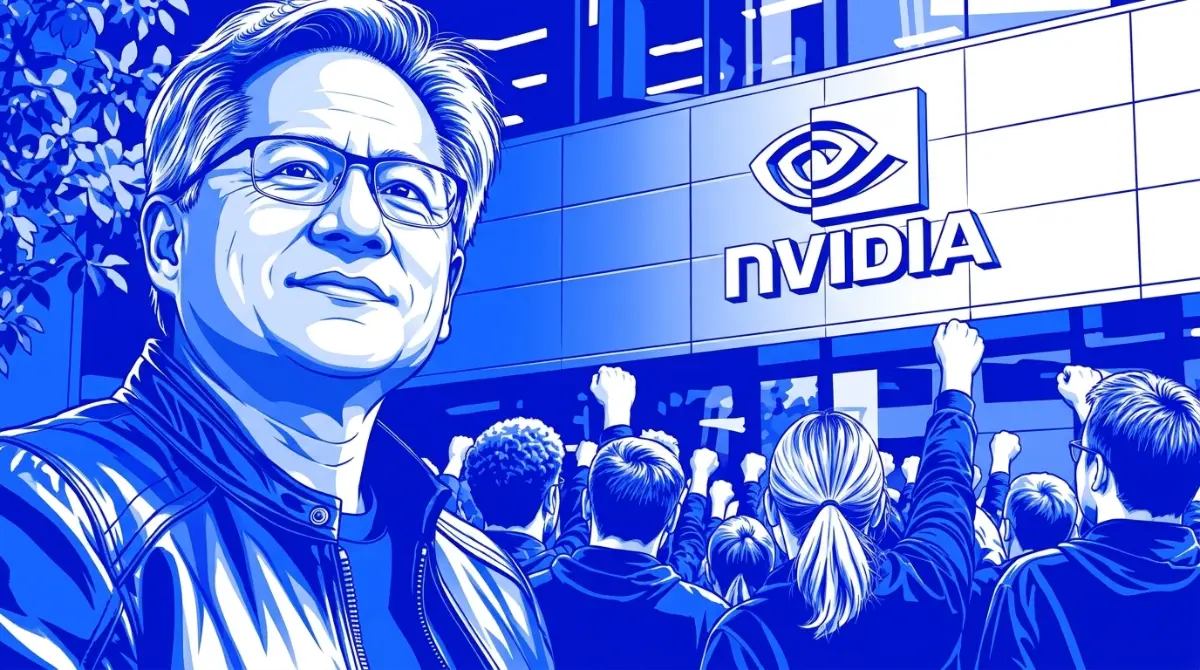
Chants of "Jensen! Jensen! Jensen!" echoed through the atrium of Nvidia Santa Clara headquarters on Monday, November 23, 2026, turning a corporate governance crisis into a stadium homecoming. Hundreds of engineers and managers packed the open walkways, clapping and filming on their phones as co-founder Jensen Huang walked back into the office eleven days after resigning in disgrace. Standing before the crowd after soaking in the applause, Huang kept his opening promise simple. "Thank you all for the second chance," he told staff in videos shared online and broadcast on financial television. "I am going to be a better CEO the second time around." Outside the glass walls of Silicon Valley, Wall Street cheered even louder: Nvidia shares surged 31.5% by Monday closing bell, adding $34B to Huang personal net worth in a single session according to the Forbes market close tally. Yet the jubilation inside Santa Clara hides an uncomfortable truth about modern American capitalism. Reversing a boardroom ouster after a presidential phone call and a stock crash does not erase federal probes, bipartisan anger on Capitol Hill, or fresh allegations that Huang ruled his own staff through public humiliation.
Just six days earlier, Nvidia board chairman Harvey C. Jones sat on an earnings call and flatly told investors that directors had no intention of bringing Huang back. That firm stance collapsed over the weekend under triple pressure: a sinking share price, an employee petition that crossed 200,000 signatures, and direct intervention from President Donald Trump. On Monday morning, Nvidia published an official Nvidia reinstatement statement confirming that directors voted unanimously to restore Huang immediately as president, chief executive officer, and board member. Jones will remain board chair, while Chief Financial Officer Colette Kress returns to her finance seat after eleven tense days running the company as interim chief, a rocky stretch we tracked when reports surfaced that Huang privately doubted Colette Kress. Putting the founder back in charge stopped the stock bleeding overnight, while raising a much bigger geopolitical question: who actually governs a $4T semiconductor supplier when market panic collides with national security?
Inside the Eleven-Day Boardroom U-Turn
To follow how quickly corporate resolve melted in Santa Clara, trace the timeline from November 12 to November 23. Huang stepped down on November 12 after disclosures revealed at least two workplace affairs plus an extramarital relationship with Alice Huang, an executive at Singapore cloud firm Megaspeed whom United States intelligence officials suspect of gathering sensitive information for Beijing. Losing its thirty-three-year founder stripped hundreds of billions of dollars from Nvidia market value within days and rattled tech indexes across Wall Street and Asia.
Inside Nvidia, employee anxiety boiled over almost immediately. Roughly 10,000 people identifying as current staff joined over 200,000 total signers on an open letter demanding due process and Huang return. Even after interim leader Kress moved annual pay reviews forward from March to December to calm restless engineers, senior technical staff warned directors that rival chipmakers were circling their top architects. That threat was real: venture funds from Silicon Valley to Tel Aviv spent the past week pitching seed checks to Nvidia veterans, an opening we covered when Israeli VCs targeted Nvidia turmoil. Heavyweight allies piled on from outside the building too. Speaking onstage in New York last week, Tesla chief Elon Musk compared removing Huang to "kicking Michael Jordan off your team when you are on a winning streak," while defense tech founder Palmer Luckey warned that Beijing wanted Huang gone to weaken American computing.
Still, the decisive push came from the White House rather than an online petition. In its Monday release, Nvidia board stated it received input from senior United States government officials that left directors confident Huang return "poses no national security risk." President Trump went much further during a Monday CNBC interview detailed in NPR and GPB reporting, openly claiming credit for persuading directors to reverse course. "I spoke to them. Let me just put it that way. And I convinced them," Trump said, adding that watching shares sink made directors far easier to persuade than a week earlier. Trump even speculated aloud that treating Huang poorly could tempt him to run a Chinese rival like Huawei, before posting an edited Truth Social graphic depicting Huang raising a fist holding a red bra in front of an Nvidia flag. In a single weekend, executive oversight at America highest-value chip company bent directly to presidential lobbying and stock-ticker pressure.
Two Very Different Portraits of Jensen Huang
Monday standing ovation inside Santa Clara clashed starkly with a dark workplace portrait published just three days earlier. While cheering engineers hoisted smartphones in the atrium and hailed Huang as a visionary builder who made thousands of employees millionaires, investigative reporting drawing on over twenty years of court files and interviews with more than a dozen current and former workers described a boss who "used humiliation as a tool" inside internal meetings.
According to accounts summarized in a PC Gamer workplace summary of the New York Times investigation, former staff recalled brutal verbal tirades in front of peers. One witness reported hearing Huang threaten to rip both arms off a subordinate and beat the worker to death with them, while another alleged Huang threatened to tear open a staffer head during a dressing-down. Notebooks left behind by former Nvidia human resources vice president Michael Winston, who reached a confidential settlement with the company before his death earlier this year, claimed HR leaders were forced to watch employees get publicly berated while complaints were brushed aside or silenced with nondisclosure agreements. Representatives for Huang rejected Winston claims, and Nvidia declined to comment on the workplace investigation.
Why do hundreds of employees erupt in cheers for a leader accused by former colleagues of ferocious bullying? Inside high-stakes Silicon Valley engineering firms, fear and devotion often live side by side. Huang flat corporate structure, with dozens of managers reporting directly to him, turned Nvidia into a relentless execution machine that beat Intel and AMD to artificial intelligence accelerators and pushed revenue to historic peaks covered in our report on Nvidia $96B sales surge. Engineers who thrived under his intense standards watched their stock grants turn into generational fortunes, creating deep tribal loyalty that critics outside the building rarely share. Yet returning under a promise to be "a better CEO the second time around" puts Huang daily conduct under an unforgiving microscope. One leaked meeting recording of a public outburst will hand plaintiffs attorneys and hostile directors fresh ammunition overnight.
Capitol Hill Fury and December Hearings Ahead
If Nvidia directors hoped White House backing would quiet Washington, Monday reaction from Congress shattered that illusion immediately. Both Republicans and Democrats blasted the sudden reinstatement, warning that a private corporate board cannot declare a national security inquiry closed before lawmakers review the intelligence.
Two separate congressional showdowns are already locked onto Huang calendar next week:
- House Tri-Committee Interview (December 1): Huang previously agreed to sit for a transcribed interview with the House Foreign Affairs Committee, the House Intelligence Committee, and the Select Committee on the Chinese Communist Party regarding his contact with Megaspeed and overseas chip diversions.
- Senate Banking Committee Hearing (December 3): Just hours after Monday reinstatement, the Senate Banking Committee—which oversees federal export control law—formally scheduled Huang for public testimony next Thursday.
Lawmakers from both parties signaled they will not go easy on him. As reported in CBS News Senate coverage, North Dakota Republican Senator Kevin Cramer warned that the risk of extortion by an individual barred by Singapore should have been enough to block a rehire, urging Congress to tighten export rules immediately. Nebraska Republican Senator Pete Ricketts noted that Monday board vote does not excuse Huang from answering for unaccounted chips or national security exposures before the Senate. On the Democratic side, Representative Raja Krishnamoorthi called the rehire "outrageous" while investigations remain unfinished, Senator Elizabeth Warren warned against Nvidia lobbying to weaken bipartisan export bills, and incoming House Intelligence chair Representative Jim Himes stated in a Washington Post congressional report that Congress still demands direct answers even if Nvidia directors feel reassured. Those upcoming hearings build directly on the summons we documented when Congress called Huang over China ties.
New Guardrails Inside Santa Clara Cannot Stop Federal Probes
To defend its unanimous reversal against angry lawmakers and shareholder lawsuits, Nvidia board wrapped Huang return inside a fresh set of corporate guardrails. Directors confirmed that the independent board committee investigating foreign intelligence targeting will finish its work with outside counsel, and Huang pledged full cooperation. In addition, the board pointed to its newly formed National Security and Export Control Committee, staffed strictly by independent directors who are hiring outside national security attorneys and advisers. Nvidia also opened a search for a brand-new Chief Compliance Officer reporting directly to the Nominating and Corporate Governance Committee rather than to Huang.
Those institutional changes look neat on paper, yet they cannot pause active investigations by the Securities and Exchange Commission and the Department of Justice. Nor do they undo the massive policy fallout already hitting Asian chip supply chains, where strict new federal export rules are forcing foundries to audit routine processor orders and police Southeast Asian cloud hubs. Nvidia own political operations, including the lobbying arm we profiled when Nvidia launched an employee PAC, now face an incoming Congress determined to scrutinize every tie between Silicon Valley chipmakers and Commerce Department trade officials.
For now, Jensen Huang has pulled off one of the fastest executive comebacks in business history, joining Sam Altman at OpenAI in proving how hard corporate boards struggle to survive a founder revolt when billions in market value are evaporating by the minute. The applause in the Santa Clara atrium proved his engineers still want him at the whiteboard. Starting next week in Washington, Huang will have to prove to skeptical senators, federal prosecutors, and cautious institutional investors that bringing him back saved Nvidia rather than exposing it to a much larger political storm.
Read More on TechRobust:
Tags:HuangNvidiaColette KressDonald TrumpHarvey JonesElon MuskSenate Banking Committeecorporate governance
Caleb Ogunkanbi
Caleb Ogunkanbi
Expertise:Practical AI Implementation, Head-to-Head Product Testing, Technical How-To Guides, Data Tools & Automation, Consumer Software Benchmarking
Award:TechRobust Guides & Insights Writer of the Year 2025
Caleb is a Staff Writer and Reporter breaking down the frontiers of artificial intelligence and actionable tech education. He produces rigorous head-to-head comparisons, demystifies data tools, and crafts step-by-step technical guides that help readers navigate complex software and AI workflows with ease.
Related Stories
Trump Calls Reported FBI Crime Database Hack Not Good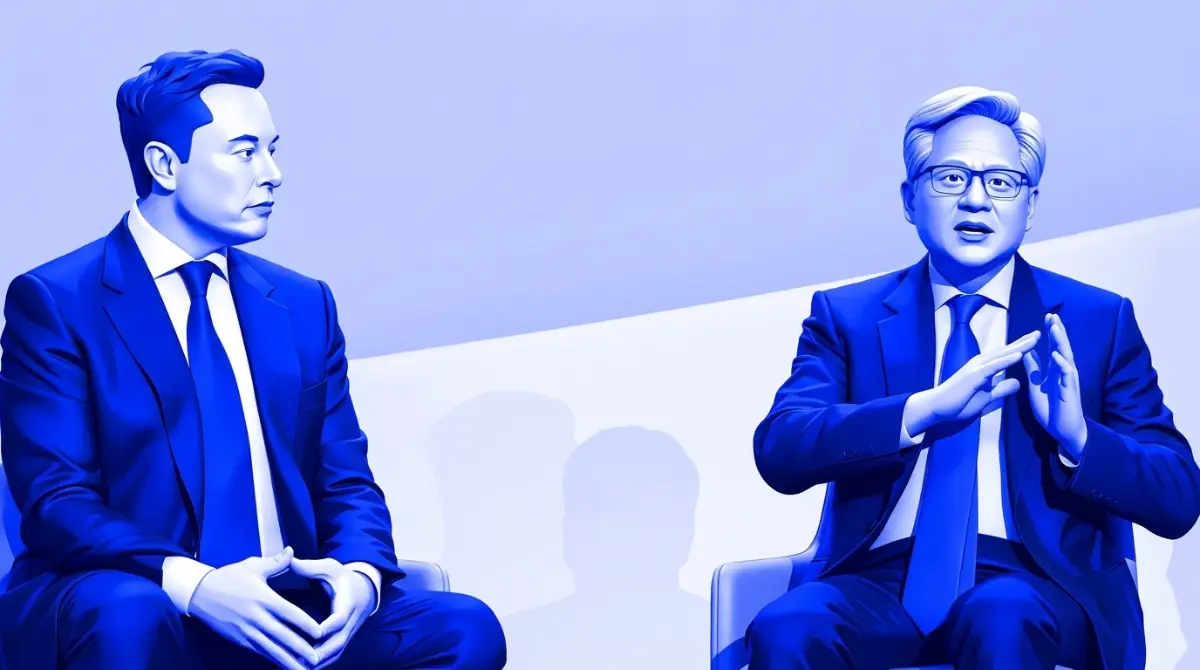 Elon Musk Compares Jensen Huang Ouster to Michael Jordan
 British Hackers Face Prison for GTA 6 and Crypto Thefts