
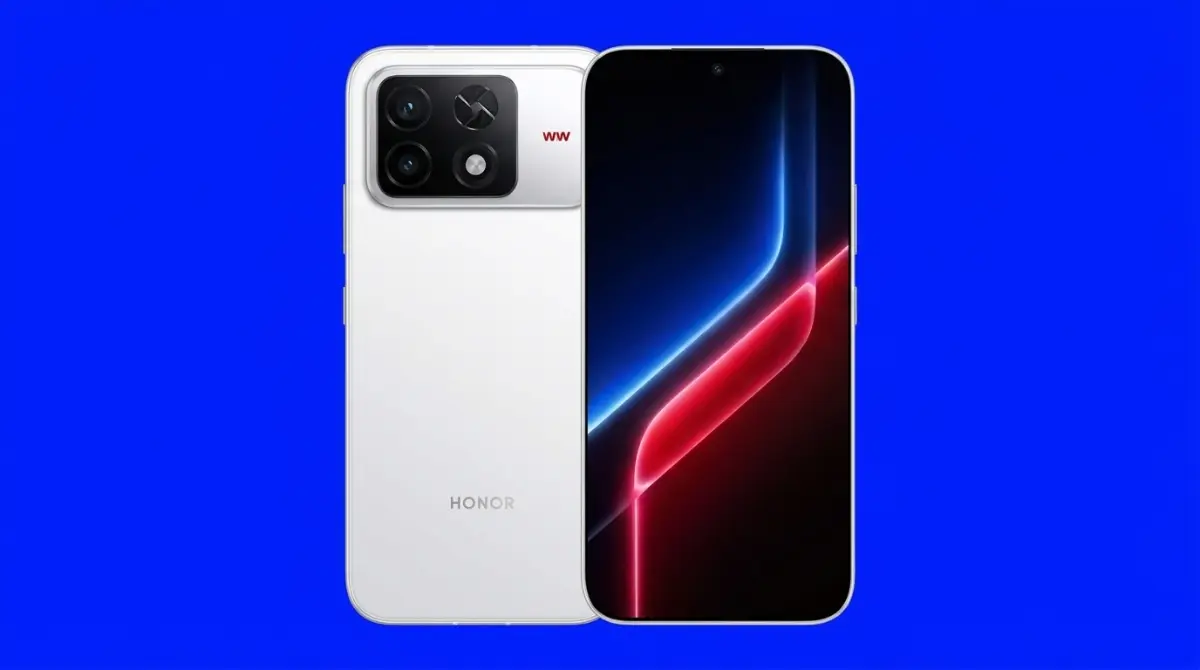


Honor Win2 and Win Tablet Debut With Internal Fans
Honor introduced its Win2 gaming smartphone series and compact Win Tablet in China, packing physical cooling fans, Snapdragon 8 Elite processors, and massive silicon-carbon battery cells up to 12,070mAh to conquer long competitive gaming sessions without thermal dropouts.
Goriola Ayankoya | · 11 min read

Handheld gaming performance has spent years running headfirst into the stubborn laws of thermal physics. When smartphone manufacturers install high-wattage mobile silicon inside slim glass enclosures without active ventilation, mobile processors turn into miniature heating elements. Within ten to fifteen minutes of launching heavy three-dimensional multiplayer titles, internal temperatures spike toward fifty degrees Celsius. To keep components from melting, the phone operating system activates thermal safety throttles, slashing processor clock speeds in half, dropping screen brightness, and causing video frame rates to stutter violently. Serious mobile esports players have had to attach awkward clip-on refrigerator fans to the backs of their phones or play beside blowing air conditioners. Shenzhen hardware manufacturer Honor stepped forward on Wednesday, October 21, 2026, to eliminate those clumsy workarounds. The company officially launched its dedicated gaming lineup in China, unveiling the Honor Win2 smartphone family alongside the Honor Win Tablet. Both products feature built-in motorized centrifugal cooling fans, flagship Qualcomm Snapdragon 8 Elite silicon, and enormous silicon-carbon battery packs that reach an astonishing 12,070mAh. The launch challenges mainstream phone makers who continue selling delicate glass flagships that choke under intense gaming loads, continuing a hardware trend visible when OnePlus unveiled the OnePlus 16 with a 9,000mAh battery.
The debut of the Win lineup marks Honor aggressive expansion into dedicated gaming hardware, competing directly against specialized gaming sub-brands like Asus ROG, Nubia RedMagic, and Xiaomi Black Shark. Instead of treating mobile gaming as a casual afterthought with cosmetic software overlays, Honor engineered the Win2 series from the motherboard outward for sustained thermal performance. The phone family includes three distinct models: the flagship Win2, the endurance-focused Win RT 2, and the high-performance Win Turbo 2. Paired with the compact 8.4-inch Win Tablet, which carries a blisteringly fast 240Hz OLED display panel, Honor is building an entire mobile gaming environment designed to run demanding graphics titles at maximum settings without thermal degradation. The aggressive hardware engineering matches battery milestones we followed when Redmi launched the K100 with a 10,000mAh battery.
The Physics of Centrifugal Fan Cooling and Dual Turbos
To grasp why the Honor Win2 represents a significant hardware departure, one must inspect its internal thermal architecture. Most mainstream smartphones rely purely on passive heat dissipation: heat generated by the processor die transfers into copper foil, graphite sheets, and a sealed vapor chamber, radiating outward through the rear glass plate. In passive designs, once the outer phone chassis heats up, thermal transfer slows down, forcing the processor to throttle.
The Honor Win2 incorporates an active, motorized dual-turbo centrifugal fan system. The miniature turbine spins at thousands of revolutions per minute, pulling cool outside air through side intake vents, forcing it across specialized thermal fins soldered directly to the vapor chamber, and exhausting hot air through dedicated vents along the top edge. In official technical presentations, Honor demonstrated that this active airflow cycle lowers internal processor die temperatures by up to 14.4 degrees Celsius during intense gaming loads, dissipating concentrated heat in fifty seconds. The fan assembly uses waterproof acoustic dampeners, keeping operational noise below twenty-four decibels while achieving IP68 and IP69K dust and water resistance ratings. Gamers can play outdoors in dusty stadiums or rainy transit stops without worrying about environmental debris clogging the internal air duct. Thermal management advances across high-performance mobile devices match engineering choices we examined in our review of Huawei advanced display and chassis engineering.
Flagship Qualcomm Snapdragon 8 Elite Silicon Under the Hood
Sustained cooling means nothing without processing muscle to drive it. The Honor Win2 is powered by Qualcomm Snapdragon 8 Elite Extreme Gen 6 chipset, fabricated on TSMC advanced three-nanometer foundry nodes. The processor replaces generic Arm cores with custom Qualcomm Oryon CPU cores, featuring prime performance cores clocked at high frequencies. Graphical processing is managed by an upgraded Adreno GPU supporting hardware-accelerated ray tracing, neural frame generation, and variable-rate shading in modern game engines.
Under passive cooling, Qualcomm powerful silicon would throttle its peak clock speeds within fifteen minutes. Inside the Win2, the active cooling fan allows the CPU and GPU to sustain peak frequencies indefinitely. In gaming benchmark tests running heavy titles like Genshin Impact, Honkai: Star Rail, and Call of Duty: Warzone Mobile at maximum visual fidelity, the Win2 maintained a steady 120 frames per second without frame pacing stutters or resolution drops. The device includes an auxiliary display processor that handles real-time frame interpolation, converting native 60fps game streams into fluid 185fps outputs without overloading the primary chip. Qualcomm custom mobile silicon capabilities were detailed during our coverage of the Snapdragon 8 Elite mobile processing platform launch.
Comparing the Honor Win2 Series and Win Tablet
| Device Model | Processor Chipset | Display Specs & Refresh | Battery Capacity | Active Cooling Mechanism | Wired Fast Charging |
|---|---|---|---|---|---|
| Honor Win2 | Snapdragon 8 Elite Extreme Gen 6 | 6.83-inch 2K OLED (185Hz) | 10,100mAh (Si/C) | Dual-turbo centrifugal fan | 100W wired / 80W wireless |
| Honor Win RT 2 | Snapdragon 8 Elite Gen 5 | 6.83-inch 2K OLED (185Hz) | 12,070mAh (Si/C) | Internal fan + 3D vapor chamber | 80W wired |
| Honor Win Turbo 2 | Snapdragon 8 Elite Gen 5 | 6.83-inch 2K OLED (185Hz) | 12,070mAh (Si/C) | High-speed turbine fan | 100W wired |
| Honor Win Tablet | Snapdragon 8 Elite Gen 5 | 8.4-inch 2.4K OLED (240Hz) | 10,000mAh (Si/C) | 15,000 RPM turbo fan + 38k mm² VC | 66W wired |
The comparison matrix reveals Honor calculated product strategy. By offering both a 10,100mAh performance flagship in the Win2 and an immense 12,070mAh power cell in the Win RT 2 and Turbo 2 models, Honor is catering to different styles of competitive play. Players who demand top benchmark scores pick the Win2, while gamers who travel or compete in multi-day tournaments without continuous charger access can select the Win RT 2 for multi-day endurance.
Silicon-Carbon Chemistry Delivers 12,070mAh Capacities
The battery capacities announced across the Win series shatter previous mobile hardware records. Traditional lithium-ion phone batteries using graphite anodes reached physical energy limits years ago. Packing more than 5,500mAh into a phone required making the chassis thick and heavy, leaving little internal room for cooling hardware.
Honor utilized advanced silicon-carbon anode chemistry, which stores significantly more lithium ions per gram than graphite. Doping the carbon anode matrix with silicon nanoparticles expands energy density while keeping battery thickness within comfortable hand dimensions. The Win2 houses a 10,100mAh battery within an 8.3mm profile, while the Win RT 2 fits an astonishing 12,070mAh battery inside an 8.6mm frame. Paired with 100W wired fast charging, the battery replenishes from empty to eighty percent in approximately thirty-five minutes. Crucially, the Win2 incorporates dedicated hardware bypass charging: when plugged into a power brick during live tournament play, electrical current flows directly to the screen and processor, bypassing the battery entirely. This prevents the battery cell from heating up, protecting battery longevity while keeping the phone comfortable in hand. Hardware longevity and battery protections were explored in our analysis of Samsung dedicated security chips for battery packs, as well as battery breakthroughs detailed when Honor revealed high-density battery engineering.
The 185Hz 2K Display and 5,920Hz Eye Protection
Display quality is another area where Honor prioritized player ergonomics. Competitive gamers dislike curved display panels because curved borders create light glare and trigger accidental palm touches during tight gameplay moments. Honor equipped the Win2 with a flat 6.83-inch AMOLED display delivering a crisp 2K resolution of 1,272 by 2,800 pixels.
The screen runs at a native 185Hz refresh rate, delivering motion clarity that eliminates ghosting on fast camera pans in first-person shooter games. Instantaneous touch sampling reaches an incredible 3,000Hz, ensuring finger commands register in fractions of a millisecond. To protect players from eye fatigue during overnight tournaments, Honor integrated high-frequency pulse-width modulation dimming rated at 5,920Hz. This eliminates invisible display flicker that causes headaches and eye strain at low brightness settings. Peak HDR brightness reaches 6,000 nits, ensuring complete visibility under outdoor sunlight or harsh stage spotlights. Display calibration choices across mobile devices were examined in our review of the Vivo T5 5G launching with high-capacity battery hardware.
The Honor Win Tablet: A 240Hz Compact Gaming Beast
Alongside the smartphones, Honor unveiled the Win Tablet (marketed domestically as the Win Pad), a dedicated 8.4-inch slate designed to challenge the Apple iPad mini in the portable gaming arena. Large 11-inch and 13-inch tablets are too heavy to hold for hours, while standard smartphone displays can feel cramped for tactical games and map overviews. An 8.4-inch form factor provides an optimal balance between screen real estate and handheld comfort.
The Win Tablet features an 8.4-inch OLED display running at an extraordinary 240Hz refresh rate with a sharp 2.4K resolution (2,304 by 1,440 pixels). Inside sits Qualcomm Snapdragon 8 Elite Gen 5 processor, paired with a massive 38,000 square millimeter double-layer vapor chamber and a dedicated 15,000 RPM internal turbo fan. The tablet packs a 10,000mAh battery with 66W fast charging within a slim 6.1mm aluminum chassis weighing barely 315 grams. Dual stereo speakers tuned with spatial audio algorithms provide directional sound cues, helping players pinpoint enemy footstep locations without wearing headphones. The compact tablet form factor matches designs we tracked in our leak analysis of the iQOO 16 design leak and compact tablet.
MagicOS 11 Gaming Controls and Tournament Customization
Software control on both the phone and tablet runs through MagicOS 11 built on top of Android 17. The interface includes Honor Game Space, a dedicated software hub that lets gamers customize hardware performance profiles for individual titles.
Players can manually adjust CPU clock governors, set fan speeds to quiet or turbo modes, fine-tune touch sensitivity along the screen borders, and block incoming phone calls and message notifications during competitive ranked matches. The software also provides customizable shoulder triggers: pressure-sensitive ultrasonic touch sensors built into the right-hand chassis frame that act like physical game controller triggers. The software suite includes live performance telemetry overlays displaying real-time frame rates, processor temperatures, and battery discharge rates. Global software distribution roadmaps for Honor operating system were detailed in our report on Honor confirming the MagicOS 11 global rollout schedule.
Sensible Camera Trade-offs to Protect Pricing
Delivering motorized cooling fans, high-refresh OLED panels, and five-figure battery packs at competitive price points requires calculated engineering compromises. Premium camera flagships spend hundreds of dollars per unit on bulky periscope zoom lenses, continuous variable apertures, and expensive optical coatings.
Honor simplified the camera system on the Win2. The rear camera module houses a capable 50MP primary sensor with optical image stabilization, supported by a 50MP 3x telephoto lens and a 12MP ultra-wide sensor. There are no gimmicky 2MP macro sensors. For everyday family photos, casual video recording, and document scanning, the camera array captures sharp, clean images with balanced color reproduction. For dedicated gamers who prioritize computing speed, thermal stability, and battery life over studio portrait photography, this hardware trade-off makes complete practical sense. High-end camera specifications on lifestyle flagships were explored in our preview of the Oppo Find X10 series global hardware configurations.
Challenging RedMagic, ROG, and the Gaming Establishment
The debut of the Honor Win series disrupts the established hierarchy of mobile gaming hardware. For years, Asus ROG Phone and Nubia RedMagic dominated the niche gaming phone segment, charging luxury prices for aggressive aesthetic designs featuring flashing RGB lights and bulky gaming shells.
Honor approach with the Win2 is more refined. The phone exterior looks like a sleek modern flagship, concealing its internal centrifugal fan behind tasteful intake grills that do not scream adolescent gaming styling. Furthermore, with battery capacities stretching from 10,100mAh to 12,070mAh, Honor easily outlasts rival gaming phones that still ship with 6,000mAh or 6,500mAh cells. If Honor pricing in China (expected to start under $600 for the base models) translates well to international retail channels across Europe and Asia, the Win2 will represent an irresistible option for serious gamers and power users. Mid-range performance competitors were analyzed in our leak coverage of the iQOO 16R and Z12 Turbo specifications.
The Future of Handheld Active Cooling
The Honor Win2 and Win Tablet prove that active motorized cooling is no longer a clumsy prototype gimmick; it has become a necessary hardware feature for high-performance computing on the go. As mobile processor silicon becomes more powerful and gaming titles approach desktop-class visual fidelity, passive cooling can no longer handle the thermal burden.
By pairing whisper-quiet centrifugal cooling fans with class-leading 10,000mAh to 12,070mAh silicon-carbon batteries, Honor has built a hardware platform that lets gamers play without compromise. No more throttling, no more dimming displays, and no more searching for wall chargers after two hours of play. The Honor Win series establishes a fresh standard for the entire mobile industry, reminding manufacturers that true flagship performance is not measured by theoretical benchmark sprints, but by sustained power that keeps running when the competition drops out. Modular hardware repairability and component durability were detailed in our report on Framework restructuring component pricing and customer repairs, while audio accessories were evaluated in our guide to the best wireless earbuds of 2026.
Read More on TechRobust:

Goriola Ayankoya
 LinkedIn
Goriola Ayankoya
Expertise:Consumer Hardware, Smartphone Trends, Gadget Reviews, Breaking Tech News, Mobile Ecosystems
Award:TechRobust Hardware Reporter of the Year 2025
Goriola is a Staff Writer and Reporter specializing in consumer technology, breaking tech news, and hands-on hardware analysis. He tracks fast-paced mobile developments, reviews modern gadgets, and unpacks product launches to give readers clear, practical insights into everyday consumer tech.