
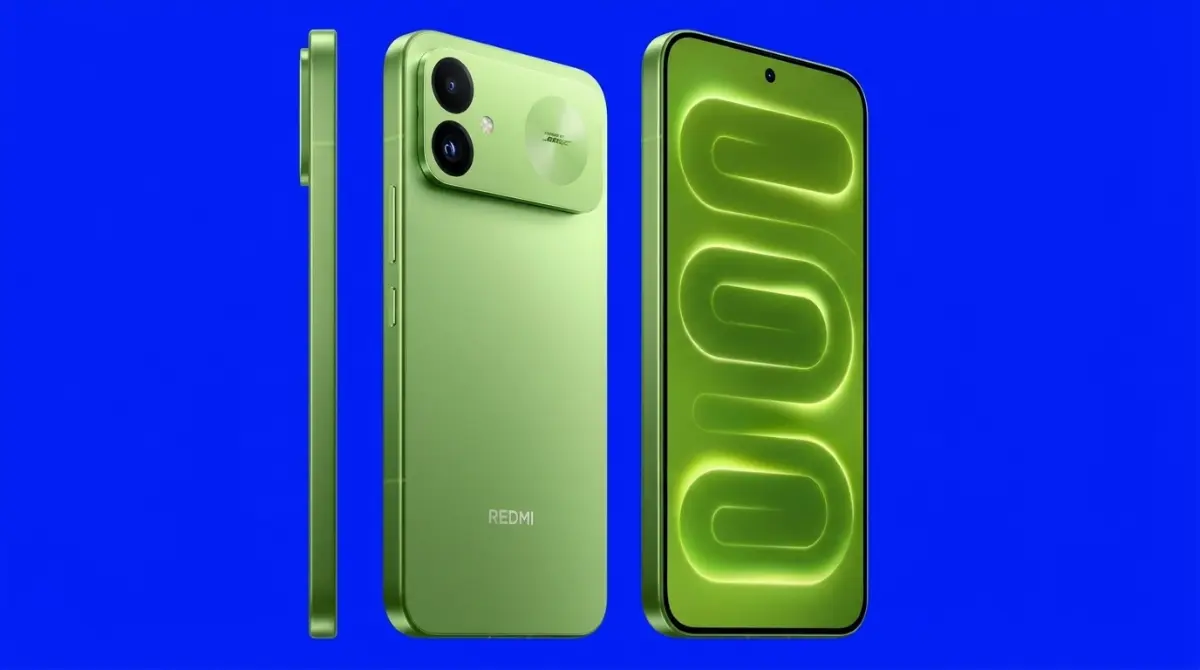


Redmi K100 Launches With 10,000mAh Battery, 165Hz Screen
Xiaomi confirmed the Redmi K100 will debut next week, pairing a massive 10,000mAh silicon-carbon battery with a 6.83-inch 165Hz flat AMOLED screen and Snapdragon 8 Elite silicon, challenging premium brands that still equip flagship phones with tiny power packs.
Goriola Ayankoya | · 10 min read

Battery capacity in portable electronics spent a decade trapped behind thin glass marketing stunts. Device makers told buyers that keeping handsets razor-thin was worth the penalty of searching for wall outlets by mid-afternoon. Mainstream brands asked consumers to carry bulky charging bricks and portable power packs, treating daily battery anxiety as an acceptable cost of modern connectivity. That design excuse is collapsing under consumer demand for real endurance. Xiaomi sub-brand Redmi confirmed that the standard edition of the Redmi K100 will launch in China during the final week of October. The device pairs an immense 10,000mAh battery cell with a flat 6.83-inch AMOLED display running at 165Hz. Driven by Qualcomm Snapdragon 8 Elite silicon and an auxiliary D2 graphics processor, the handset challenges phone makers who charge premium prices for hardware that dies before bedtime. The aggressive push into high-capacity cells reflects changing hardware priorities, a design direction visible when OnePlus unveiled the OnePlus 16 with a 9,000mAh battery.
The announcement details an uncompromising design strategy: give mobile gamers and heavy users uninterrupted battery life without pushing retail pricing past mid-tier budgets. Expected to sell near 3,500 CNY, or approximately $490 in China, the device bypasses fragile design novelties to focus on thermal stability, sustained processing speeds, and display responsiveness. The K100 arrives alongside companion accessories, including the Clip Neo open-ear earphones, setting up a competitive showdown in Asian retail channels ahead of the holiday shopping cycle. By bringing a five-figure milliampere-hour rating to a mass-market handset, Redmi is raising consumer standards across the broader smartphone market. That pricing aggression matches retail strategies we tracked when reviewing the Vivo T5 5G launching with a 7,050mAh battery.
Silicon-Carbon Chemistry Breaks the Energy Density Barrier
Understanding how phone engineers fit a 10,000mAh power cell into an ordinary smartphone frame requires looking at recent leaps in battery materials. For twenty years, lithium-ion phone batteries used graphite anodes. Graphite reached its physical limit years ago, holding around 372 milliampere-hours per gram of material. To increase capacity, manufacturers had to make batteries physically larger and heavier, which caused phone cases to bulge uncomfortably in pockets.
Silicon-carbon battery technology alters that equation. Silicon can theoretically store ten times more lithium ions than graphite, reaching over 4,000 milliampere-hours per gram. The historical drawback was swelling: pure silicon anodes expand by up to three hundred percent during charging cycles, cracking internal components and destroying battery life. Modern battery plants solved that problem by embedding nanoscale silicon particles inside porous carbon structures. This hybrid material accommodates expansion while packing far more energy into tight spaces. The 10,000mAh battery inside the Redmi K100 fits into a chassis thickness under 8.7mm, proving that massive endurance no longer requires carrying a heavy brick. The rapid evolution of high-capacity battery engineering matches steps we followed when Honor revealed high-density battery engineering.
The 6.83-Inch 165Hz Flat AMOLED Display Built for Games
Screen design on the Redmi K100 was shaped directly by feedback from competitive mobile gamers. While luxury lifestyle flagships continue pushing curved glass edges that look sleek in advertisements, serious mobile players dislike curved panels. Curved borders create distracting light reflections, warp viewing angles, and trigger accidental palm touches during tense competitive multiplayer matches.
Redmi equipped the K100 with a completely flat 6.83-inch AMOLED display panel. The screen runs at a fluid 165Hz refresh rate, supporting native 165 frames per second playback across more than forty mobile game titles. Over one hundred additional games support frame insertion through the dedicated display processor. Peak local brightness reaches 3,500 nits, ensuring complete visibility when playing outdoors under direct sunlight. Touch response is equally rapid: the panel features a 480Hz multi-finger reporting rate and a 3,500Hz instantaneous touch sampling rate, ensuring finger swipes register instantly. To protect player eyesight during long night sessions, Xiaomi added its Green Mountain Eye Protection 4.0 system, using high-frequency dimming to cut invisible screen flicker. Display engineering priorities across mobile devices were evaluated in our hands-on review of Huawei advanced screen display technologies.
Comparing Flagship Battery Capacities and Display Speeds
| Model | Battery Capacity | Display Type and Size | Refresh Rate | Peak Brightness | Approximate Price |
|---|---|---|---|---|---|
| Redmi K100 | 10,000mAh (Si/C) | 6.83-inch Flat AMOLED | 165Hz | 3,500 nits | ~$490 |
| OnePlus 16 | 9,000mAh (Si/C) | 6.82-inch Curved AMOLED | 120Hz | 4,500 nits | ~$899 |
| Redmi Note 17 Pro Max | 10,000mAh (Si/C) | 6.78-inch Flat AMOLED | 144Hz | 3,200 nits | ~$380 |
| Apple iPhone 18 Pro Max | 4,850mAh (Li-Ion) | 6.9-inch OLED | 120Hz | 3,000 nits | $1,199 |
| Samsung Galaxy S26 Ultra | 5,200mAh (Li-Ion) | 6.8-inch Dynamic AMOLED | 120Hz | 3,200 nits | $1,299 |
The comparison table reveals the massive gap separating Asian performance devices from Western market leaders. While Western flagships costing over $1,100 offer 120Hz panels and batteries hovering near 5,000mAh, Redmi delivers double the battery capacity and a faster 165Hz refresh rate at less than half the price. This divergence explains why price-conscious buyers in international markets are questioning the value offered by established luxury brands.
Dual-Chip Architecture: Snapdragon 8 Elite and the D2 Graphics Unit
Raw battery endurance means little if a phone stutters under heavy software loads. Inside the Redmi K100 sits Qualcomm Snapdragon 8 Elite processor, manufactured on advanced three-nanometer foundry nodes. The processor uses custom Oryon CPU cores, delivering high instruction throughput on single-threaded tasks and sustained speed across heavy multi-core demands.
Qualcomm processor does not work alone. Redmi paired the main system-on-chip with an in-house D2 dedicated gaming display GPU. The D2 processor handles frame generation, motion smoothing, and real-time resolution scaling, taking heavy graphic calculations off the primary processor. Because the main silicon runs cooler, the phone maintains stable frame rates without dropping resolution during two-hour gaming runs. A large stainless steel vapor chamber and multi-layer graphite sheets pull heat away from internal components toward the outer frame. That dual-processor arrangement aligns with silicon developments we covered during the launch of the Snapdragon 8 Elite mobile processing platform.
Rapid 100W Charging and Bypass Power Modes
Refilling a 10,000mAh battery using older charging standards would take hours, turning overnight charging into a requirement. Redmi paired the battery cell with 100W wired fast charging. The high-wattage charging system replenishes the battery from empty to eighty percent in under forty minutes, minimizing downtime.
Even more valuable for gamers is hardware bypass charging. When the phone is plugged into a wall outlet during active gaming sessions, the internal power circuit routes electricity directly to the processor, display, and memory, bypassing the battery cell completely. This prevents the chemical battery from heating up during intense multiplayer sessions, keeping the phone comfortable in hand while extending the long-term health of the battery cells. Safeguards protecting battery longevity were also examined in our analysis of Samsung dedicated hardware chips for battery packs.
Camera Simplification to Protect the Budget Price
Building a handset with flagship silicon, a custom display processor, a 165Hz flat AMOLED screen, and an immense battery for around $490 requires calculated compromises. Premium flagships spend hundreds of dollars per unit on complex periscope telephoto lenses, continuous optical zoom modules, and branded color tuning partnerships.
Redmi took a pragmatic approach with the K100 camera array. The rear camera module centers on a dependable 50MP primary sensor equipped with optical image stabilization, flanked by an 8MP ultra-wide lens. There is no dedicated telephoto camera; distant subjects are captured using digital sensor cropping. Tiny, cheap 2MP macro sensors were removed completely. For everyday photos, social video uploads, and document scanning, the primary camera produces clean, sharp pictures with balanced dynamic range. For users who prioritize gaming speed and long battery life over studio photography, skipping expensive periscope optics is a sensible compromise. Complex camera configurations across expensive flagships were explored in our preview of the Oppo Find X10 series global hardware configurations.
High-Speed Memory and HyperOS 4 Power Governance
Fast processing silicon requires rapid memory bandwidth to prevent operational slowdowns. The Redmi K100 starts with 12GB of LPDDR5X system RAM and 256GB of fast UFS 4.1 flash storage, with top-tier configurations offering 16GB of RAM and 512GB of capacity. UFS 4.1 storage delivers read speeds above 4,000 megabytes per second, ensuring large mobile games load in seconds without delayed textures.
Software control runs through Xiaomi HyperOS 4, built on top of the newest Android release. The operating system uses upgraded background resource scheduling, freezing idle applications in memory so they do not drain battery power in the background. System apps launch promptly, while memory compression keeps dozens of browser tabs and messaging channels ready for instant access. The balance between memory speeds and daily device performance matches hardware lessons we outlined in our guide to the best budget laptops for students and creators, alongside component adjustments detailed when Framework restructured component pricing and repair channels.
Western Hesitation Versus Asian Battery Boldness
The arrival of 10,000mAh smartphones highlights a widening divide between Western tech conglomerates and Asian hardware makers. For years, Apple and Samsung adopted a conservative approach to battery sizing. Flagship phones priced above $1,200 rarely exceed 5,000mAh, with executives pointing to weight reduction, slim profiles, and software tuning to justify small batteries.
Asian manufacturers recognized that consumers are tired of babying their electronics. Users stream high-resolution video, navigate with GPS, play demanding games, and tether laptops to mobile hotspots all day. Software tuning cannot defy the laws of physics; running bright screens and high-frequency wireless modems consumes electricity. By investing heavily in silicon-carbon anode manufacturing, Chinese companies like Xiaomi, Honor, and Vivo have established an insurmountable lead in battery density. Western consumers who spend four figures on luxury handsets are left wondering why budget phones in Asia offer twice the battery life at half the cost. That consumer frustration was visible in our evaluation of the iPhone 18 Pro Max review, as well as our review of the Redmi Note 17 Pro Max with high-capacity battery hardware.
The Global Rebrand Question: Will It Arrive as a Poco Device?
For international consumers outside China, the main question surrounding the Redmi K100 is international availability. Xiaomi rarely releases Redmi K-series models in Western or European retail stores under their domestic Chinese branding. Instead, the company traditionally re-badges standard K-series devices under its Poco sub-brand for international markets.
Industry analysts anticipate that the hardware blueprint of the Redmi K100 will debut internationally in early 2027 as the Poco F9 Pro or Poco F9 Ultra. Bringing a 10,000mAh battery, a 165Hz flat AMOLED display, and Snapdragon 8 Elite power to international markets under $550 would disrupt mid-range retail shelves across Europe, Latin America, and India. Sub-brand design changes across international device portfolios were detailed in our leak report on the iQOO 16 design leak and camera module, while battery expansion across budget models was tracked when Samsung introduced high-capacity battery hardware.
Audio Accessories and the Redmi Clip Neo Launch
Xiaomi is using the late October launch event to expand its personal audio portfolio alongside the K100. The company will introduce the Redmi Clip Neo open-ear earphones, designed for runners, commuters, and fitness enthusiasts who want spatial awareness during outdoor workouts.
Open-ear clip headphones avoid blocking the ear canal, using directional audio drivers to beam music directly toward the eardrum while allowing ambient street noise to filter in naturally. Pairing open-ear earphones with a long-lasting gaming phone creates a practical combination for active mobile users. Trends across wireless audio gear and portable listening were explored in our buyer guide comparing AirPods 5 against the wireless charging edition.
The Long-Term Outlook for Five-Figure Battery Capacities
The debut of the Redmi K100 proves that the era of fragile, under-powered smartphones is coming to an end. By uniting 10,000mAh silicon-carbon chemistry with an ultra-fast 165Hz flat AMOLED panel and flagship processing silicon, Xiaomi is proving that true mobile speed must be backed by real endurance.
A smartphone that needs constant recharging is an unfinished product. As silicon-carbon manufacturing scales across global factories, 7,000mAh to 10,000mAh power cells will become the expected baseline for modern mobile devices. The companies that continue charging premium prices for small batteries will find themselves outpaced by pragmatic manufacturers that listen to consumer needs. With the Redmi K100, Xiaomi delivered a clear message to the entire electronics sector: the future of mobile computing belongs to devices that can run all day, all night, and into tomorrow without searching for a power plug.
Read More on TechRobust:

Goriola Ayankoya
 LinkedIn
Goriola Ayankoya
Expertise:Consumer Hardware, Smartphone Trends, Gadget Reviews, Breaking Tech News, Mobile Ecosystems
Award:TechRobust Hardware Reporter of the Year 2025
Goriola is a Staff Writer and Reporter specializing in consumer technology, breaking tech news, and hands-on hardware analysis. He tracks fast-paced mobile developments, reviews modern gadgets, and unpacks product launches to give readers clear, practical insights into everyday consumer tech.