


 LinkedIn
 Motorola Signature 27 Arrives With 7,000mAh Battery
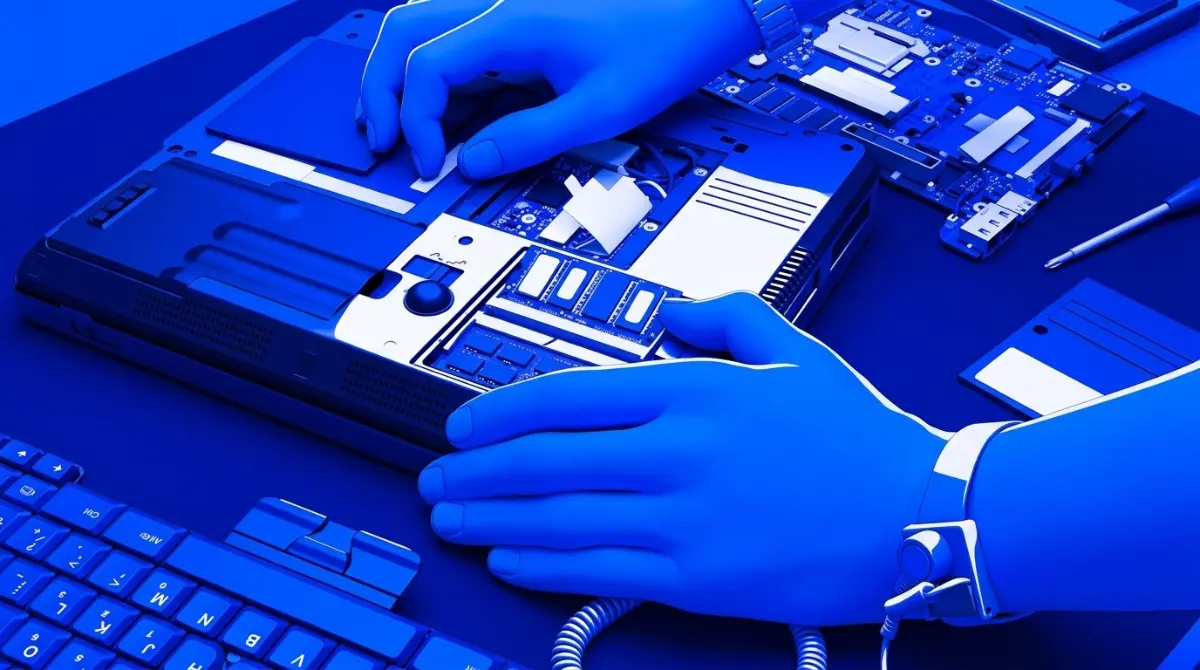
How a $10 Tool Saves BIOS-Locked ThinkPads From Landfills
A ten-dollar USB programmer and an open-source exploit are rescuing thousands of off-lease corporate Lenovo ThinkPads from electronics dumps, allowing hardware hobbyists to bypass locked supervisor passwords and install modern operating systems.
Goriola Ayankoya | · 9 min read

Millions of perfectly functional business laptops are crushed into scrap metal every year because of a forgotten four-digit password. When corporate enterprises, commercial banks, and government agencies upgrade their computer fleets, hundreds of thousands of off-lease Lenovo ThinkPads are sold in bulk auctions to electronics recyclers. These laptops are physical marvels of durability: featuring magnesium-alloy roll cages, spill-resistant mechanical keyboards, and capable Intel Core processors that can handle daily office productivity for another decade. Most recyclers cannot resell them to the public. Corporate information technology departments routinely lock the Basic Input/Output System (BIOS) with an administrative supervisor password before decommissioning computers. When a secondhand buyer powers on the machine, they encounter a black screen with a padlock icon: blocking access to the boot menu, preventing operating system installations, and leaving the hardware completely unusable. For years, removing that lock required buying an expensive replacement motherboard or tossing the machine into an industrial shredder. An international grassroots hardware movement has dismantled that corporate barrier. Tech tutorials highlighted by Tom Hardware on Tuesday, November 10, 2026, revealed that hardware enthusiasts are using an inexpensive $10 USB programmer to clear supervisor passwords on fourth- through eighth-generation Intel ThinkPads, saving mountains of discarded laptops from regional landfills. The repair breakthrough arrives as consumers demand physical hardware longevity, continuing right-to-repair developments we tracked when Framework championed modular laptop repairability.
The repair method was brought to public attention by Ukrainian technology creator Hileeq, operating the popular YouTube restoration channel "Rebooted by Hileeq." In a detailed technical demonstration, Hileeq walked viewers through unlocking an enterprise-locked ThinkPad T480 purchased at auction for a fraction of its market value. The underlying hardware exploit was originally discovered and published on a Romanian enthusiast forum by security researcher Victor Voinea. Rather than relying on destructive soldering irons or expensive specialized laboratory equipment, the technique requires only an inexpensive CH341A USB EEPROM programmer, an eight-pin SOIC test clip, and a secondary computer running an open-source Python script. The exploit targets the SPI flash memory chip on the laptop motherboard: reading the compiled BIOS binary, patching the exact memory offset where the supervisor password hash is validated, and flashing the cleaned firmware back to the chip in under five minutes. The process leaves the unique hardware identifier (UUID), serial numbers, and factory digital Windows license keys completely intact, transforming a piece of electronic trash into a responsive daily workstation. Hardware restoration and teardown evaluations match benchmarks we explored in our review of ten years of personal computing hardware durability.
The E-Waste Scandal: Corporate IT Negligence
To understand why this $10 hardware exploit is celebrated across circular electronics communities, one must inspect the immense scale of corporate electronic waste. Corporate enterprises operate on strict three-year equipment depreciation schedules: replacing thousands of employee laptops like clockwork regardless of whether the hardware still works.
When IT asset disposition (ITAD) contractors collect these decommissioned machines, corporate compliance rules demand that internal solid-state drives be removed and shredded to protect company data. That drive removal is reasonable; locking the motherboard firmware with an unremovable supervisor password is not. On Lenovo ThinkPads manufactured between 2013 and 2019: spanning legendary models like the T440, T450, T460, T470, and T480: the supervisor password is stored in non-volatile flash memory. Unlike desktop motherboards where removing the coin-cell CMOS battery resets system settings to factory defaults, ThinkPads retain supervisor passwords indefinitely even if every power source is disconnected. When an enterprise IT technician forgets to clear the supervisor password before sending laptops to auction, commercial refurbishers cannot change the boot priority to install a fresh copy of Linux or Windows. Because corporate service centers charge up to $400 for motherboard replacements, auction houses sell locked ThinkPads for scrap or dump them into municipal incinerators. Tens of thousands of capable computers are destroyed annually simply because an administrative password check cannot be cleared. Corporate hardware disposal practices match issues we analyzed when Dell laptops tested alternative processor architectures.
The Victor Voinea Exploit: Patching the Security Region
The technical brilliance of the patch developed by Victor Voinea sits in software precision. In the past, clearing a ThinkPad password required using an oscilloscope to short out specific data pins on an EEPROM chip at the exact millisecond the machine powered up: a risky timing trick that routinely fried motherboard circuitry.
Voinea reverse-engineered the compiled UEFI firmware on fourth- through eighth-generation Intel ThinkPads, discovering that Lenovo security architecture stores the supervisor password verification routine within an accessible region of the primary SPI flash chip. The modern $10 repair workflow operates through four straightforward steps:
- Physical Chip Connection: The technician removes the laptop bottom cover plate, locates the 8-pin Winbond or Macronix SPI flash chip on the motherboard, and snaps an eight-pin SOIC spring clip over the chip legs without desoldering.
- Firmware Readout: The clip connects to an inexpensive CH341A USB programmer plugged into a secondary computer. Open-source software like AsProgrammer or Flashrom reads the complete eight-megabyte or sixteen-megabyte binary firmware dump.
- Automated Python Patch: The technician passes the raw binary file through Voinea open-source patching script. The script scans the file for the supervisor password authentication block, replacing the validation check with a bypass sequence while preserving motherboard UUIDs and hardware serials.
- Firmware Reflash: The patched binary is flashed back to the chip over the USB clip. The technician removes the clip, boots the ThinkPad into BIOS setup, and navigates to the security menu, where the password prompt is permanently cleared.
The entire operation takes less than ten minutes and requires zero soldering skills. Once unlocked, the owner can enable virtualization extensions, adjust memory timings, update firmware, and boot any operating system from USB thumb drives. Operating system installation alternatives were detailed in our review of the Googlebook desktop operating system.
Comparing Business Laptop BIOS Security Architectures
| Laptop Manufacturer | Target Generation Tested | Password Storage Location | CMOS Battery Reset Status | Bypass Accessibility |
|---|---|---|---|---|
| Lenovo ThinkPad (Intel 4th-8th Gen) | T440 through T480 / X1 Carbon Gen 2-6 | SPI Flash NVRAM / Security Block | Non-volatile (Battery pull fails) | Simple $10 CH341A clip + Voinea patch |
| Lenovo ThinkPad (Intel 9th Gen+) | T490, T14 Gen 1-5, X1 Carbon Gen 7+ | Embedded Controller (MEC1633 chip) | Non-volatile encrypted hardware | Complex JTAG programmer / desoldering |
| Dell Latitude (5000/7000 Series) | Broadwell through Kaby Lake | Service tag hash generator | Non-volatile security chip | Master password calculators via service tag |
| HP EliteBook (800 Series) | G1 through G5 business lines | Dedicated HP Sure Start crypto chip | Hardware cryptoprocessor | Requires authorized HP SMC.bin unlock file |
| Apple MacBook Pro (Intel T2/Apple Silicon) | 2018 onwards | Secure Enclave / Activation Lock | Hardware cloud-tethered lock | Impossible without original Apple ID |
The comparative data illustrates why older ThinkPads have become the darlings of the right-to-repair movement. While modern Apple laptops brick permanently when locked to an abandoned iCloud account, and newer 9th-generation ThinkPads move security routines into encrypted embedded controllers, 4th- through 8th-generation ThinkPads hit a sweet spot. They are cheap, abundant, physically modular, and mathematically unlockable with accessible tools. An individual with ten dollars and thirty minutes of patience can rescue a quad-core ThinkPad T480 with thirty-two gigabytes of RAM, pop in a twenty-dollar solid-state drive, and build a dependable laptop that outperforms brand-new entry-level consumer machines. Hardware repairability standards match themes we followed in our guide to using older laptops as second monitors in Windows 11.
The ThinkPad T480 Cult: The Peak of Practical Engineering
The device benefiting most from this unlock technique is the Lenovo ThinkPad T480. Released in 2018, the T480 is considered by many software developers, systems administrators, and privacy advocates to be the peak of practical laptop engineering.
The T480 was the final ThinkPad to include Lenovo Power Bridge battery architecture: combining an internal twenty-four-watt-hour battery with an external, hot-swappable battery pack that allows users to swap batteries while the computer remains running. It features two standard DDR4 RAM slots supporting up to sixty-four gigabytes of memory, a user-replaceable M.2 NVMe storage drive, an Ethernet port, full-size HDMI output, dual USB-C ports with Thunderbolt 3, and an SD card reader. Modern business laptops have soldered memory, glued batteries, and missing ports that require carrying plastic dongles. When corporate IT departments retire T480 fleets, the machines are bought on auction websites for under seventy dollars because of supervisor passwords. Using the $10 CH341A programmer, students, indie creators, and remote workers are turning these locked castaways into daily production machines that run Linux distributions like Fedora and Ubuntu with flawless driver compatibility. Practical utility tools for daily productivity were explored in our review of LocalSend as an open-source AirDrop alternative.
The Right-to-Repair Movement and Corporate Accountability
The popularity of the ThinkPad BIOS bypass carries profound political implications for the global right-to-repair movement. Legislative bodies in the United States and the European Union have passed right-to-repair statutes, demanding that manufacturers provide spare parts, repair manuals, and diagnostic tools to independent repair shops.
Most right-to-repair statutes contain a glaring loophole: they ignore software locks and administrative passwords on decommissioned enterprise hardware. Under the guise of corporate data security, manufacturers allow companies to lock hardware permanently, washing their hands of responsibility once equipment leaves corporate offices. Right-to-repair advocates argue that true electronics sustainability requires mandatory software unlock tools. When an enterprise decommissions a fleet of computers, manufacturers should be legally required to provide public master reset utilities once physical storage drives are destroyed. Allowing working hardware to be shredded simply because an administrative password check is stuck in flash memory is an environmental crime. Until politicians close this statutory loophole, grassroots engineers and open-source modders using $10 USB programmers will remain the thin line standing between functional technology and regional landfills. Consumer hardware longevity was analyzed in our review of consumer hardware upgrade cycles slowing down.
The Final Verdict on Grassroots Hardware Reclamation
The discovery that a $10 programmer and a few lines of open-source Python code can save thousands of ThinkPads from the dump delivers a powerful lesson to the consumer technology industry: built-in obsolescence is a choice, not an inevitability.
Corporate electronics manufacturers design hardware to be replaced every three years, encouraging a disposable culture that fills developing nations with toxic electronic waste. The grassroots hardware community proved that with curiosity, open-source collaboration, and simple physical tools, ordinary people can take control of their hardware. A six-year-old ThinkPad T480 rescued from an e-waste bin may not possess the thinnest aluminum bezels on the market, but it possesses something far more valuable: modularity, repairability, and the freedom to serve human needs for years to come. In an economy dominated by corporate walled gardens and planned obsolescence, the humble $10 programmer is not just an electronic tool: it is an instrument of digital liberation.
Read More on TechRobust:
Tags:Lenovo ThinkPadRight to Repaire wasteCH341A programmerBIOS passwordlaptop repaircircular electronics

Goriola Ayankoya
Goriola Ayankoya
Expertise:Consumer Hardware, Smartphone Trends, Gadget Reviews, Breaking Tech News, Mobile Ecosystems
Award:TechRobust Hardware Reporter of the Year 2025
Goriola is a Staff Writer and Reporter specializing in consumer technology, breaking tech news, and hands-on hardware analysis. He tracks fast-paced mobile developments, reviews modern gadgets, and unpacks product launches to give readers clear, practical insights into everyday consumer tech.
Related Stories
Motorola Signature 27 Arrives With 7,000mAh Battery Nothing Confirms Screen-Free AI Device for December
 RedMagic 12 Pro Debuts Globally With 185Hz AMOLED Screen