
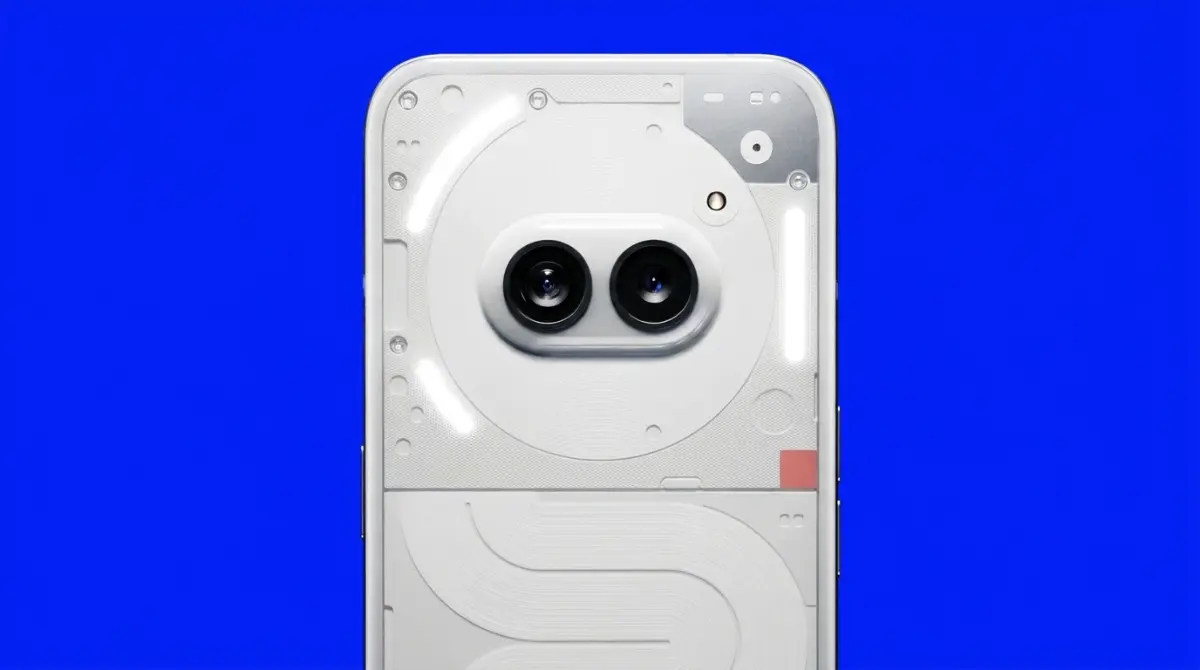


Nothing Confirms Screen-Free AI Device for December
Nothing Chief Executive Officer Carl Pei confirmed the consumer hardware company will ship its first dedicated artificial intelligence device in December 2026, delivering a screen-free mechanical tool that relies on custom hardware rather than smartphone software applications.
Goriola Ayankoya | · 7 min read

Consumer technology hardware spent two years struggling to escape the smartphone shadow. When startups set out to build dedicated artificial intelligence gadgets, they produced expensive, clumsy novelties: clip-on pins that projected green lasers onto sweaty palms, or handheld plastic bricks that took five seconds to answer basic questions over cellular networks. Reviewers mocked these gadgets as half-baked smartphone applications trapped inside cheap plastic shells. Consumer hardware pioneer Nothing has decided to prove that dedicated computational hardware can succeed when designed with personality. In an extensive publication titled "Toolmakers" posted on social platform X on Wednesday evening, November 4, 2026, Nothing Chief Executive Officer Carl Pei confirmed that the London company will ship its first artificial intelligence device next month, in December 2026. Pei revealed that the upcoming device has no screen and emphasized that it could never have functioned as a simple phone app. The announcement marks a bold gamble as gadget makers seek fresh form factors, continuing hardware developments we tracked when Nothing debuted rugged personal audio gear.
The confirmation arrives as Nothing completes an extraordinary transition from a niche audio accessory brand into a full-fledged consumer hardware competitor. Founded in London by former OnePlus co-founder Carl Pei, Nothing built an international following by making consumer electronics fun: using transparent polycarbonate enclosures, visible mechanical screws, and white Glyph LED light strips to stand out against boring aluminum slabs. The company expanded from wireless earbuds into mid-range smartphones and budget accessories under its CMF sub-brand. Pei emphasized in his manifesto that modern smartphones have evolved into attention-trapping billboards designed to harvest user data, rather than tools that empower human intent. By engineering a screen-free device that executes tasks quietly in the background, Nothing aims to liberate users from digital screen addiction while delivering real computational utility. The December launch window positions the device to capture holiday curiosity, arriving as personal hardware makers re-evaluate mobile interfaces, matching design discussions we analyzed when Apple CEO John Ternus explained why Apple refuses to ship machine tools for their own sake.
The Post-Screen Philosophy: Why the Device Has No Display
To inspect why Nothing chose a screen-free form factor, one must evaluate the psychological trap of modern smartphone screens. In theory, smartphones are pocket computers meant to help us navigate cities, communicate with loved ones, and access information.
In practice, modern mobile operating systems are optimized for engagement loops. A user unlocks their phone to check the weather, sees three red notification badges, taps an Instagram icon, and spends forty-five minutes scrolling through short-form video reels, completely forgetting what they set out to accomplish. Glass touchscreens demand full optical attention and two-handed interaction. Pei argued that authentic digital tools should respect human attention: performing assignments when requested and disappearing when finished. A screen-free device relies on alternative input modalities: tactile dials, mechanical switches, spatial microphones, and haptic feedback loops. By removing the visual screen, the device eliminates the temptation to browse mindless feeds, keeping the interaction focused on immediate physical intent. Wearable audio and sensory interface trends were explored in our analysis of Redmi introducing open-ear clip headphones with physical buttons.
The Hardware Necessity: Why It "Couldn't Have Been an App"
The most intriguing statement in Pei announcement is his insistence that the product could not have been an app. The graveyard of consumer hardware is filled with devices that failed because they performed tasks that a standard smartphone already handles better.
The Humane AI Pin failed because asking a laser projector to display text on your hand is worse than looking at a sharp OLED phone screen. The Rabbit R1 failed because its automated web scripts were fragile versions of standard mobile apps. For Nothing device to justify its physical existence, it must interact with the physical world in ways a smartphone inside your pocket cannot. Industry analysts speculate that the hardware incorporates specialized environmental sensors: continuous spatial audio microphones, edge computer vision cameras, or ambient tactile controls that require direct contact with clothing or desk surfaces. By designing custom silicon and dedicated power management, the device can monitor ambient audio or capture physical gestures without draining a smartphone battery. Building dedicated physical tools ensures that the user relationship belongs to the hardware, rather than being mediated by Apple or Google app store rules. Mobile hardware design evolutions were detailed in our review of ten years of Google Pixel hardware history.
Comparing First-Generation AI Hardware Form Factors
| Hardware Device | Display Technology | Primary Input Modality | Primary Point of Failure | Market Status |
|---|---|---|---|---|
| Nothing Mystery Device (Dec 2026) | Zero screen (Audio/Haptic/LED) | Tactile controls & spatial voice | Awaiting December commercial test | Shipping December 2026 |
| Humane AI Pin | Laser palm projection | Hand gestures & voice microphone | Overheating, slow response, bad battery | Commercial flop; seeking buyer |
| Rabbit R1 | 2.88-inch small color LCD | Scroll wheel & push-to-talk button | Broken web scripts; Android APK disguise | Largely abandoned by users |
| Ray-Ban Meta Smart Glasses | Zero screen (Audio only) | Touchpad tap & multimodal camera | Short battery life during continuous video | Commercial hit; millions sold |
| Friend AI Pendant | Zero screen (Light ring) | Always-listening neck microphone | Social stigma & privacy backlash | Niche companion novelty |
The comparative data reveals the critical lesson learned from early hardware missteps. Products that attempted to project visual interfaces onto human skin or squeezed tiny color screens into plastic toys failed because they competed poorly with smartphone screens. The only category that succeeded was Ray-Ban Meta glasses: which abandoned visual screens entirely, using audio and cameras to provide ambient assistance without interrupting the user view of the physical world. Nothing screen-free approach follows this winning audio-first design, applying Pei industrial design flair to build a tool that feels natural to carry. Wearable audio hardware evaluations match benchmarks detailed in our tested guide to the best wireless earbuds tested for everyday listening.
The London Industrial Design Advantage: Personality Over Plasticky Tech
The competitive advantage that Nothing brings to consumer hardware sits in industrial design culture. Silicon Valley hardware ventures routinely treat industrial design as an afterthought: outsourcing manufacturing to generic contract factories that churn out cheap, uninspired plastic shells.
Nothing approaches design like a Scandinavian furniture studio or a Swiss watchmaker. By partnering with Teenage Engineering and cultivating internal mechanical design teams in London, Nothing hardware features tactile details: knurled aluminum volume wheels, transparent acrylic windows that show internal copper coils, and rhythmic LED light sequences that communicate device states without harsh beeps. Pei noted in his essay that Nothing aims to build tools that users want to hold, fidget with, and carry because the physical craftsmanship brings joy. If the mystery device combines tactile satisfaction with fast on-device voice processing, it will capture consumers who appreciate beautiful objects. Consumer audio design choices were detailed in our review of Sennheiser Momentum wireless audio hardware.
The December Verdict on Post-Smartphone Computing
Nothing decision to launch its screen-free device in December marks a critical turning point for modern consumer technology. For fifteen years, consumer electronics has meant one thing: staring at black glass rectangles that buzz with notifications.
Carl Pei and his team are attempting to build an alternative physical path. The hurdles confronting any new hardware form factor are immense: battery endurance must last full days, voice processing must be instantaneous, and the device must perform a real function that justifies spending money. Nothing has proven that it knows how to build stylish, reliable consumer hardware that captures public imagination. As the mystery device ships to consumers next month, the world will discover whether Nothing has built another forgotten gadget novelty, or whether Carl Pei has crafted the physical tool that finally breaks the smartphone spell.
Read More on TechRobust:

Goriola Ayankoya
 LinkedIn
Goriola Ayankoya
Expertise:Consumer Hardware, Smartphone Trends, Gadget Reviews, Breaking Tech News, Mobile Ecosystems
Award:TechRobust Hardware Reporter of the Year 2025
Goriola is a Staff Writer and Reporter specializing in consumer technology, breaking tech news, and hands-on hardware analysis. He tracks fast-paced mobile developments, reviews modern gadgets, and unpacks product launches to give readers clear, practical insights into everyday consumer tech.