


 LinkedIn
 Meta Acquires AI Coding Agent Startup Conductor
Apple Cuts Daily AI Token Budgets for Internal Staff
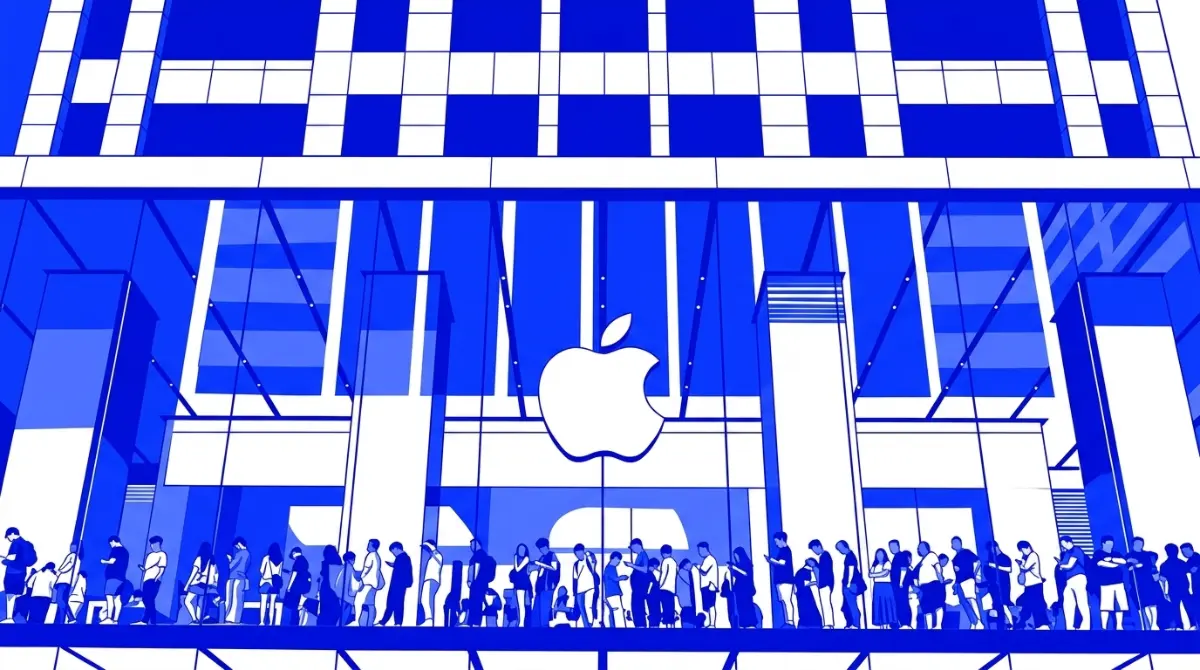
Apple reduced daily artificial intelligence allowances for engineering staff from $300 down to $200 with plans to drop limits to $100, checking runaway token spending as Chief Executive Officer John Ternus prioritizes corporate financial discipline.
Caleb Ogunkanbi | · 7 min read

Writing computer code with artificial intelligence assistants is fast, productive, and ruinously expensive when multiplied across tens of thousands of corporate employees. In the early rush to modernize software engineering, technology companies encouraged programmers to use automated reasoning models for every task: writing functions, refactoring legacy databases, generating test scripts, and summarizing meeting notes. Software developers quickly discovered that running frontier models like Claude Opus or GPT-5 for several hours straight burns through hundreds of dollars in cloud tokens daily. When the monthly cloud server bills arrived at corporate treasury desks, financial officers gasped at the numbers. Silicon Valley giant Apple moved to control that internal spending drain on Tuesday, November 3, 2026. Financial reporting from Bloomberg confirmed that Apple slashed daily artificial intelligence usage budgets for its employees. Daily spending allowances for software engineers were reduced from $300 down to $200, with internal plans to reduce the cap further to $100 in coming weeks. Non-engineering staff have seen daily limits capped at $100, with potential drops to $25 under review. The corporate clampdown proves that even the most profitable technology company on Earth will not tolerate unmonitored computational waste, continuing corporate financial trends we tracked when Amazon warned engineers against tokenmaxxing to protect corporate margins.
The internal budget cuts deliver a clear signal regarding the management priorities of new Chief Executive Officer John Ternus. Since succeeding Tim Cook, Ternus has focused on corporate efficiency, streamlining management layers, and holding departments accountable for operational expenses. Apple relies heavily on foundation models developed by third-party laboratories to support internal software engineering, alongside running internal research models. Every time an engineer runs an automated reasoning loop across an entire operating system repository, Apple incurs token fees covering input text and expensive output generations. At $300 per day across thousands of software engineers, internal model usage was costing Apple millions of dollars every month. By enforcing a $200 daily cap, Apple is forcing developers to be selective: using automated assistants where they deliver verified time savings, while writing routine code by hand. The corporate move matches industry-wide measures to curb computational waste, mirroring policies at Tesla, which imposed $200 weekly limits, and Uber, which capped developer tool usage at $1,500 monthly. Financial discipline across enterprise tech platforms matches themes we analyzed when Apple stockpiled memory inventory to defend gross margins.
The Physics of Token Burn: Why Engineering Prompts Cost Hundreds
To inspect why Apple engineers were hitting three-hundred-dollar daily limits, one must evaluate the mathematics of automated programming. When a consumer asks a chatbot to draft an email, the query consumes a few hundred tokens, costing fractions of a cent.
Enterprise software development is an entirely different beast. To debug a memory leak or refactor an operating system driver, an engineer feeds entire code repositories, architecture documentation, and testing frameworks into a model context window. A single multi-file coding prompt can ingest two hundred thousand tokens of background code. When the model processes that massive context, tests five candidate solutions, compiles dependencies, and generates revised code files, that single task can cost $20 to $40 in metered cloud inference fees. If an engineer runs eight or ten of those complex reasoning loops throughout an eight-hour working shift, the daily bill easily exceeds $300. Without spending caps, engineers run broad queries without optimizing context windows, passing huge documentation dumps when a fifty-line snippet would suffice. By lowering daily limits to $200, Apple is forcing programmers to manage context discipline: pruning unnecessary files from prompts and avoiding lazy token consumption. Token management and developer discipline were detailed in our report on Apollo warning that enterprise software investments produced zero financial payoff.
Comparing Corporate AI Spending Limits for Developers
| Corporate Employer | Developer Spending Limit | Non-Engineering Limit | Policy Enforcement Mechanism | Strategic Corporate Objective |
|---|---|---|---|---|
| Apple Inc. (AAPL) | $200/day (Slashing to $100) | $100/day (Slashing to $25) | Hard automated daily token throttles | Margin defense & eliminating token bloat |
| Tesla Inc. (TSLA) | $200 per week limit | Restricted; manager approval | Weekly credit caps per employee | Prioritizing compute for FSD training |
| Uber Technologies | $1,500 per month cap | Standard enterprise SaaS tier | Monthly procurement budget audits | Predictable software tool accounting |
| Amazon (AWS) | Internal token usage guidelines | Discourages tokenmaxxing | Manager reviews on vanity activity | Frugality Leadership Principle |
| Meta Platforms | Uncapped on internal Llama | Open internal cluster access | Internal GPU cluster scheduling | Dogfooding in-house open models |
The comparative data illustrates why corporate finance departments are reining in developer spending. While Meta subsidizes developer usage by running its own internal Llama models on corporate server parks, companies like Apple and Uber pay third-party cloud providers for external model APIs. When software engineers treat commercial APIs as an infinite corporate expense account, annual software procurement bills jump by tens of millions of dollars without delivering measurable product gains. Imposing hard daily spending throttles forces software teams to treat computing tokens like physical office supplies: resources that must be husbanded with care. Corporate software spending audits match patterns we followed when Barclays restructured operations to preserve corporate margins.
The John Ternus Efficiency Doctrine: Eliminating Corporate Bloat
The decision to cut internal token budgets reflects the management philosophy implemented by John Ternus since taking over as Apple chief executive. Ternus built his career in hardware engineering: a discipline defined by millimeter tolerances, supply chain haggling, and strict component cost tracking.
In hardware manufacturing, an extra ten cents on a screw or capacitor can erase millions in profit when manufacturing two hundred million iPhones. Ternus is applying that exact component discipline to software engineering operations. Under Cook, Apple experienced rapid headcount expansion across middle management and speculative research divisions. Ternus has moved to flatten management reporting lines, eliminate redundant administrative layers, and scrutinize software licensing agreements. During the recent fourth-quarter earnings conference, Ternus emphasized that Apple refuses to chase industry fads, declaring that the company will not ship artificial intelligence for its own sake. Slashing internal token budgets reinforces that corporate message: proving that Apple expects its own engineering teams to embody the efficiency and restraint it promises to public shareholders. Management philosophy and corporate hardware priorities were analyzed in our report detailing Apple CEO John Ternus defending product discipline over industry buzz.
Exceptions for Critical Projects: Autonomous Driving and Siri
While standard engineering allowances are being curtailed, Apple policy maintains flexibility for high-priority strategic initiatives. Bloomberg reported that employees working on mission-critical projects are permitted to exceed standard daily spending caps upon manager approval.
Engineering teams training the updated Siri conversational brain, designing machine vision models for spatial computing, or developing autonomous vehicle perception software require massive computational allocations. Restricting token usage on these projects would delay marquee product rollouts. The policy targets general software developers who use external chatbots for routine administrative chores, code commenting, and basic script formatting. Apple expects developers to use Xcode local on-device code completion: powered by Apple Silicon neural processing units: for everyday typing, reserving expensive cloud reasoning models for complex architectural challenges. Software optimization platforms that lower processor bills match models we explored when Nvidia backed Simplismart to cut enterprise processor expenses.
The Future Outlook for Enterprise AI Cost Accounting
Apple decision to slash daily token budgets delivers a healthy reality check to the software industry. The initial euphoria, characterized by open-ended experimentation where corporate executives ordered employees to use automated assistants for every task regardless of expense, has concluded.
The corporate world has entered the accounting phase. Chief financial officers are auditing software seat licenses, demanding proof of return on investment, and setting hard spending limits on model inference. Writing durable, high-performance software code has never been about consuming the maximum number of tokens in the shortest period; it is about architectural simplicity, system discipline, and human ingenuity. By reminding its engineering workforce that computational resources carry real financial costs, Apple is demonstrating the fiscal discipline that turned Cupertino into a three-trillion-dollar titan. In the emerging computational economy, the most valuable engineers will not be those who consume the largest token allowances, but the thoughtful builders who achieve extraordinary results while running on the leanest possible metal.
Read More on TechRobust:
Caleb Ogunkanbi
Caleb Ogunkanbi
Expertise:Practical AI Implementation, Head-to-Head Product Testing, Technical How-To Guides, Data Tools & Automation, Consumer Software Benchmarking
Award:TechRobust Guides & Insights Writer of the Year 2025
Caleb is a Staff Writer and Reporter breaking down the frontiers of artificial intelligence and actionable tech education. He produces rigorous head-to-head comparisons, demystifies data tools, and crafts step-by-step technical guides that help readers navigate complex software and AI workflows with ease.
Related Stories
Meta Acquires AI Coding Agent Startup Conductor AMD Takes $1.07B Charge on OpenAI and Meta Chip Deals
 DeepSeek $15.9B Deal Drives October Global VC to $59B