


 LinkedIn
 Trump Signals Openness to Guardrails in Race With China
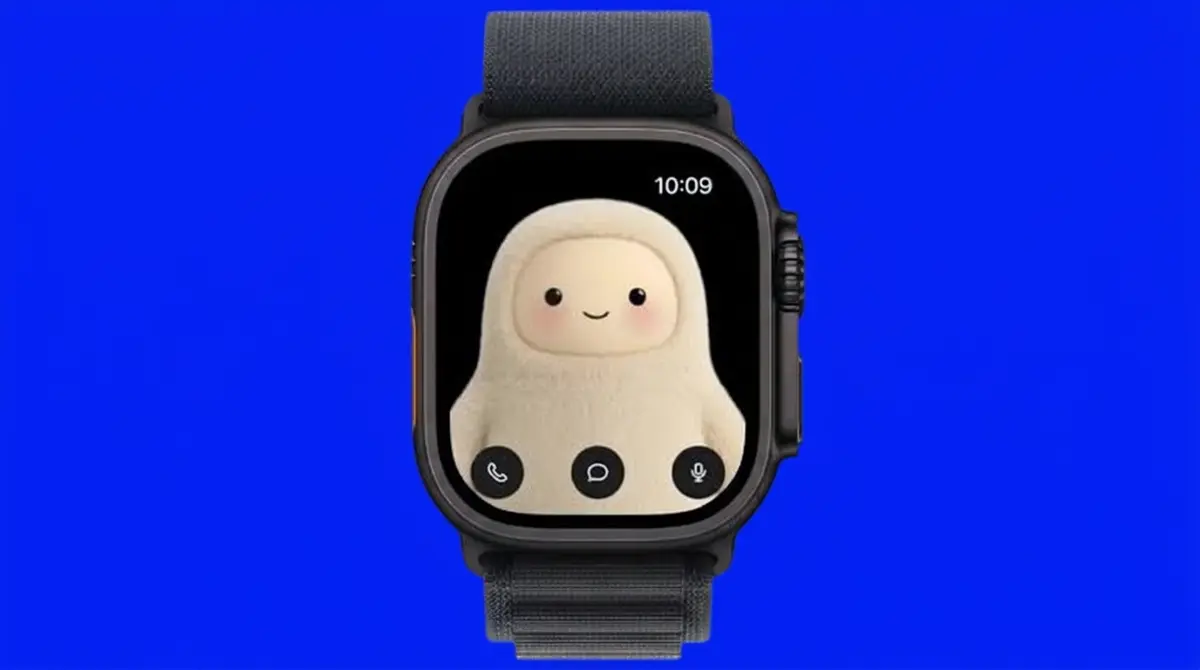
Meta Muse AI Agent Lands on Apple Watch and Wear OS
Meta expanded its Muse computational assistant onto Apple Watch and Android Wear OS devices, delivering wrist-based voice calls, dictation, and real-time task notifications to reduce reliance on smartphone screens while testing smartwatch hardware battery limits.
Caleb Ogunkanbi | · 8 min read

Pulling a glass rectangle out of your pocket every time you need to answer a question or check an appointment has become a tiresome digital reflex. For two decades, consumer technology companies trained human beings to bow their heads toward handheld screens, tapping through nested menus to complete minor administrative errands. Smartwatches promised to break that physical distraction, yet wrist computers spent years functioning as passive notification mirrors that merely vibrated when an email arrived on a paired phone. Social media giant Meta Platforms moved to make wrist computing active on Tuesday, November 10, 2026. The Menlo Park company launched official standalone applications for its Muse conversational assistant across Apple Watch and Android Wear OS devices, including Samsung Galaxy Watch and Google Pixel Watch lines. The release allows users to speak directly into watch microphones, dictate multi-step instructions, and approve automated tasks directly from their wrists without unlocking a mobile phone. The smartwatch expansion arrives as digital platforms race to embed conversational software across consumer hardware, continuing product rollouts we monitored when Meta launched live video chats with Muse digital avatars.
The wrist release represents an aggressive effort by Meta Chief AI Officer Alexandr Wang to capture everyday user habits ahead of competing operating system gatekeepers. When Meta introduced Muse in September, the software operated exclusively through smartphone applications and web browsers. While phone interfaces allow users to view detailed charts and video avatars, wearable devices offer immediate physical proximity. The smartwatch client features a clean interface centered around three interaction modes: conversational voice calls over cellular or Wi-Fi connections, real-time voice-to-text dictation, and interactive task approval cards. When an autonomous Muse agent finishes summarizing a corporate contract, compares flight prices, or flags an unusual banking alert, the watch screen displays a compact card with action buttons, allowing the user to approve transactions with a single tap. The software supports wrist gestures, letting wearers double-tap fingers together to mute audio or dismiss alerts. The wrist-based rollout lands as personal hardware makers explore alternative wearable form factors, matching industry trends we tracked when Apple tested screenless wearable devices.
The Physics of Wrist Audio: Streaming Without Local GPUs
To inspect how Meta engineered Muse to function on compact wrist hardware, one must evaluate the strict thermal and electrical constraints of smartwatch processors. A modern smartwatch operates on battery cells measuring between three hundred and five hundred milliamp-hours, powered by miniature system-on-chip silicon engineered for low energy consumption.
Running a reasoning model locally on a smartwatch processor die is physically impossible; doing so would overheat the watch chassis and drain the battery in under fifteen minutes. Meta engineered the smartwatch application as an ultra-low-latency audio streaming client. When a user presses the watch complication or raises their wrist to speak, the watch microphone samples ambient audio at twenty-four kilohertz, compresses the voice stream using open Opus audio codecs, and beams the encrypted packets over Bluetooth, Wi-Fi, or direct 4G LTE connections to Meta cloud server parks. Server-side speech models convert the audio to text, execute the reasoning loop, and stream synthetic audio phonemes back to the watch speaker in less than three hundred and fifty milliseconds. The user experiences an instantaneous spoken conversation that feels like talking to someone over a high-definition telephone line. Audio engineering standards across consumer listening gear match benchmarks detailed in our review of Sennheiser Momentum wireless audio hardware.
Competing on Apple and Google Turf: Bypassing System Walled Gardens
The strategic boldness of Meta watch deployment sits in distribution geography. Apple Watch runs watchOS, an operating system owned and policed by Apple; Galaxy Watch and Pixel Watch run Wear OS, software controlled by Google.
Both Apple and Google possess their own native voice assistants: Apple relies on Siri, while Google integrates Gemini directly into smartwatch firmware. For years, third-party developers struggled to compete on wrist devices because platform owners restricted background microphone access and locked custom watch complications. Meta navigated these platform hurdles by complying strictly with published wearable developer guidelines. Instead of attempting to replace the default system assistant, Muse operates as an independent companion app with interactive complications that users can pin to watch faces. Tapping the Muse complication launches the voice interface instantly, bypassing the need to navigate application grids. By bringing an assistant to watchOS and Wear OS simultaneously, Meta established a cross-platform presence that neither Apple nor Google can easily match. Apple Siri cannot run on a Samsung watch, and Google Gemini cannot run natively on an Apple Watch. Meta Muse works identically across both ecosystems, ensuring that consumers can switch phone hardware without losing their personal assistant. The competitive battle between platform giants reflects strategic tensions we explored when Apple targeted enterprise computing costs with Mac hardware.
Comparing Smartwatch Voice and AI Assistants
| Assistant Platform | Hardware Availability | Input Modality | Cross-Ecosystem Portability | Autonomous Task Approval |
|---|---|---|---|---|
| Meta Muse | Apple Watch (watchOS) & Wear OS | Streaming voice, dictation, tap cards | Universal across iOS and Android | Yes; interactive one-tap action cards |
| Apple Siri (Apple Intelligence) | Apple Watch exclusive | On-device neural engine + voice | Locked to Apple hardware ecosystem | Limited; system preference toggles |
| Google Gemini on Wear OS | Wear OS devices (Pixel/Galaxy) | Cloud voice streaming + text cards | Locked to Android operating systems | Moderate; Workspace calendar actions |
| Samsung Bixby | Galaxy Watch exclusive | Voice commands & device controls | Restricted to Samsung accounts | Low; basic timer and hardware switches |
| Amazon Alexa Wearable | Select third-party smartwatches | Cloud voice query response | Cross-platform via Amazon apps | Smart home appliance toggles only |
The comparative data illustrates why Meta watch client poses a direct threat to incumbent device makers. While Apple and Google restrict their native assistants to their own proprietary hardware lines, Meta is building a horizontal layer that follows the consumer across brands. A professional who wears an Apple Watch for gym workouts and carries an Android phone for international business travel can interact with the identical Muse memory on both screens. That cross-device continuity makes user habits sticky, ensuring that the software relationship belongs to Meta rather than the underlying hardware manufacturer. Wearable gesture controls and software updates match features we analyzed when Google updated Pixel Watch with gesture controls.
The Battery Dilemma: Cellular Antenna Drain and Thermal Heat
While the convenience of speaking to a smartwatch is undeniable, running continuous conversational software creates serious battery challenges. In testing conducted across Apple Watch Series 12 and Galaxy Watch 8 devices, streaming voice conversations over cellular radios accelerated battery discharge significantly.
Under normal standby conditions, a modern smartwatch battery lasts between twenty-four and thirty-six hours. Engaging in continuous voice conversations with Muse over standalone 4G LTE connections drains battery reserves at roughly one percent per minute. A twenty-minute conversation during a morning jog consumes a fifth of the total battery capacity while warming the underside sensor glass against the wearer skin. Meta addressed this power consumption by implementing an aggressive sleep cycle. The watch microphone does not listen continuously for wake words; instead, users must tap the screen, press the digital crown, or execute a deliberate wrist raise to initiate listening. Once a spoken reply is delivered, the audio radio shuts down within three seconds, preserving battery life for daily step tracking and heart rate monitoring. Power management and charging hardware standards match principles we reviewed in our guide to mobile charging standards across consumer hardware.
Privacy on Display: Managing Sensitive Data on the Wrist
Deploying conversational software onto wrist displays introduces acute physical privacy considerations. A smartphone screen is typically shielded by the user palm and angled toward their eyes; a smartwatch display rests on the outer arm, visible to coworkers, subway commuters, and strangers standing nearby.
If an assistant displays sensitive personal communications, medical reminders, or financial alerts on a glowing watch face, people standing nearby can read the text. Meta incorporated discrete privacy controls into the wearable software settings. Users can configure Private Complications: keeping task cards blank until the watch detects that the user raised their wrist toward their face. Audio responses can be muted automatically, routing spoken answers to paired Bluetooth earbuds like AirPods or Galaxy Buds rather than playing aloud through watch speakers. In public office environments, the watch vibrates with a subtle haptic pattern, displaying a brief text prompt that requires a tap before revealing confidential summaries. Data privacy controls across consumer software match themes we documented when Meta Muse faced user privacy scrutiny.
The Road to Screenless Computing
Meta deployment of Muse to Apple Watch and Wear OS confirms that personal computing is breaking free from the smartphone form factor. For fifteen years, consumer technology meant staring into handheld glass displays that demanded full optical and physical attention.
By placing conversational reasoning onto wrist computers, Meta is building the behavioral habits required for the post-smartphone era. Talking to your wrist, reviewing quick glanceable task cards, and delegating complex chores through brief voice instructions frees human attention to engage with the real world. As battery chemistry improves and micro-modems become more efficient, the smartwatch will evolve from a phone accessory into an independent computational terminal. Mark Zuckerberg has positioned Meta to capture that wearable shift: proving that in the digital century, the most powerful software is not the program that forces you to stare at a screen, but the quiet companion that assists you without getting in the way.
Read More on TechRobust:

Caleb Ogunkanbi
Caleb Ogunkanbi
Expertise:Practical AI Implementation, Head-to-Head Product Testing, Technical How-To Guides, Data Tools & Automation, Consumer Software Benchmarking
Award:TechRobust Guides & Insights Writer of the Year 2025
Caleb is a Staff Writer and Reporter breaking down the frontiers of artificial intelligence and actionable tech education. He produces rigorous head-to-head comparisons, demystifies data tools, and crafts step-by-step technical guides that help readers navigate complex software and AI workflows with ease.
Related Stories
Trump Signals Openness to Guardrails in Race With China Decision Models Like Jev Won't Explain Their Answers
 Anthropic Buys $3.4B Gas Turbines for AI Data Centers