
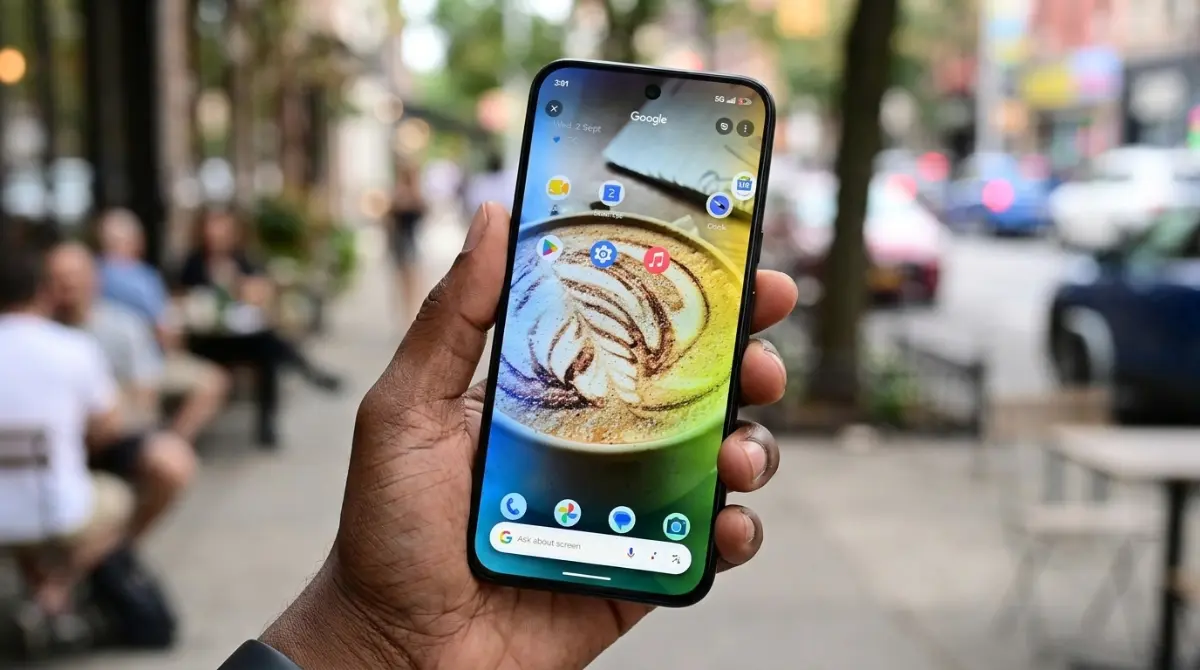


Google Pixel Adds Screen Flash for Dark Face Unlock
Google is preparing an update for Pixel handsets that illuminates the OLED display to light up user faces in pitch black rooms, solving biometric recognition failures on front cameras that lack dedicated infrared hardware projectors.
Caleb Ogunkanbi | · 7 min read

Unlocking a smartphone in a dark bedroom should not require entering a backup passcode. On modern Google Pixel handsets, face recognition stops working the moment room lights go out. Because Google chose not to install dedicated infrared dot projectors or flood illuminators beside the front selfie camera, the optical sensor cannot distinguish facial features in the dark. Users are left reaching for the under-display fingerprint reader or typing a numeric PIN on screen. Google is preparing an uncomplicated hardware workaround to solve this daily irritation. Recent code inspection inside Android developer previews revealed that Google is building Screen Flash for Face Unlock. The feature momentarily illuminates the phone OLED screen with a bright wash of light, illuminating the user face so the standard selfie camera can complete biometric matching in pitch black environments. The software update addresses a long-standing hardware compromise, continuing hardware adjustments we tracked in our report on Google Pixel secret software features.
The planned update highlights the ongoing trade-off between phone design and biometric hardware. When Apple introduced Face ID on the iPhone X in 2017, it committed to a wide display notch packed with specialized hardware: an infrared camera, a flood illuminator, and a dot projector that beams thirty thousand invisible light points onto the user face. That hardware works in complete darkness, but it takes up valuable screen space. Google abandoned its own Soli radar and infrared sensors after the Pixel 4, switching to a single, clean display hole-punch. While machine vision models allow the standard Pixel front camera to achieve Class 3 biometric security for banking apps in daylight, optical cameras remain blind without ambient light. Using the OLED screen as an automatic fill light provides a software solution that avoids redesigning phone enclosures. The evolution of Google hardware engineering was detailed in our retrospective on the Google Pixel ten-year hardware retrospective.
The Physics of Screen Illumination and Optical Sensors
To understand why Google is implementing screen illumination, one must inspect how optical face recognition functions. When a user looks at a Pixel phone, the front camera takes a high-resolution photograph. Onboard neural networks measure facial geometry: calculating the distance between pupils, the contour of the nose bridge, and the depth of cheekbones, comparing those ratios against encrypted templates stored inside the Titan M2 security chip.
In low light, optical camera sensors struggle with noise and grain. The microscopic pixels on small front-facing sensors cannot capture enough photons to distinguish skin contours from dark shadows. Under the new Android implementation, the operating system monitors ambient light sensors when the display wakes up. If ambient illumination falls below two lux, the screen activates a calibrated illumination sequence. The center of the OLED panel displays an off-white or soft peach light circle, casting even illumination across the user face from twelve inches away. The camera captures the illuminated frame, confirms biometric markers, and dismisses the lock screen in less than four hundred milliseconds. The user gains seamless dark access without Google adding expensive infrared hardware. Hardware design choices across earlier Pixel generations were explored in our analysis of why the Google Pixel 5 hardware deserves more praise.
Comparing Smartphone Biometric Face Unlock Methods
| Smartphone Platform | Hardware Sensor Array | Dark Room Performance | Display Cutout Size | Banking App Clearance |
|---|---|---|---|---|
| Google Pixel (Upcoming) | Single RGB camera + OLED screen flash | Functional via momentary display burst | Minimal centered hole-punch | Class 3 Biometric certified |
| Apple iPhone 18 Pro | Infrared camera, flood illuminator, dot projector | Flawless invisible infrared operation | Dynamic Island cutout | Class 3 Biometric certified |
| Samsung Galaxy S26 Ultra | Single RGB camera (2D matching) | Poor: prompts for fingerprint in dark | Small centered hole-punch | Class 1 (Screen unlock only, no banking) |
| Honor Magic 8 Pro | 3D Time-of-Flight depth sensor + RGB | Full infrared dark functionality | Pill-shaped dual-sensor cutout | Class 3 Biometric certified |
| Huawei Mate 70 Pro | Structured light 3D depth system | Full dark performance via IR grid | Triple display punch-hole layout | Class 3 certified in China |
The comparison matrix clarifies Google hardware positioning. While Apple and Honor dedicate significant display area to house infrared emitters, Google maintains a clean single-lens profile. The screen flash feature allows Google to match the night utility of competing devices while keeping phone manufacturing expenses lower. Advanced biometric hardware developments were detailed in our analysis of Apple under-display Face ID technology.
Managing the Nighttime Glare Experience
The primary design challenge confronting Google software engineers is user comfort. If an individual wakes up at three in the morning in a dark room and turns on their phone, blasting full panel brightness into dilated pupils causes physical pain and temporary visual blindness.
Google code indicates that the engineering team tested multiple color temperatures and luminance curves to avoid blinding users. Rather than flashing maximum cold white light, the system uses ambient light sensors to calculate the minimum illumination required for biometric capture. In pitch-black rooms, the software defaults to an amber or soft peach tone that illuminates facial skin without shocking night-adapted human eyes. The flash duration is brief, illuminating for less than half a second before returning the display to the user chosen night brightness. Users will also have an optional toggle inside biometric settings to disable screen flash entirely, allowing those who dislike night light to rely exclusively on fingerprint authentication. Battery performance across high-end smartphones was reviewed in our report on the OnePlus 16 with a 9,000mAh battery cell.
Security Standards: Preventing Photo Spoofing in the Dark
Lighting up a face with an OLED display introduces security considerations that Google engineering teams had to validate. Cheaper Android handsets from budget manufacturers often use screen brightening for face unlock, but those basic implementations use 2D photo matching that can be fooled by printed photographs or digital tablet screens.
Google maintains Class 3 biometric certification: the highest standard defined by Android security guidelines: by pairing the camera with machine learning depth models. When the OLED screen illuminates, the light hits different parts of a human face at slightly different angles and fractions of a millisecond. The nose tip reflects light before the eye sockets, and curved cheekbones create subtle dynamic shadows as light emanates from the flat glass panel. Google neural models analyze these dynamic light reflections to confirm that the subject is a living three-dimensional human head rather than a flat photo. If the algorithm detects flat reflection patterns characteristic of printed paper or mobile screens, authentication fails immediately, locking the device and requiring a passcode. High-capacity hardware designs were explored in our coverage of the Redmi K100 launching with a 10,000mAh battery.
Silicon Advancements: The Tensor G6 Neural Core
The speed of this illumination sequence is made possible by custom mobile silicon. In earlier Pixel phones, running complex machine vision models on camera frames introduced a noticeable delay, forcing users to wait over a second for the phone to unlock.
On current Tensor processors, Google dedicates specialized neural processing cores to camera tasks. The Tensor chipset processes multiple exposure frames concurrently, applying automated noise reduction and feature extraction in milliseconds. This computational throughput ensures that the screen flash lasts only a fraction of a second: fast enough that the user barely registers the flash before the home screen appears. The integration between custom silicon and operating system software gives Google the flexibility to improve hardware features post-purchase through monthly Pixel Feature Drops. Hardware security protections across mobile phones match concepts we analyzed in our review of Samsung dedicated hardware chips for battery packs.
The Long Term Future of Smartphone Biometrics
The arrival of Screen Flash for Face Unlock confirms that software ingenuity can often solve physical hardware limitations. For years, the mobile industry operated under the assumption that flawless dark face recognition required bulky infrared sensor clusters that compromise modern screen designs.
Google has proven that combining a standard optical camera, an OLED display, and machine vision models can deliver secure dark unlocking without cutting notches into displays. While infrared depth systems like Apple Face ID remain the gold standard for zero-light performance, Google pragmatic fix eliminates the biggest daily headache for Pixel owners. As the update rolls out to supported Pixel devices in upcoming Android releases, users can finally check bedtime notifications without fumbling for fingerprint sensors or turning on bedside lamps, proving that sometimes the best engineering solutions are the ones hiding in plain sight.
Read More on TechRobust:
Caleb Ogunkanbi
 LinkedIn
Caleb Ogunkanbi
Expertise:Practical AI Implementation, Head-to-Head Product Testing, Technical How-To Guides, Data Tools & Automation, Consumer Software Benchmarking
Award:TechRobust Guides & Insights Writer of the Year 2025
Caleb is a Staff Writer and Reporter breaking down the frontiers of artificial intelligence and actionable tech education. He produces rigorous head-to-head comparisons, demystifies data tools, and crafts step-by-step technical guides that help readers navigate complex software and AI workflows with ease.