


Xiaomi 18 Pro Goes Global With 7,050mAh Cell and Leica
Xiaomi confirmed international release plans for the Xiaomi 18 Pro and 18 Pro Max arriving in November 2026, sporting Leica optical hardware, Qualcomm Snapdragon 8 Elite Extreme silicon, and battery capacities reaching 7,050mAh across European and Asian store shelves.
Caleb Ogunkanbi | · 8 min read

Western smartphone markets have spent half a decade trapped in predictable hardware duopolies. In carrier stores across North America and Western Europe, shoppers walk down aisles where ninety percent of shelf space is divided between Apple and Samsung. Year after year, those two brands release conservative updates: retaining modest 5,000mAh batteries, capping wired charging speeds below forty-five watts, and charging upwards of $1,300 for devices that look identical to hardware from three seasons ago. Chinese hardware giant Xiaomi has decided to challenge that comfortable stagnation on an international stage. Official announcements on Monday, November 2, 2026, confirmed that the Xiaomi 18 Pro and Xiaomi 18 Pro Max will launch globally during November. Bringing custom Leica optical lenses, Qualcomm flagship Snapdragon 8 Elite Extreme Gen 6 silicon, and silicon-carbon batteries reaching 7,050mAh, the hardware lineup is engineered to compete directly with premier flagships worldwide. The international launch lands as smartphone brands adjust component supply lines, continuing mobile hardware shifts we tracked when Oppo introduced flagship devices with massive battery packs.
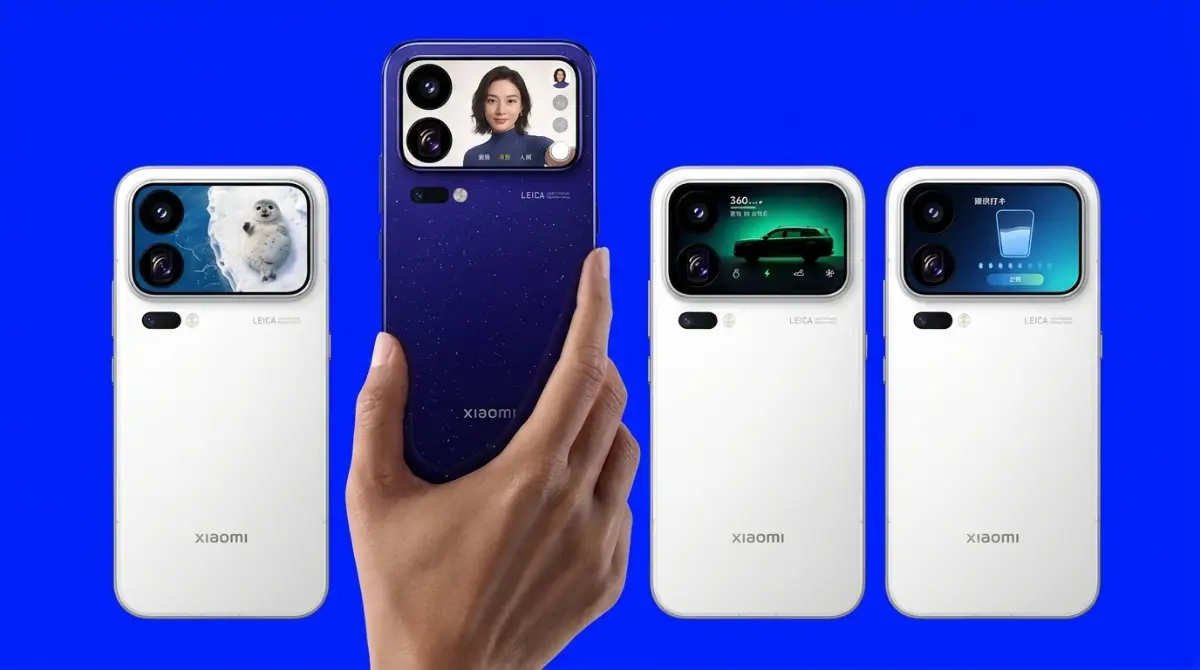
The confirmed global release marks an ambitious expansion for Xiaomi leadership. While the company previously kept its most advanced Pro Max hardware confined to mainland China, the 18 Pro series will arrive across Europe, the Middle East, Southeast Asia, and India. Retail listing leaks indicate that the base Xiaomi 18 Pro with 12GB of RAM and 256GB of storage will debut in Europe around €1,398, while the top-tier Xiaomi 18 Pro Max will start near €1,783 for 512GB of storage. The steep pricing reflects uncompromising hardware specifications: pairing a customized one-inch primary camera sensor with an upgraded Leica Summilux lens array and a 200MP floating periscope telephoto camera. The base 18 Pro packages a 6,000mAh battery, while the larger 18 Pro Max houses an immense 7,050mAh cell, delivering multi-day battery endurance that outclasses Western competitors. Flagship hardware specifications across competing Android devices match benchmarks we examined in our iPhone flagship hardware review and upgrade guide.
The Leica Summilux Optical Array and 200MP Floating Telephoto
To understand why mobile photography enthusiasts follow Xiaomi global releases, one must inspect the physical glass elements inside the camera bump. While Western competitors rely heavily on computational software algorithms to simulate background blurs and sharpen distant details, Xiaomi focuses on optical physics.
The 18 Pro series features a primary 50MP Sony LYT-900 sensor measuring a full one inch. The sensor is paired with a stepless variable aperture ranging from f/1.42 to f/4.0, allowing photographers to control physical depth of field and light intake mechanically. Backing the main camera is a 200MP periscope telephoto lens built around an apochromatic optical design. Internal glass groupings float on magnetic guide rails, moving backward and forward to provide true telephoto macro focus down to twenty centimeters. Users can capture close-up portraits of human eyes, insect wings, and mechanical watch movements with authentic optical depth rather than software blur. Leica customized color profiles: Leica Authentic and Leica Vibrant: preserve natural skin tones and high-contrast shadow textures, avoiding the over-sharpened, artificial look that plagues competing mobile cameras. Camera advances across mobile devices mirror optical benchmarks we detailed when evaluating the Vivo X500 Pro Max optical camera array.
Silicon-Carbon Density: 7,050mAh Inside a Sleek Chassis
The defining hardware advantage that Xiaomi brings to international markets sits in battery chemistry. For five years, American and South Korean brands told consumers that packaging batteries larger than 5,000mAh required making phones thick and heavy.
Xiaomi dismantled that excuse by deploying third-generation silicon-carbon anode chemistry. By infusing the negative electrode with porous nano-silicon, energy density exceeds 800 watt-hours per liter. This allows Xiaomi to fit a 7,050mAh battery inside the 18 Pro Max while keeping total chassis thickness at 8.3 millimeters. In real-world battery drain tests, the 18 Pro Max delivers twenty-four hours of continuous video streaming or eleven hours of outdoor gaming. The phone supports 120W wired HyperCharge alongside 50W wireless charging, restoring a full charge in twenty-six minutes. Xiaomi Surge P3 charging chips monitor individual battery cells in real time, regulating electrical current and heat dissipation to ensure that the battery retains eighty percent health after 1,600 charge cycles. High-capacity battery competition was explored in our analysis of the OnePlus 16 with a Snapdragon 8 Elite Extreme processor.
Comparing Premium International Flagship Smartphones
| Device Model | Processor Silicon | Battery Pack Size | Main Camera Sensor | Peak Wired Charging | European Base Price |
|---|---|---|---|---|---|
| Xiaomi 18 Pro Max | Snapdragon 8 Elite Extreme | 7,050mAh Si-C | 50MP 1-inch LYT-900 (Leica) | 120W HyperCharge | €1,783 (512GB) |
| Xiaomi 18 Pro | Snapdragon 8 Elite Extreme | 6,000mAh Si-C | 50MP 1-inch LYT-900 (Leica) | 90W wired | €1,398 (256GB) |
| Samsung Galaxy S26 Ultra | Snapdragon 8 Elite Gen 6 | 5,000mAh standard | 200MP ISOCELL HP2 (1/1.3") | 45W wired | €1,449 (256GB) |
| Apple iPhone 18 Pro Max | Apple A20 Pro (2nm) | 4,850mAh pouch | 48MP Fusion (1/1.28") | 30W wired | €1,479 (256GB) |
| Vivo X500 Pro Max | Dimensity 9600 Extreme | 7,000mAh Si-C | 50MP 1-inch LYT-900 (Zeiss) | 100W FlashCharge | €1,499 (Import base) |
The comparative data shows how Xiaomi outpaces Western competitors in physical hardware specifications. While Apple and Samsung retain battery capacities near 5,000mAh with charging speeds below 50W, the Xiaomi 18 Pro Max packages a 7,050mAh battery alongside 120W charging and a one-inch primary camera sensor. That gap explains why power users are turning to Asian manufacturers for uncompromising mobile hardware. Flagship product launches were analyzed in our report on Oppo flagship hardware releases worldwide.
Qualcomm Snapdragon 8 Elite Extreme: TSMC Three-Nanometer Foundries
Under the display sits Qualcomm Snapdragon 8 Elite Extreme Gen 6 platform, fabricated on TSMC refined three-nanometer foundry lines. The processor abandons low-power efficiency cores entirely, deploying an all-big-core design centered on custom Oryon CPU cores.
The two prime cores run at clock speeds exceeding 4.3GHz, while six performance cores handle background processing at 3.5GHz. This architecture delivers a thirty-five percent jump in single-core performance and a forty percent reduction in energy consumption compared to previous chips. The updated Adreno GPU features hardware-accelerated ray tracing and mesh shading, allowing mobile console titles to run at steady 120 frames per second without frame drops. To prevent thermal throttling during long gaming sessions, Xiaomi installed an expansive dual-channel loop vapor chamber that routes heat away from the silicon die toward the titanium-aluminum outer chassis. Even under sustained graphical benchmarks, chassis temperatures stay below forty-one degrees Celsius. Mobile silicon competition was detailed in our review of Qualcomm Snapdragon 8 Elite platform debut.
HyperOS 3.0: Clean Software and Multi-Device Continuity
The software experience on Xiaomi global variants runs on HyperOS 3.0, built on Android 16. Historically, Chinese software interfaces drew criticism from Western reviewers for bloated pre-installed apps and aggressive battery killers that blocked background notifications.
HyperOS 3.0 demonstrates welcome restraint. The interface uses clean typography, subtle blur effects, and smooth physics animations that rival iOS. The operating system includes cross-device continuity tools: allowing users to share clipboards, drag files, and mirror phone screens effortlessly to Windows PCs, iPads, and Xiaomi tablets. Xiaomi committed to five major Android OS upgrades and six years of security patches, matching the software support policies of Google and Samsung. The global variant includes full Google Mobile Services out of the box, with verified banking app support and localized language packs. Operating system updates were examined in our review of Honor global software update schedules.
The Carrier Hurdle in Western Retail Stores
While the hardware is undeniably top-tier, Xiaomi faces persistent distribution hurdles outside Asia. In the United States, direct sales remain blocked due to geopolitical tensions and carrier restrictions. In Western Europe, smartphone sales are dominated by mobile network operators like Vodafone, Orange, and Deutsche Telekom.
European carriers sell phones through monthly installment plans bundled with cellular service, shielding consumers from paying €1,400 upfront. While Xiaomi has established retail presences across southern and eastern Europe, breaking into carrier stores in the UK and Germany requires heavy marketing capital. If Xiaomi wants to convince European buyers to spend €1,783 on a Pro Max rather than buying an iPhone, the company must spend advertising budgets to educate consumers on Leica optics and silicon-carbon battery longevity. Mobile carrier dynamics and hardware sales were explored in our analysis of Apple hardware manufacturing expenses.
The Final Verdict on Xiaomi Global Ambitions
The global launch of the Xiaomi 18 Pro series confirms that the Chinese tech giant is ready to compete at the highest tier of international commerce. Playing safe with minor camera revisions and conservative batteries is no longer acceptable for flagship buyers.
By combining a 7,050mAh battery with Leica one-inch optics, 120W charging, and Qualcomm three-nanometer silicon, Xiaomi produced a mobile device that challenges established market leaders. For creative professionals, travelers, and mobile enthusiasts who demand maximum battery endurance and authentic photography, the 18 Pro series represents an undeniable technical triumph. As the devices arrive on global shelves this November, Apple and Samsung will have to watch their backs: because Xiaomi is playing to win.
Read More on TechRobust:

Caleb Ogunkanbi
 LinkedIn
Caleb Ogunkanbi
Expertise:Practical AI Implementation, Head-to-Head Product Testing, Technical How-To Guides, Data Tools & Automation, Consumer Software Benchmarking
Award:TechRobust Guides & Insights Writer of the Year 2025
Caleb is a Staff Writer and Reporter breaking down the frontiers of artificial intelligence and actionable tech education. He produces rigorous head-to-head comparisons, demystifies data tools, and crafts step-by-step technical guides that help readers navigate complex software and AI workflows with ease.